
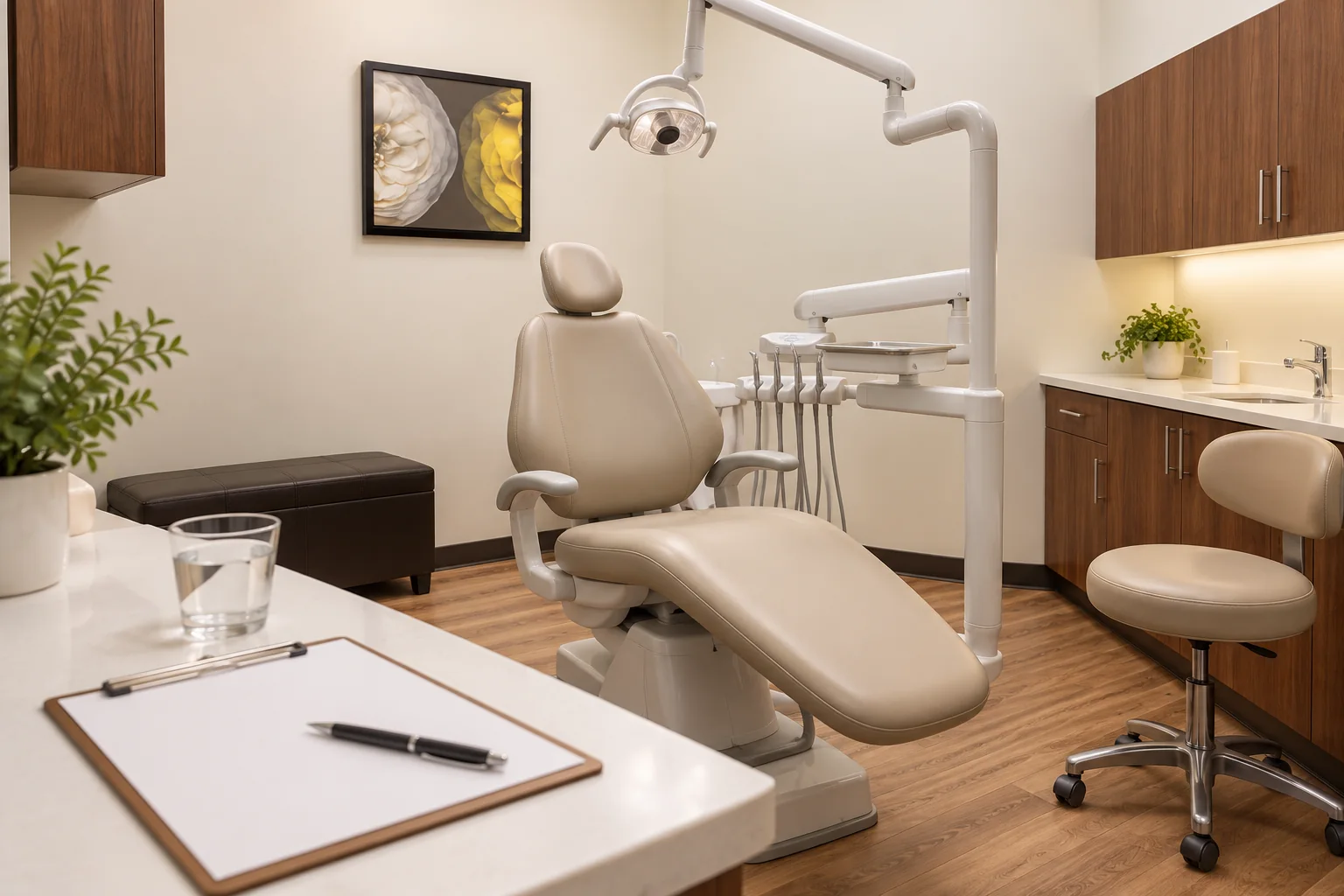
RETURNING TO DENTAL CARE
Haven’t been to the dentist in years? Start with an assessment, not a prediction of everything you might need. Tell the office about the gap, any symptoms and what worries you. Your first visit may include a health-history discussion, an examination, gum measurements and X-rays if clinically needed. The findings determine whether a routine cleaning, gum treatment or other care is appropriate. You do not need to have all the answers before calling.
Maybe money was tight, life became complicated or a previous appointment made returning difficult. The useful starting point is what you need now. You can explain the situation briefly without preparing an apology or trying to make your teeth look better before anyone sees them.
What if it has been 5, 10 or 20 years?
The number of years is helpful background, not a diagnosis. There is no reliable rule that five years means fillings, ten years means deep cleaning or twenty years means losing teeth. Two people with the same gap can have very different findings.
If nothing hurts, you can still arrange an assessment: the ADA explains that dental problems can be present without symptoms. Conversely, a long gap alone does not establish that extensive treatment is necessary.
What should I say when I book?
Explain roughly when you last had care and whether you have pain, bleeding, swelling, a broken tooth or trouble chewing. If you are anxious, mention it when booking. That helps the office discuss the right appointment instead of assuming you want only a cleaning.
A simple call script
“It has been about [number] years since my last dental visit. I would like an assessment, and I am nervous about [your concern]. I have noticed [symptoms, or no specific symptoms]. What will the first appointment include, what should I bring and what costs should I expect before treatment?”
Ask how much time to allow, whether cleaning is planned and whether forms can be completed ahead of time. Mention accessibility, communication or interpreter needs. See our new-patient information for a starting point.
What should I bring?
- Your health information: a current list of medicines, supplements, allergies and medical conditions; mention pregnancy or possible pregnancy.
- Coverage details: your insurance or Medicaid member information and any identification the office requests.
- A short symptom list: where a problem is, when it started, what triggers it and whether it is changing.
- Previous records, if available: the former office’s contact details, recent X-rays and unfinished treatment information.
- Your priorities: two or three questions about comfort, chewing, appearance, time or affordability.
Ask the office how records should be transferred securely. The ADA describes how dental records support continuity of care. If you cannot locate them, tell the team; do not assume that missing paperwork prevents you from making the call.
What happens at the first appointment?
The order varies by your needs and the visit booked. If you have an urgent problem, the initial appointment may focus on that concern before a broader assessment.
- Discuss your history and priorities. The team asks about your health, medicines, symptoms, previous treatment experiences and daily oral care. Start with the concern you most want addressed.
- Examine your teeth and mouth. The dentist looks for decay, damaged teeth or restorations, gum changes and other tissue changes. The examination may also include your lips and neck.
- Assess gum health. A small measuring instrument may be used around teeth to record pocket depths. Mention tenderness or sensitivity.
- Decide whether images are needed. Existing records, examination findings and your individual circumstances help guide this decision.
- Review the findings together. Ask what needs attention, what is uncertain and whether any treatment or cleaning can appropriately happen that day.
The NHS overview describes these common examination and discussion steps.
An assessment is useful even when treatment needs another visit. Aim to leave knowing what was found and what the next appointment is for—not simply with a list of unfamiliar procedure names.
Will I automatically need new X-rays?
No single imaging package is right for everyone returning after a gap. The dentist considers your history, examination, current symptoms and risk of disease. X-rays can reveal information that is not visible by looking in the mouth, but they should answer a clinical question.
The ADA’s X-ray guidance says images are not required at every visit and that a new dentist may request previous images. Older X-rays can be useful without being sufficient for today’s concerns. Ask: “What will these images help you check, and can any existing images be used?”
Routine cleaning versus deep cleaning: what is the difference?
A routine cleaning is not interchangeable with treatment for periodontitis, a disease affecting the tissues supporting teeth. If the examination identifies periodontitis or deeper gum pockets needing treatment, the dentist may recommend targeted care rather than a routine polish.
Gum measurements are considered alongside other findings. The National Institute of Dental and Craniofacial Research describes gum examination, medical history and imaging of supporting bone as parts of assessment. A single number, bleeding or the years since your last cleaning does not tell the whole story.
- Routine professional cleaning: removes deposits as part of appropriate preventive care; the dentist first determines whether this fits your gum condition.
- Scaling and root planing: cleans below the gumline and treats root surfaces when indicated for gum disease.
- Follow-up: checks healing and helps determine further care or an individualized maintenance schedule.
The ADA explains that scaling and root planing may require local anesthetic and more than one visit. Ask which areas need treatment, why it is recommended and how progress will be reassessed. Learn more about examinations and cleanings at Star Dental.
What if I am anxious or afraid of being judged?
Say what makes the appointment difficult: pain, gagging, sounds, feeling rushed or embarrassment. “I am worried about being criticized for the gap” is a reasonable thing to tell the team. You can ask to discuss concerns before the examination begins.
The ADA recommends speaking up, asking questions and agreeing on a signal for a break. Useful requests include:
- “Please explain the next step before starting.”
- “Can we agree that raising my hand means I need a pause?”
- “I would like the main findings explained in plain language.”
Tell the team if something hurts. Ask which comfort options are suitable for your situation rather than assuming a particular approach is needed. You can also ask whether headphones would be suitable.
If anxiety has kept you away for years, bring it up before the appointment so the team can discuss how to begin and what options may be suitable.
What should I ask about costs and insurance?
There is no dependable “years-away” price. An examination, necessary images, cleaning and other treatment can be separate parts of the estimate. Ask what the booked visit includes and when additional recommendations will be discussed.
- Is this office in network for my specific plan?
- What is the estimated cost of the assessment and any proposed images?
- Is the recommended cleaning covered, and do frequency limits apply?
- What deductible, copayment, coinsurance or benefit limit applies to me?
- Does any proposed treatment require advance authorization or a benefit estimate?
- What might I owe, when is payment due and what payment arrangements can I ask about?
The ADA explains common dental-plan limits and cost-sharing terms. These questions are not a statement that every limit applies to every plan. Medicaid and commercial policies should be checked separately; do not assume they use identical rules.
Use our insurance and payment guide to prepare. Confirm your own eligibility and benefits. If paying without insurance, request a written estimate rather than guessing the total from a general article.
What if the dentist recommends several treatments?
Ask the dentist to separate immediate concerns, treatment that can be planned and longer-term prevention. Budget or scheduling constraints matter, but the dentist should explain any clinical consequences of waiting.
Questions before deciding
- What finding supports this recommendation?
- What are the reasonable alternatives and their benefits and risks?
- What could happen if I postpone or decline it?
- Can care be staged safely, and what would each stage accomplish?
- What follow-up or referral might be needed?
The ADA’s patient-autonomy principle emphasizes involving patients in decisions and explaining reasonable alternatives. Request a written plan. If you want another opinion, ask what records to obtain and how urgently a decision is needed.
When should I seek help sooner?
Call for urgent dental advice about worsening or persistent pain, new swelling, fever with dental symptoms, a broken tooth or a suspected infection. Do not wait for a routine new-patient slot if symptoms are worsening. The NHS advises urgent dental treatment for a suspected abscess.
Call 911 or seek emergency medical care for trouble breathing or swallowing, severe swelling affecting the throat or eye, heavy mouth bleeding that will not stop, or serious facial injury. These warning signs are described in NHS emergency guidance. Star Dental is open seven days, not a 24-hour hospital emergency department.
What can I do while waiting?
Continue gentle daily care. The ADA recommends a soft-bristled toothbrush with fluoride toothpaste twice daily and cleaning between teeth daily. You cannot replace professional assessment by brushing harder before your appointment.
Ask for a technique demonstration if cleaning hurts or particular areas are difficult. For recurring bleeding, read our guide to bleeding gums when brushing or flossing and tell the dental team what you notice.
Returning-to-the-dentist FAQs
Is it too late to return after twenty years?
No. You can still request an assessment and discuss your options. The dentist needs to examine your mouth before explaining which care may help and what its limitations are.
Should I wait until a tooth hurts?
No. Lack of pain does not establish that everything is healthy. You can book a check without a specific symptom; report any changes when arranging the visit.
Will all my teeth need work?
Not necessarily. Recommendations depend on individual teeth, gums and diagnostic findings. Ask the dentist to show you which areas need attention and explain why.
Can the first appointment just be an assessment?
Ask when booking. Explain that you want to understand the findings and options first. If an urgent problem is identified, discuss what needs timely attention.
Will I definitely have a cleaning that day?
No. It depends on the appointment, available time and the type of care your gums need. Confirm what is planned so your expectations match the visit.
Do I need my old dental records before calling?
No. Start the conversation even if you cannot find them. Give the previous office’s details if known and ask what records would be helpful to request.
What if I cannot afford every recommendation at once?
Explain your budget and ask for priorities, a written estimate and whether treatment can safely be staged. Ask about the consequences of delay; not every problem can wait.
How often should I return after this visit?
Ask for an interval based on your findings and treatment needs. The ADA notes that dental-visit frequency is individualized, so do not assume everyone needs the same schedule.
Does accepting Medicaid mean my entire visit is covered?
No general statement can confirm your personal coverage. Call with your member information and ask the office to check eligibility and benefits for the proposed services before assuming what you will owe.
Can I ask for a break during the examination?
Yes. Agree on a hand signal before starting and tell the team what you need. Asking for a pause gives you a chance to communicate before continuing.
Take the first step in Denver
Star Dental welcomes adults and children at our southwest Denver office near Lakewood and is open seven days a week. We accept Health First Colorado Medicaid. Call to confirm appointment availability, eligibility and benefits, and tell us what would help you prepare.
General patient information, not a diagnosis or an individual treatment or coverage recommendation. Your dentist can advise you after examining your mouth and reviewing your health history.