Tooth Extraction in Denver: Costs and What to Expect
A simple tooth extraction at Star Dental in Denver generally costs $250–$350 per tooth, including local numbing. A surgical extraction may cost about $500. The exam and X-rays are typically $150 extra. We first check whether your tooth can be saved, explain the treatment needed, and review the expected cost with you.
Star Dental’s office is located in southwest Denver near Lakewood, welcoming patients from Denver, Lakewood, and surrounding communities.

How much does it cost to pull a tooth?
Here is a practical starting point for one regular adult tooth at Star Dental. The type of removal—not simply which tooth hurts—helps determine the fee.
| Your care | Approximate fee | What it covers |
|---|---|---|
| Simple extractionA regular tooth the dentist can reach and remove without opening the gum | $250–$350per tooth | Removal of one straightforward, non-wisdom tooth, including local numbing. |
| Surgical extractionA regular tooth that needs extra steps for removal | About $500per tooth · example fee | A surgical-removal example. The dentist explains the steps needed and what your individual fee includes. |
| Exam & X-raysThe first step in understanding the tooth and your options | Typically $150additional | The examination and needed dental X-rays, charged separately from the extraction. |
These amounts help you plan. Your dentist will review your expected cost, including any other recommended care, before treatment.
Looking for wisdom-tooth prices? See our separate wisdom teeth cost guide.
Start with an examination
Tell us about the tooth and we’ll help you book a visit to understand your options.
What else can affect the cost?
The exam and X-rays show how much tooth remains, the shape of the roots and how easily the dentist can reach them. These details help determine whether removal is simple or surgical.
- Extra comfort options: local numbing and sedation are different. Sedation helps you relax and is a separate service when used; surgical removal does not automatically mean being put to sleep.
- Care for the space left behind: a bone graft or tooth replacement may be discussed when useful for your longer-term plan. These are separate services, and not everyone needs them.
- Other care: prescribed medicines, additional imaging or treatment by a specialist may have separate fees when needed.
Understand the price for your situation
How much does tooth extraction cost without insurance?
The table above shows our self-pay fees. You can book an examination without dental insurance. After checking the tooth, we explain the recommended treatment and expected cost before you decide.
If cost is making it difficult to arrange care, tell our team when you call. We can discuss the payment options currently available and help you understand your next step.
Insurance and Medicaid information ↓Does pulling a molar cost more?
A molar—a back tooth used for chewing—does not have one fixed extraction price. Some molars can be removed with a simple extraction. Others have roots or a position that make surgical removal more appropriate. The exam and X-rays help the dentist explain which approach fits your tooth.
If you mean a wisdom tooth at the very back, use our wisdom-tooth price guide.
Does a broken tooth cost more to remove?
A broken or decayed tooth does not automatically require a surgical extraction. If enough tooth remains for the dentist to reach it, simple removal may be possible. A break below the gum or hard-to-reach roots may call for extra steps. That is why the tooth’s appearance alone cannot tell you the fee.
Understand simple and surgical removal →Is it cheaper to pull a tooth or save it?
The extraction fee alone does not tell you which option costs less overall. A filling, crown or root canal may preserve a tooth that can be repaired. If a tooth is removed, replacing it may involve a separate cost. Your dentist can compare the complete options with your chewing, comfort and long-term needs in mind.
Compare saving and removing a tooth →We Look at Whether the Tooth Can Be Saved First
An extraction is not automatically the first answer to tooth pain. Depending on the diagnosis, a filling, crown, root canal or other care may preserve the tooth. Removal may be recommended when the tooth is no longer predictably restorable or when keeping it poses a greater risk.
- Deep decay or an infection that has damaged too much of the tooth
- A crack or fracture extending below the gumline
- A broken tooth or root that cannot support a reliable restoration
- Advanced gum disease with severe loss of support and mobility
- Dental trauma that has made the tooth non-restorable
- An impacted or poorly positioned tooth that is causing problems
- Teeth that must be removed as part of a carefully planned denture treatment
Simple, Surgical and Situation-Specific Extractions
The approach is based on how much tooth is visible, the shape and position of the roots, nearby bone and anatomy, the reason for removal, your health history and the number of teeth involved.
Simple Extraction
Used when the dentist can reach the tooth and gently loosen it for removal without opening the gum. The area is numbed with local anesthetic before the tooth is carefully removed.
Surgical Extraction
May be needed when a tooth is broken near or below the gumline, difficult to access, unusually shaped or covered by gum or bone. The dentist may divide the tooth into smaller pieces to remove it carefully.
Broken Tooth or Root Removal
A badly fractured tooth may leave too little structure to grasp normally. X-rays help the dentist locate the remaining roots and choose the safest removal approach.
Infected or Emergency Extraction
When a tooth is causing significant pain, abscess or spreading infection and cannot be saved, extraction can remove the source. The dentist first evaluates swelling, medical history and the appropriate treatment sequence.
Multiple or Pre-Denture Extractions
When several non-restorable teeth are removed, treatment is coordinated with the plan for healing and tooth replacement. Star Dental's denture team can discuss partial and complete denture options.
Wisdom Tooth Removal
Impacted, partially erupted or problematic third molars have different planning considerations. Visit our dedicated wisdom teeth removal resource.
Some cases benefit from specialist care
If the tooth's position, root anatomy, medical considerations or expected complexity calls for an oral surgeon, the dentist will explain why and help guide the next step. The team can help you plan the next step.
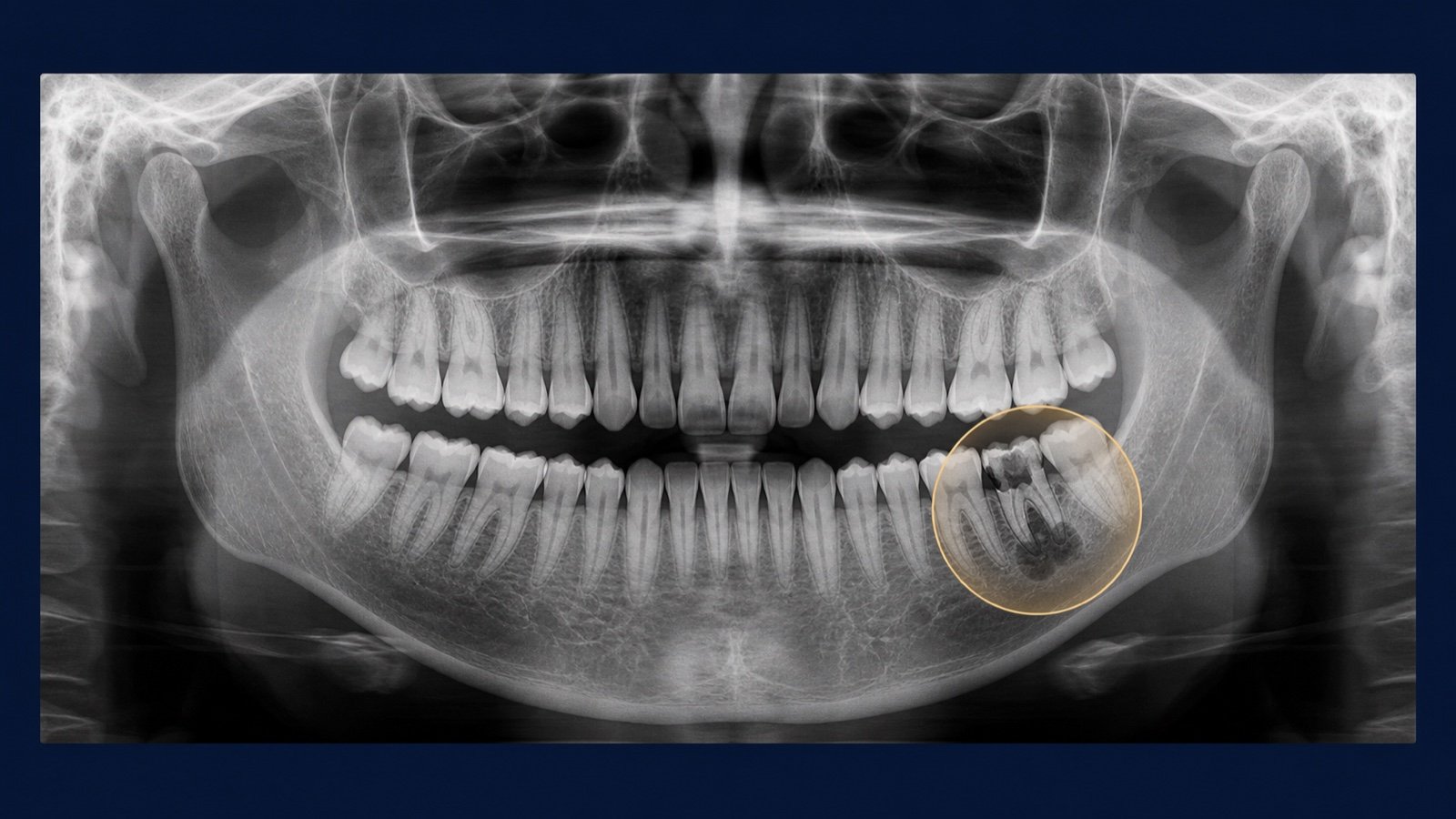
The X-Ray Helps Answer More Than “Which Tooth Hurts?”
Pain can travel, and the tooth that feels sore is not always the source. A focused examination and appropriate imaging help the dentist see what cannot be evaluated from the surface alone.
- How far decay or fracture extends
- The number, length and curvature of the roots
- Infection or changes around the root and bone
- The tooth's relationship to the sinus, nerves and neighboring teeth
- Whether a simple or surgical approach is more likely
- Whether restoration, extraction or referral is the appropriate next step
Star Dental uses modern digital and panoramic X-rays when appropriate for diagnosis and treatment planning.
Your Tooth Extraction Visit, Step by Step
Listen & Examine
We review your symptoms, health history and medications, then examine the tooth and surrounding tissues.
Take the Right X-Ray
Imaging helps evaluate the roots, bone, infection and nearby anatomy so the procedure can be planned.
Review Your Options
The dentist explains whether the tooth may be saved, why removal may be recommended and whether referral is appropriate.
Numb & Remove
Local anesthetic is used for comfort. You may feel pressure and movement, but tell the team if you feel sharp pain.
Protect the Site
The socket is cleaned, gauze is placed and stitches may be used when needed. You leave with specific aftercare instructions.
Nervous About Having a Tooth Removed?
That is common, especially when the tooth already hurts. The goal is to make the area thoroughly numb, tell you what to expect and keep communication open throughout the procedure.
- Local anesthetic numbs the tooth and surrounding tissue
- Pressure and movement can be normal; sharp pain should be reported
- The dentist can pause and recheck comfort when needed
- Let us know about dental anxiety, previous difficult experiences or medical concerns
- Bring a current medication list and tell us about blood thinners or major health conditions
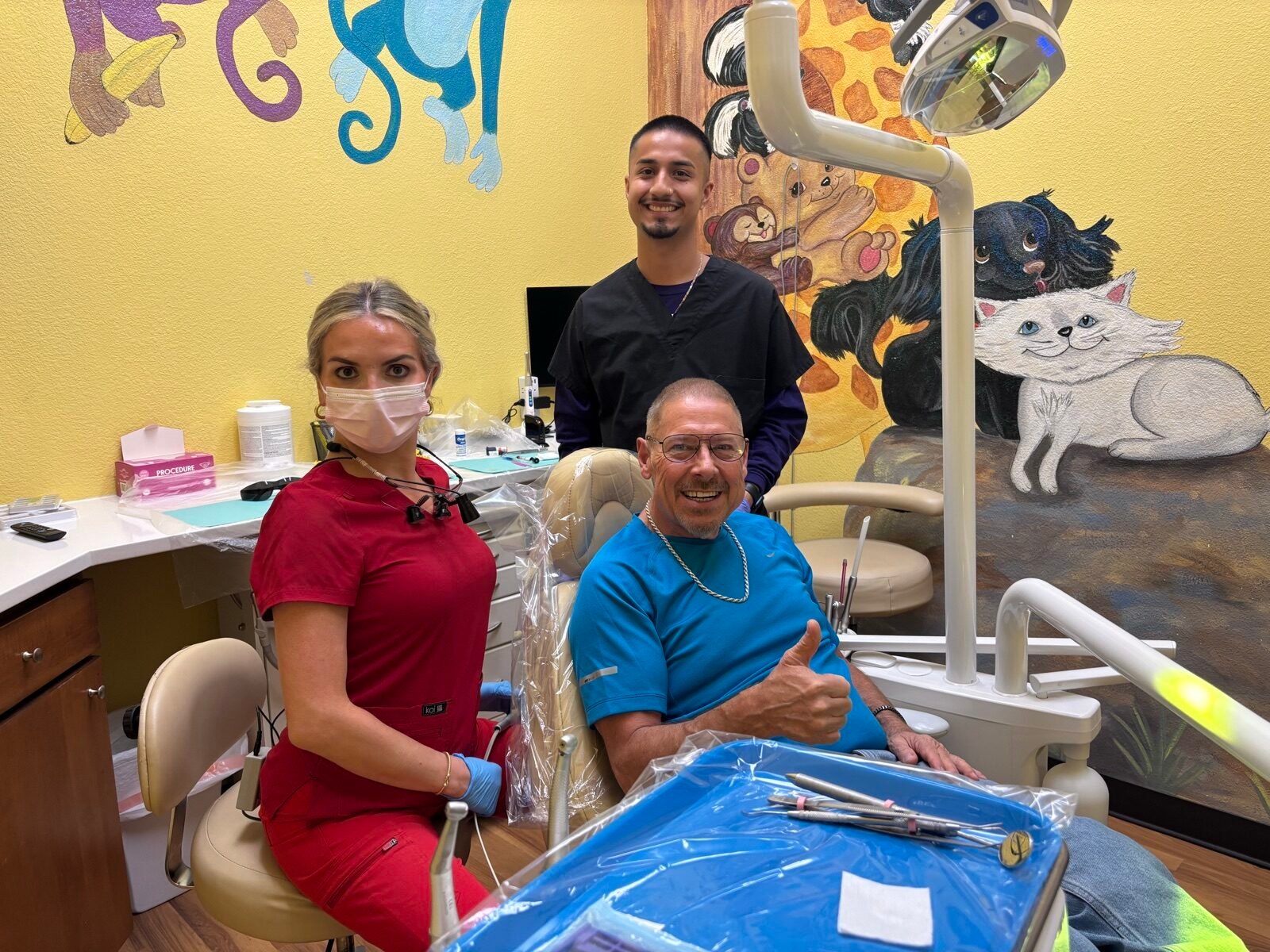
Protect the Blood Clot While the Socket Begins to Heal
A protective blood clot forms in the socket after removal. Follow the instructions given for your specific procedure; they may differ based on the tooth, your health and the complexity of treatment.
Helpful aftercare
- Bite on gauze exactly as directed to control bleeding.
- Rest and keep your head elevated during the early recovery period.
- Choose cool or lukewarm soft foods and drink water.
- Use prescribed or recommended medication only as directed.
- Keep the rest of the mouth clean and follow instructions for gentle rinsing.
- Call if symptoms are worsening rather than gradually improving.
Avoid early in healing
- Smoking or vaping, which can delay healing and raise dry-socket risk.
- Straws, forceful spitting or vigorous rinsing that may disturb the clot.
- Poking the site with fingers, the tongue or other objects.
- Hard, sharp, crunchy or very hot foods near the socket.
- Heavy exercise or lifting until the dentist says it is appropriate.
- Taking medications differently from the instructions.
What is dry socket?
Dry socket can occur when the protective clot breaks down or is displaced, exposing sensitive bone and nerves. Pain that becomes intense or starts increasing several days after an extraction—especially if it travels toward the ear or has a bad taste or odor—should be reported to the dentist. Treatment may include cleaning and a soothing medicated dressing.
Plan for Healing and, When Appropriate, Tooth Replacement
Not every extracted tooth must be replaced—wisdom teeth are a common example—but replacing other missing teeth may help chewing, appearance and the stability of surrounding teeth. The appropriate timing and option depend on the location, bone, gums, number of missing teeth and your goals.
Star Dental offers full, partial and replacement dentures with an onsite denture technician. When extraction and denture care are connected, the team can coordinate the sequence so you understand each appointment.
Questions to discuss before removal
- Can this tooth be predictably restored?
- Is the extraction simple or surgical?
- Would a specialist referral improve safety or predictability?
- What should I do with my medications?
- How should I prepare for recovery?
- Should this tooth eventually be replaced?
- What costs and insurance benefits apply to my plan?
Medicaid, PPO Insurance and Uninsured Patients Welcome
Star Dental accepts Health First Colorado Medicaid and most PPO plans, including Delta Dental, Cigna, Aetna, MetLife and Guardian. Coverage depends on eligibility, diagnosis, plan rules and the specific procedure, so our team checks DentaQuest eligibility and confirms benefits for each patient.
Convenient, Clear and Patient-Focused Extraction Care
Open Seven Days
Weekday, Saturday and Sunday hours give patients more opportunities to be evaluated when dental pain disrupts life.
Se Habla Español
Spanish-speaking staff are available every day to help explain appointments, insurance questions and next steps.
Modern Dental Imaging
Digital and panoramic X-rays support diagnosis, extraction planning and patient education when appropriate.
Medicaid Accepted
We welcome Health First Colorado patients and confirm benefits and coverage for the recommended treatment.
Adults & Families
Our office cares for adults, children and older adults in a friendly environment without making the experience feel rushed.
Easy to Reach
Find us at Sheridan and Florida in the King Soopers plaza, with free onsite parking and wheelchair accessibility.
Detailed Answers to Common Questions
Does a tooth extraction hurt?
How do I know whether my tooth can be saved?
What is the difference between a simple and surgical extraction?
Can Star Dental remove a broken tooth or a root left below the gum?
Can an infected tooth be extracted?
How long does a tooth extraction take?
How much is a tooth extraction without insurance?
Is the dental exam and X-ray included in the extraction price?
Is local anesthetic included in the tooth extraction fee?
Does Health First Colorado Medicaid cover tooth extractions?
Do I need antibiotics before or after an extraction?
Can I drive myself home?
What can I eat after a tooth extraction?
How long is recovery?
When should I call after an extraction?
Will I need to replace the extracted tooth?
Oral surgery resources
Understand Extraction, Comfort and Recovery Options
Learn how tooth removal, wisdom teeth care and optional sedation fit together—and what may come next.
Further reading
These patient resources explain tooth removal, comfort options and when to seek urgent help:
Get Clear Answers About a Painful, Broken or Infected Tooth
Call Star Dental to book an examination. Tell us which tooth is bothering you and whether you have pain, swelling or a broken tooth. We will explain your treatment options and expected cost before treatment.
TOOTH EXTRACTION NEAR YOU
Start with an examination and clear options
A nearby office and seven-day schedule can help. The dentist will examine the tooth, review any needed imaging and explain whether extraction or another treatment is appropriate.
PATIENT GUIDES
Helpful Reading for Your Next Step
LOCAL OFFICE INFORMATION
Tooth-extraction evaluation near Denver and Lakewood
The Star Dental office is close to the Denver–Lakewood boundary and is open seven days. An examination and appropriate imaging are needed before the dentist can determine whether a tooth can be saved or whether removal is appropriate.