01
Small Enamel Chip
A minor edge chip may be smoothed or repaired with tooth-colored bonding depending on appearance and function.

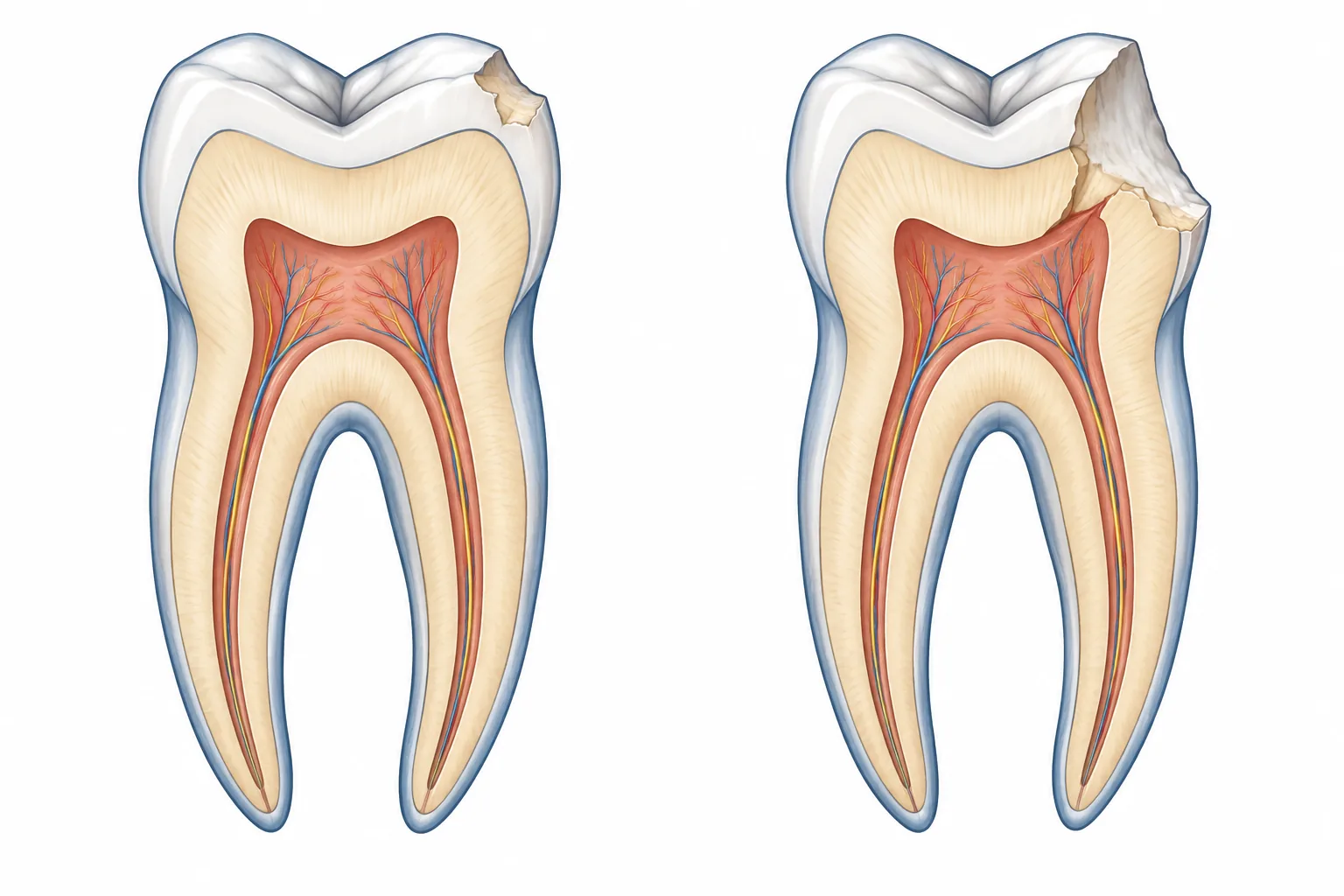
A chipped tooth may be mostly cosmetic, while a deeper fracture can expose the nerve or split the tooth. Prompt evaluation helps protect the remaining structure, relieve sensitivity and determine whether the tooth can be repaired.
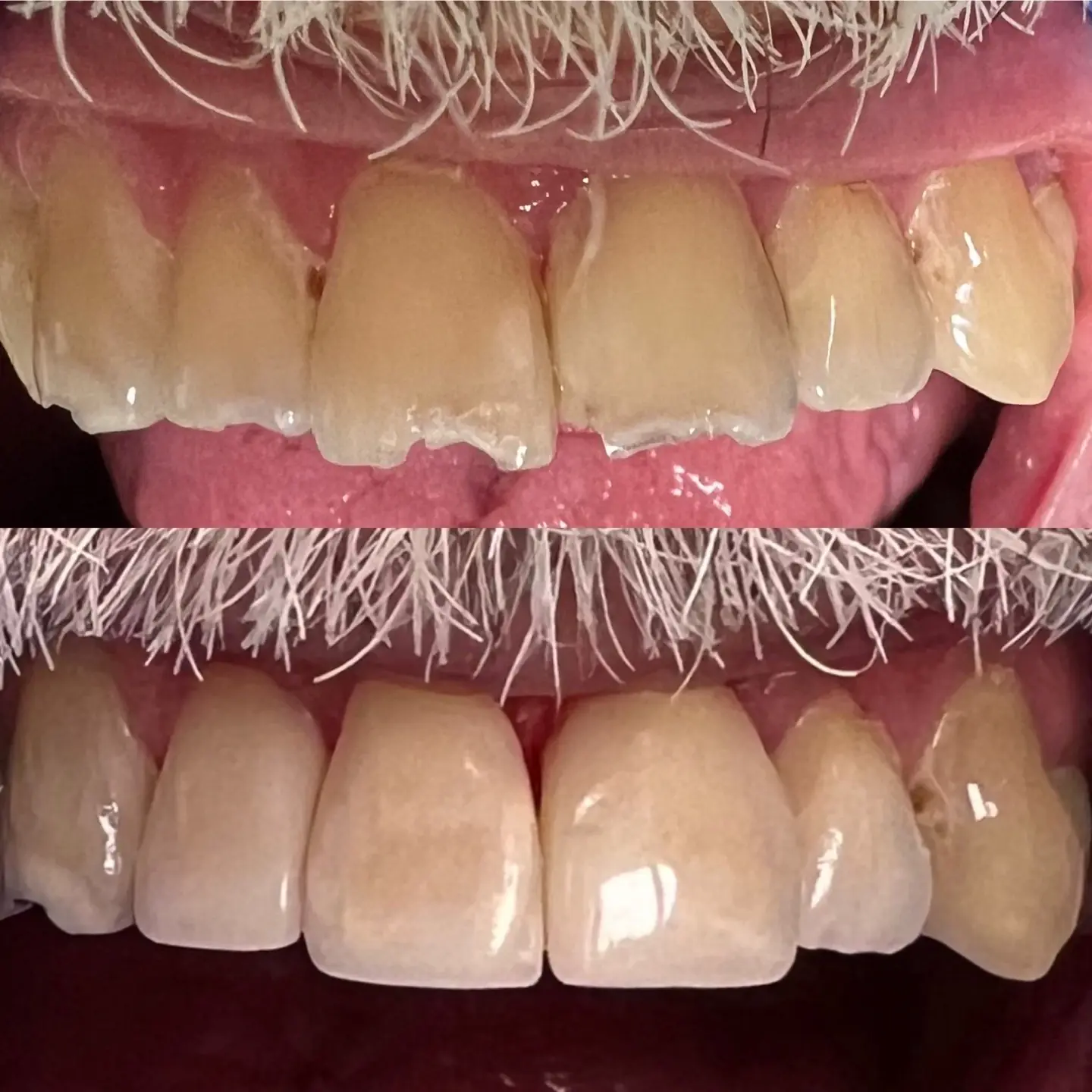
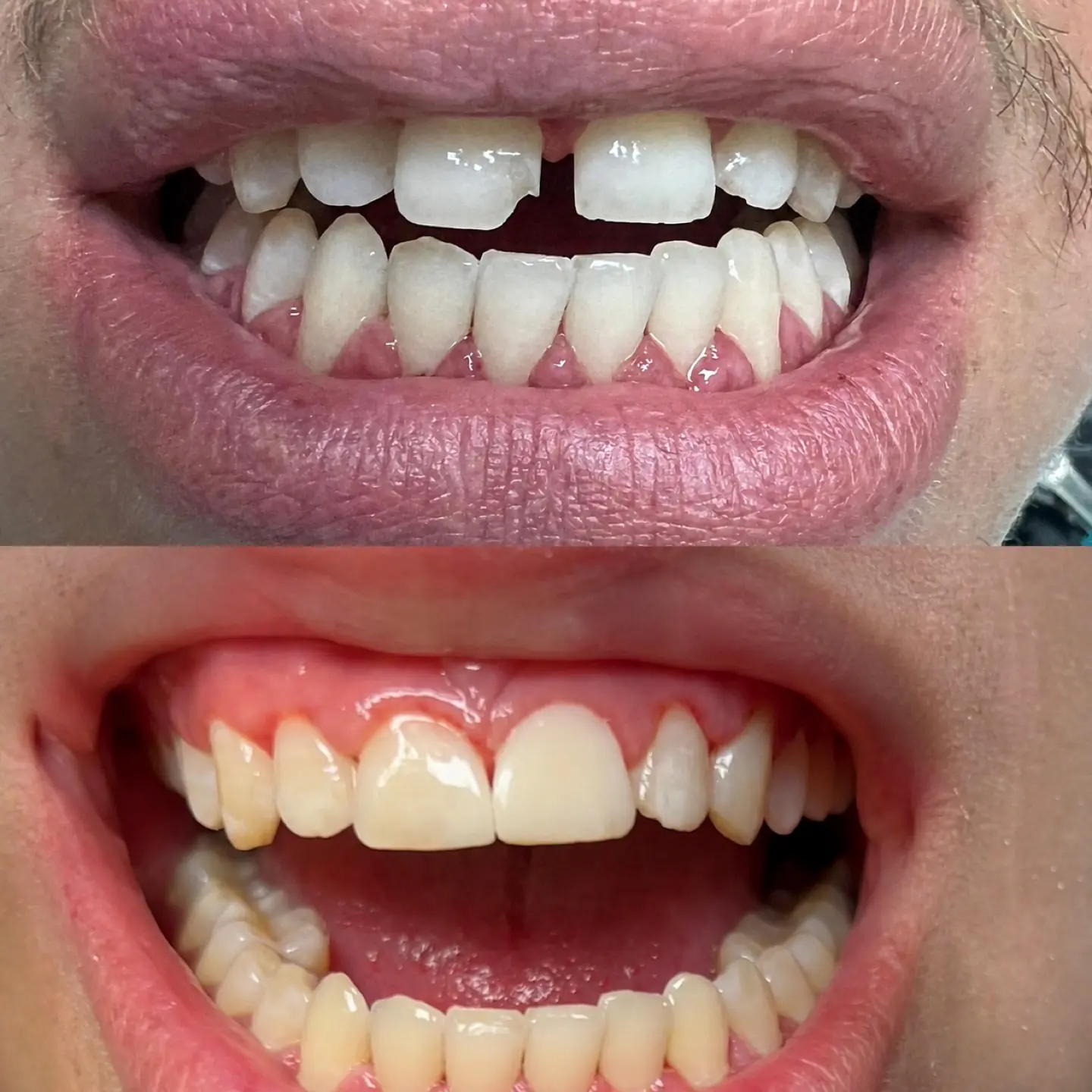
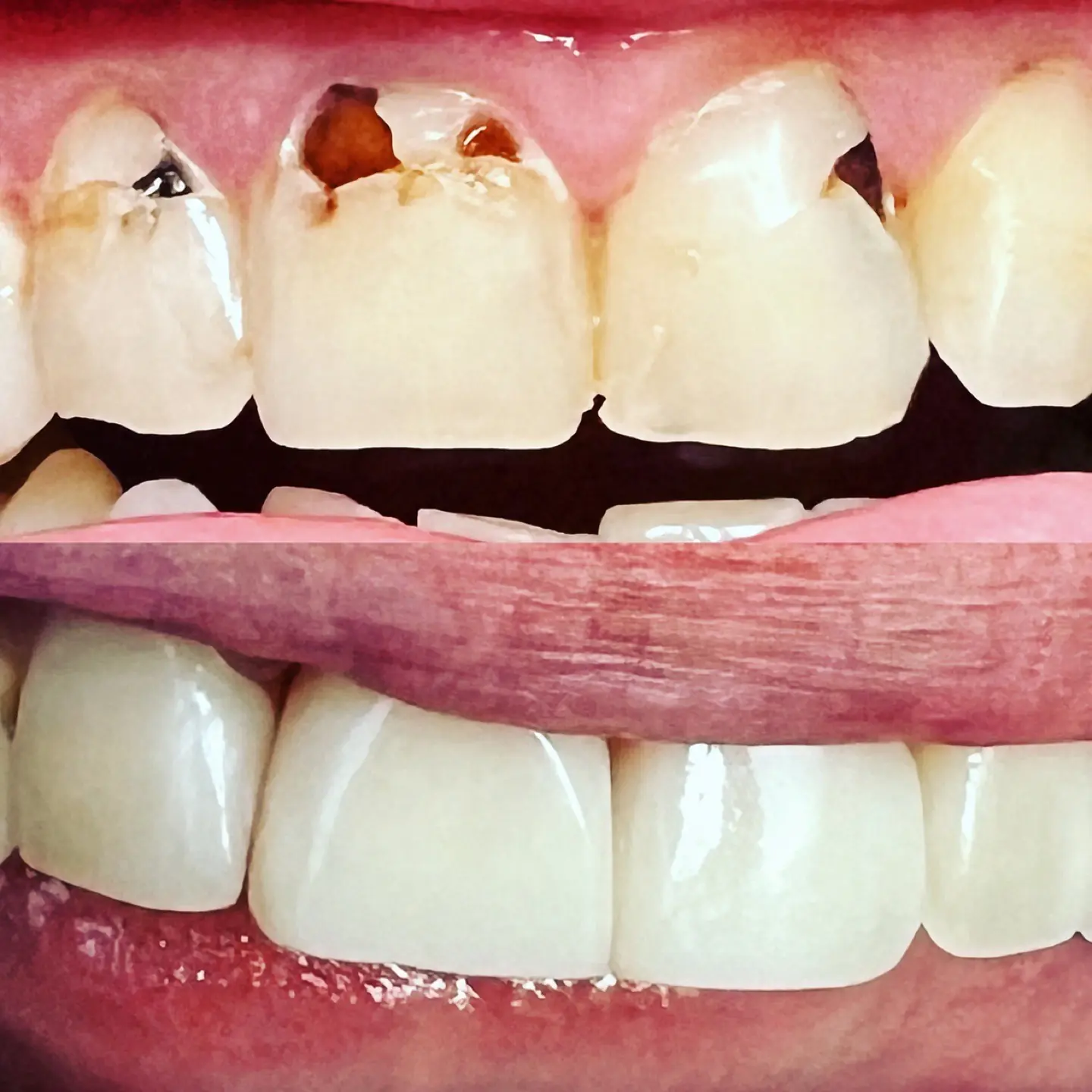
See examples of front-tooth restorations by Dr. Florina Menina. Before is shown on top; after is shown below.
For a chipped front tooth, see our guide to front-tooth repair options and cost.
 View larger photo
  View larger photo
  View larger photo
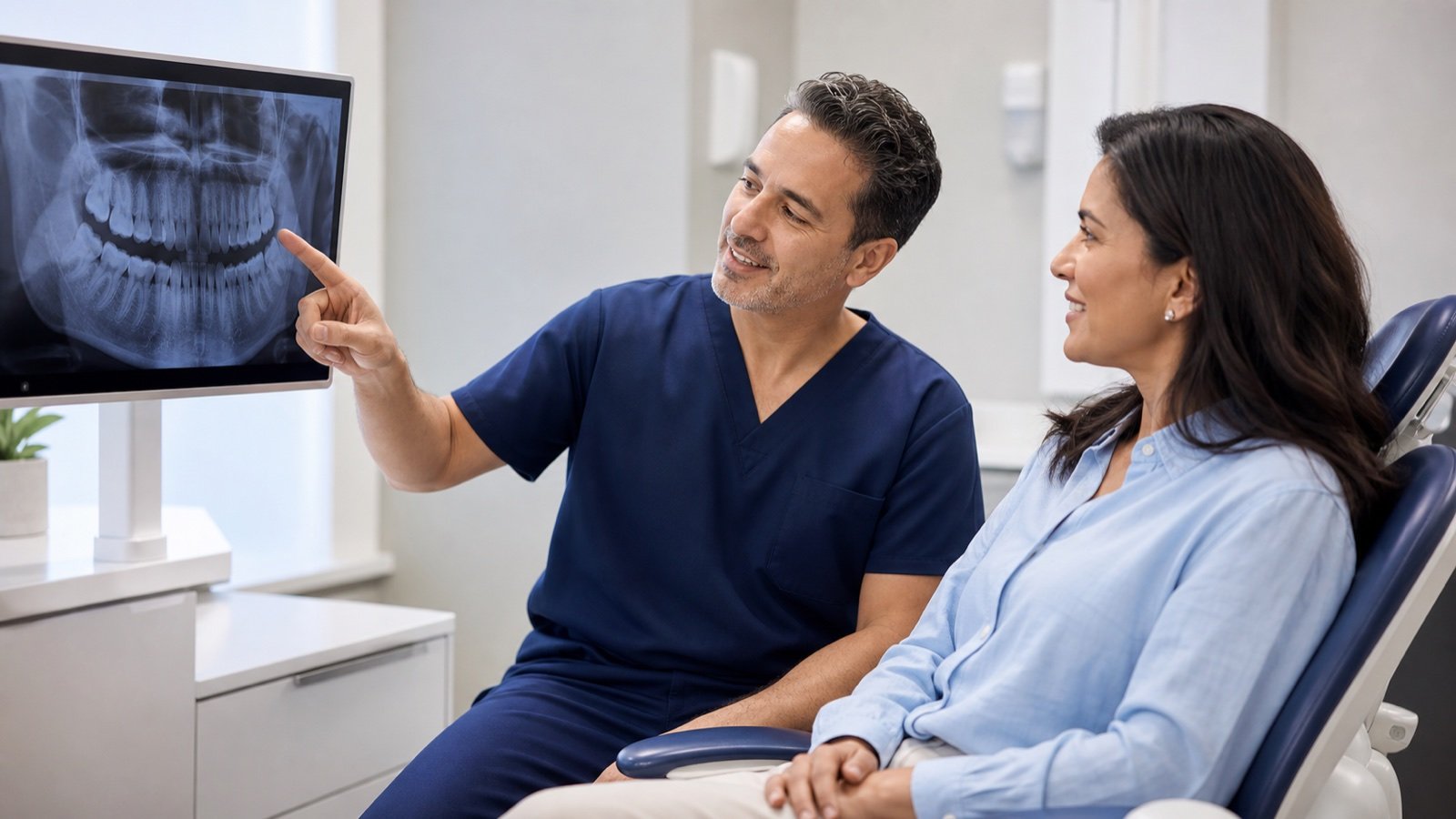
 The visible size of a chip does not always show how deep the damage extends. Dental X-rays, bite tests and careful examination help determine the safest restoration.
A minor edge chip may be smoothed or repaired with tooth-colored bonding depending on appearance and function.
A large filling can weaken surrounding tooth structure, allowing a piece of the tooth to fracture.
If a filling has come out, read about replacing a lost filling and checking the surrounding tooth.
Cracks may cause sharp pain with biting or release and can progress without visible separation.
A deep fracture can expose the pulp, causing strong sensitivity, pain or bleeding from the center of the tooth.
Some fractures extend too far below the gum or through the root to be predictably restored.
Trauma can move a tooth, damage its blood supply or injure supporting bone and needs urgent evaluation.
Treatment depends on depth, location, remaining structure and whether the nerve and root are healthy. Small chips may be polished or restored with composite bonding. Larger damage may need a filling, onlay or crown. If the pulp is exposed or irreversibly inflamed, root canal treatment may be needed before final restoration. A tooth fractured through the root or without enough support may need extraction and replacement planning.
Back teeth and chewing
Often there is a repair option, but the visible missing piece is only part of the decision. A back tooth with one broken corner is different from a tooth split through its center. The location and depth of the fracture, the remaining tooth and the condition of the tissue inside it help determine what is possible. Little or no pain does not establish that a fracture is minor. [1]
You may notice a corner disappear beside an old filling, a sharp edge against your tongue or pain only when chewing. When calling, “part of a back tooth broke” is enough. Do not delay because you cannot tell whether the fragment is tooth or filling material.
The visit is not just a choice between patching the hole and removing the tooth. The dentist examines the remaining structure, restoration and gums, checks for tenderness and may test the tooth's response to cold or biting. X-rays can add information about the root and surrounding tissues; the examination and symptoms still matter. [2]
Tell the team when the break happened, whether the tooth has been repaired before and whether you have swelling, a bad taste or a change in your bite. If you have a fragment, bring it in a container with milk or your own saliva; do not try to glue it back yourself. [3]
| Finding after assessment | A treatment the dentist may discuss |
|---|---|
| A limited chip with suitable remaining tooth | Bonding or a filling to rebuild the damaged area. |
| A larger missing portion or weakened chewing surface | A restoration that covers and supports more of the tooth, sometimes a crown. |
| Damage involving the pulp inside a tooth that can be restored | Root canal treatment followed by the appropriate protective restoration. |
| A severe fracture that leaves the tooth unrestorable | Extraction, with a separate discussion of any replacement needs. |
These are possibilities, not a diagnosis from the size of a chip. Sources: [3], [4].
Root canal treatment addresses the tissue inside the tooth; a filling or crown addresses its outer structure. One does not automatically replace the other. A protective restoration also cannot guarantee that a crack will never progress. [5] · [1]
Ask: “What can be saved, what would make the result uncertain, and is today's treatment temporary or final?” If several visits or a specialist assessment may be needed, ask about that before planning around a completion date. Our fillings page explains smaller repairs; the existing crown service explains broader tooth protection.
Until you receive advice, avoid chewing on that tooth, choose soft foods and avoid temperature extremes that hurt. Keep the area gently clean. [6] Do not use household glue, file the edge or test the tooth with ice or hard candy. Rinsing gently with warm water can help clean the area; a cold compress outside the face can help with swelling after injury. [7]
Call promptly for severe or worsening pain, fever or facial swelling. Trouble breathing or swallowing, swelling around an eye, vision changes, or extensive mouth swelling needs emergency medical care; call 911 for breathing or swallowing difficulty. [8] Read about dental abscess treatment if infection is a concern.
For a broken back tooth in Denver, call 303-222-1414 before arriving so Star Dental can hear what happened and confirm current appointment availability.
We begin with a diagnosis, explain the options and help you understand the next step. Treatment is based on your examination, health history and individual needs.
Rinse gently, save fragments and avoid biting on the damaged tooth.
Describe the injury, pain, sensitivity, bleeding and when the break occurred.
The dentist checks fracture depth, nerve response, bite and root support.
Options may include bonding, filling, crown, root canal treatment or extraction.
Hold the tooth by the crown, not the root. If dirty, rinse briefly without scrubbing. Place it back in the socket if you can do so safely, or keep it moist in milk, and seek immediate dental care. Do not reinsert a knocked-out baby tooth.
Star Dental welcomes new patients, accepts Health First Colorado Medicaid and most PPO plans—including many Delta, Cigna, Aetna, MetLife and Guardian plans—and has Spanish-speaking staff available every day. Benefits and coverage are confirmed for each patient. Same-day appointments may be available; call for availability.
Find us at 1490 S Sheridan Blvd in the King Soopers plaza, with free onsite parking and wheelchair accessibility. New patients should arrive 10–15 minutes early with photo ID and insurance information.
Call for current availability or send an online appointment request. We respond to phone calls and online requests promptly.