Smoothing and polishing
For a very small enamel chip, a dentist may smooth the rough edge without adding material. This reshapes the edge; it does not rebuild a missing corner.

Star Dental · Denver
Yes—a chipped front tooth can often be repaired. A small missing edge may need tooth-colored bonding or simply smoothing. The first step is a dental exam to check the depth of the chip and choose a repair that suits your tooth.
Worried about your smile or a numbing injection? Bonding is shaped and polished to blend with nearby teeth. Some small repairs may be possible without an injection; your dentist will explain the comfort options for the work you need.
Front-tooth bonding: $300–$500 per tooth. See cost details.
Real Star Dental examples
These Star Dental treatment examples show repairs to chipped edges and more extensively broken front teeth. Before is on top; after is below. Tap a photo to enlarge it.
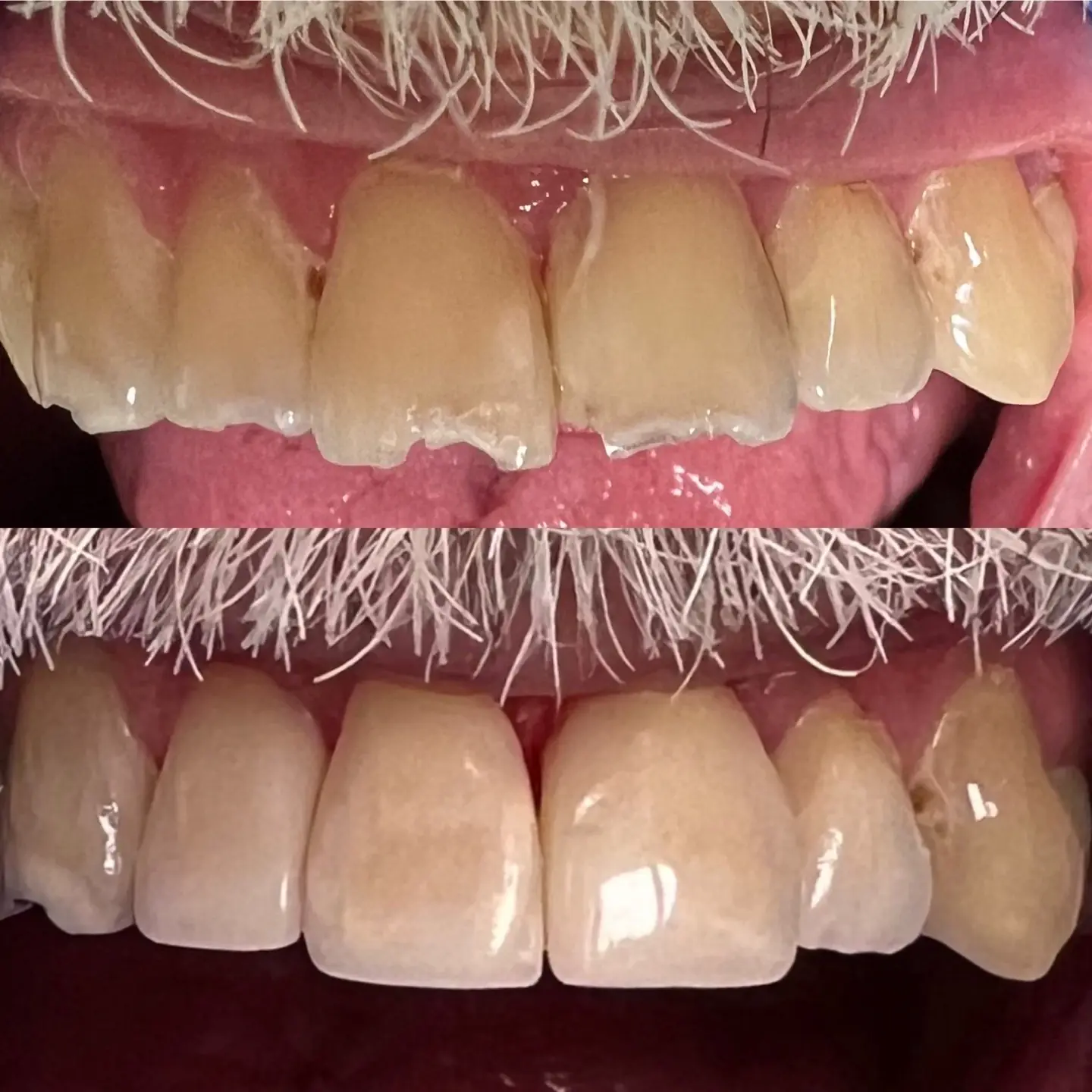
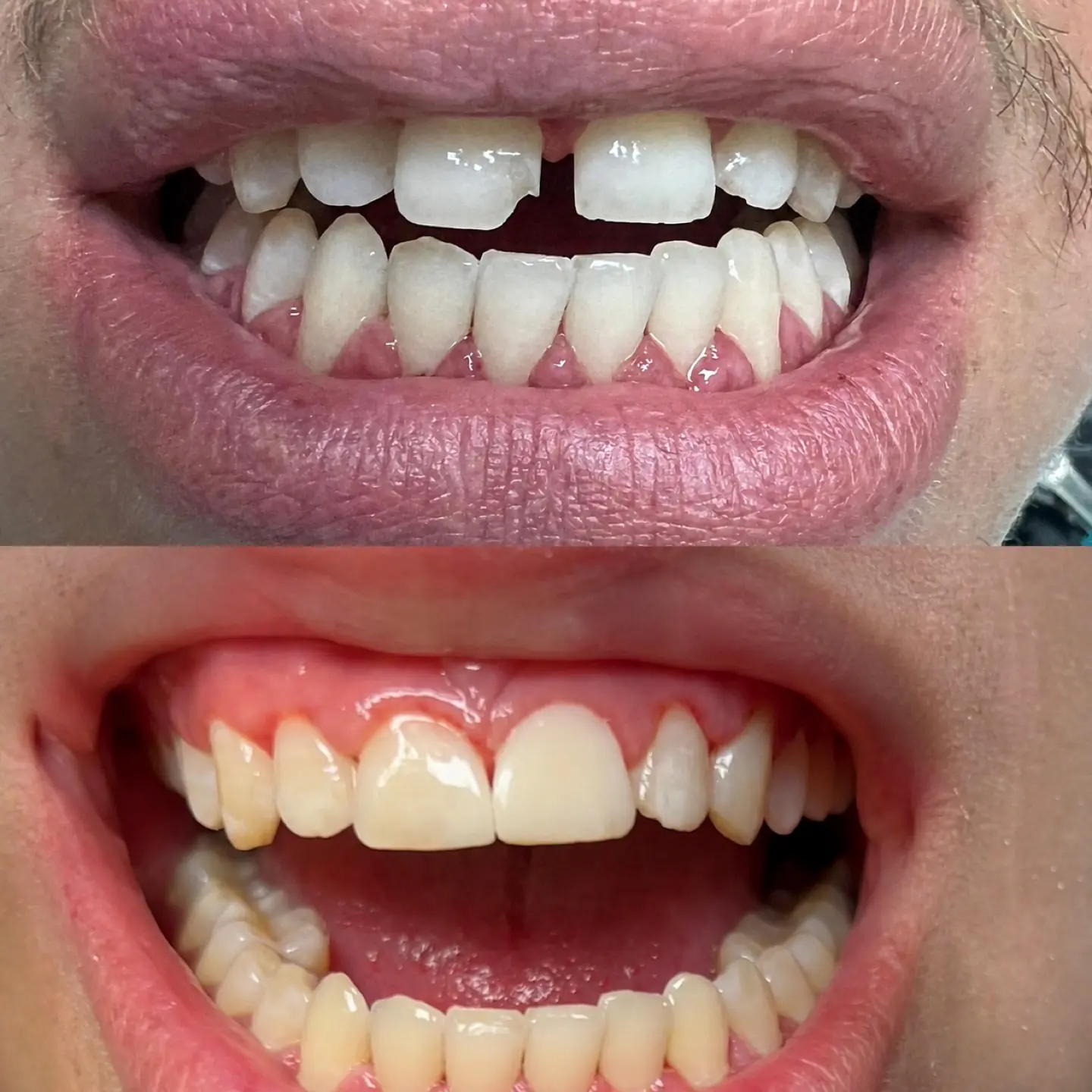
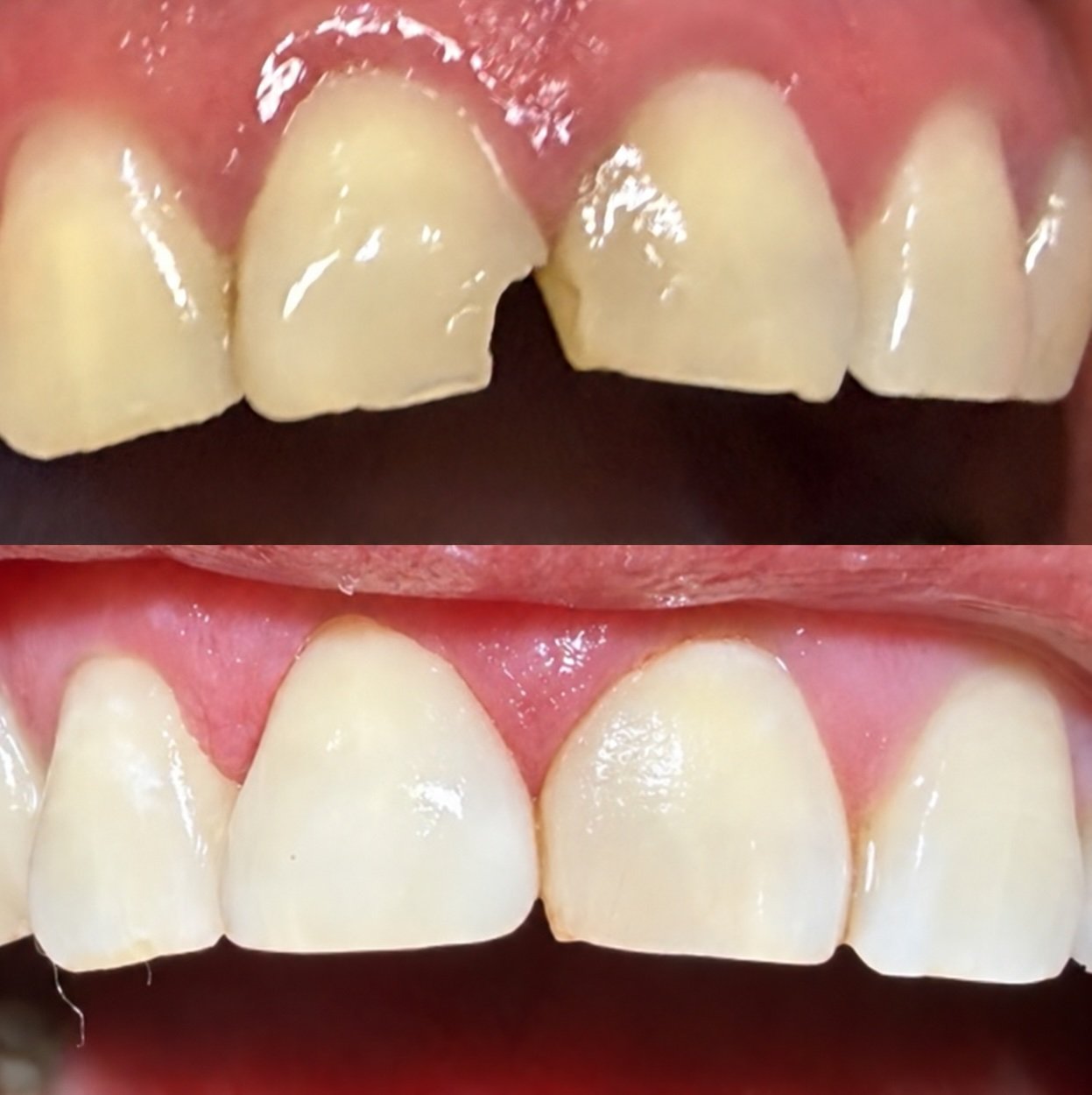
Your dentist can help you choose a repair suited to your tooth and smile. Explore more Star Dental before-and-after photos.
Planning your repair
Front-tooth bonding at Star Dental ranges from $300–$500 per tooth.
This range is for bonding. Your dentist will confirm whether it is the right repair and explain the cost of any different treatment. When you book, ask about the exam and any X-rays needed for your visit.
The treatment needed—not just the size of the visible chip—determines the cost. Smoothing a tiny edge, adding bonding, and restoring a larger break with a crown are different procedures. A photograph alone cannot show everything needed for an estimate.
If you are paying without insurance, tell the team when you call. We can discuss how to get an assessment and review the recommended treatment cost with you. See Star Dental’s insurance and payment guide.
Do not file the tooth or use household glue. If you are seeing a fine line rather than a missing piece, our cracked tooth versus craze line guide explains the difference.
Get emergency medical help for trouble breathing or swallowing, heavy bleeding that will not stop, a serious face or jaw injury, or a head injury causing loss of consciousness, vomiting, or double vision. Call 911 or go to an emergency department.
Start with the simplest suitable option
A small chip does not automatically mean you need a veneer or crown. The aim is to restore a comfortable edge and a natural-looking smile while choosing a repair your tooth can support.
A deeper break involving the inner nerve may need root canal treatment as part of the repair. For back teeth or broader fracture questions, use our broken and chipped tooth repair guide.
Appearance, comfort, and function
Explain how the chip happened and what feels different. The dentist examines the tooth, checks how it meets the opposite teeth, and decides whether X-rays or other tests are needed.
Point out the edge or corner that bothers you. Discuss its shape and color as well as comfort when biting. The goal is a repair that fits your smile, not a one-size-fits-all tooth shape.
Bonding commonly takes about 30–60 minutes per tooth. The examination and work needed determine the appointment plan.
A painless chip may not need emergency treatment, but it is worth arranging an assessment. The dentist can check the damage and explain whether the edge needs smoothing, rebuilding, or simply monitoring.
No home kit replaces a dental assessment and repair. Temporary protection may make a rough edge more comfortable while you wait. Filing or gluing a tooth yourself can cause more damage.
The least involved suitable option may be smoothing; a missing corner may need material added instead. Compare the options the dentist recommends for your tooth, including the assessment and any additional treatment—not just an advertised starting price.
Bonding may be an option for more than one tooth. Each tooth needs assessment, and the dentist can discuss how the edges and shapes will work together. The plan and total cost depend on the work each tooth needs.
Bonding can need touch-ups or replacement over time. Cleveland Clinic gives a typical range of 3–10 years, depending on oral habits and treatment. Brush, floss, keep checkups, and avoid biting pens, fingernails, or packaging. Tell the dentist if an edge feels sharp or your bite changes.
The cause is not always obvious from the missing piece. Tell the dentist about an old repair, grinding or clenching, and anything you noticed while eating. The exam helps identify what weakened the area and whether that needs attention along with the chip.
Baby teeth and adult teeth need different planning. Tell the dental team your child’s age and how the injury happened so they can guide you to appropriate care. Do not assume a repair described for an adult tooth is right for a baby tooth.
Star Dental · Denver, Lakewood & West Denver
Call Star Dental to arrange an assessment. Tell us which tooth chipped, when it happened, and whether it hurts. We can help you plan the next step.
1490 S Sheridan Blvd, Suite 102
Denver, CO 80232
Office details and appointment requests
General patient information; your dentist’s assessment guides your care.