
Star Dental · Patient guide
Clear next steps for a lost or broken filling—even if it doesn’t hurt—plus repair options, cost questions, and care after your visit.
A missing filling can often be replaced. Call your dentist, even if there is no pain. Until you’re seen, rinse gently, brush carefully, and chew on the other side. Don’t glue the old filling back in. The dentist will check whether the tooth needs another filling or a different repair.
Filling replacement at Star Dental: $200–$500, depending on the tooth and size of the filling. The exam and X-rays are not included. See the cost breakdown.
Start here
What should I do when a filling falls out?
- Rinse gently with warm water. If you find a loose piece, put it in a small container to show the dentist. Don’t pull at anything still attached.
- Go easy on the tooth. Choose soft foods and chew on the other side until you get advice.
- Call the dental office. Mention when it happened, whether it hurts, and whether there is swelling or a sharp edge.
Never use household glue to repair the tooth. The American Dental Association’s first-aid guidance also cautions against putting aspirin on a tooth or gum and using pointed tools in the mouth.
Not sure whether you lost a filling or a crown? Our guide to protecting a tooth after a filling or crown comes out covers both situations.
My filling fell out, but there’s no pain. How long can I wait?
A filling can come out without hurting, and it still needs a dental assessment. Contact the dentist rather than waiting for discomfort. If you’re comfortable and there is no swelling, a regular appointment may be appropriate; the dental team can help decide.
There is no single safe waiting period for every lost filling. Explain your symptoms and ask when to come in. A small, comfortable defect and a tooth with worsening pain are different situations. If symptoms change while you’re waiting, call again rather than keeping the same plan.
What if I can’t get an appointment right away?
Tell the office you have a missing filling, not just that you need a checkup. Describe any difficulty eating, sensitivity, sharp edge, or change in your bite. Ask what to do until the assessment and whether your symptoms call for an earlier visit. If you cannot reach your usual office and need urgent help, contact an emergency dentist in Denver.
When to ask for urgent help
Tell the dentist promptly about strong or persistent pain, facial or jaw swelling, fever, or chills. Pain that keeps you from sleeping or going about your day also needs urgent advice.
Call 911 for trouble breathing or severe choking. Get emergency medical care for heavy bleeding that will not stop, a serious face or jaw injury, or major swelling that affects swallowing. A lost filling on its own is not usually a reason to go to the ER. Read more about dental emergency warning signs.
What does it look or feel like when a filling falls out?
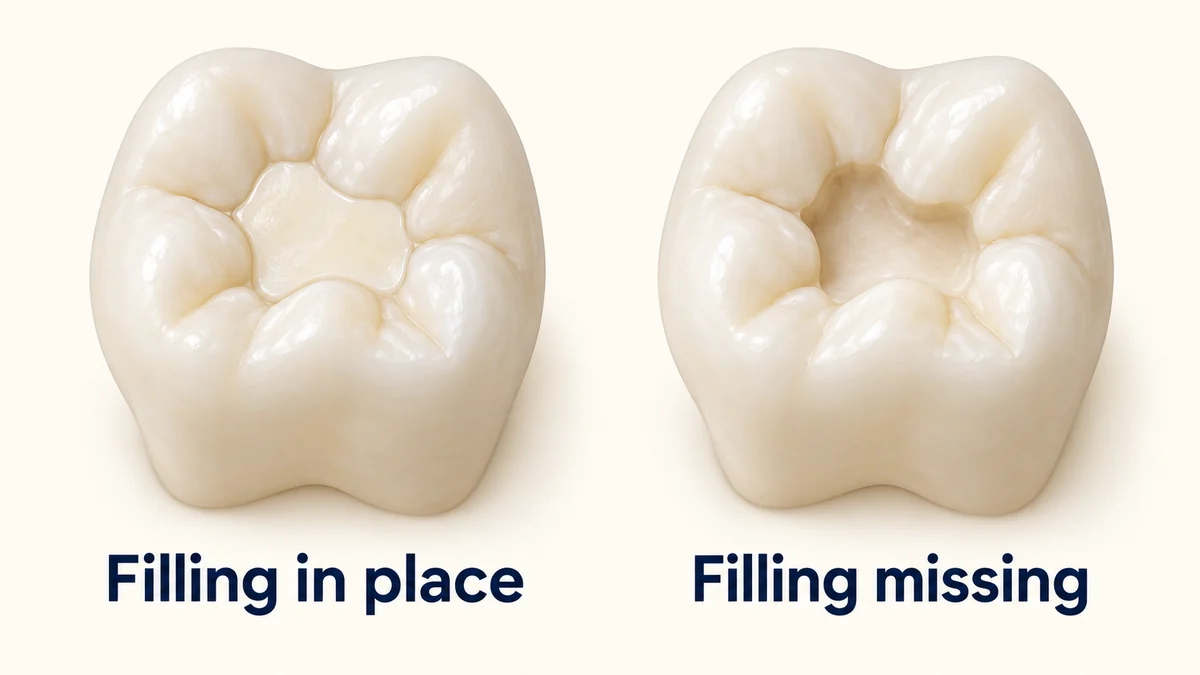
You might notice a new hollow, an edge that catches your tongue, food collecting in a spot, or sensitivity when you drink. Sometimes the first clue is a hard piece in your mouth. Other times, you never find the missing piece.
A tooth-colored fragment can be hard to identify. It might be filling material or part of the tooth beside it. A silver-colored piece can suggest an older metal filling, but the fragment’s appearance does not show the condition of the tooth underneath. You do not need to name the material when you call.
Did the filling fall out, or did my tooth break?
A raised part of the chewing surface can break next to a filling. Dentists call this a fractured cusp; in everyday terms, it is a broken corner of the tooth. It can happen with little pain. The American Association of Endodontists’ guide to cracked teeth explains this distinction.
Keep a piece you find, if convenient, and tell the dentist what you noticed. A description such as “part of the back tooth is missing” is enough to start. Our broken and chipped tooth guide explains the broader repair options when tooth structure is involved.
Why do fillings fall out?
Several things can change how a filling holds or how the tooth supports it. The material may wear or break, a surrounding piece of tooth may fracture, the filling may lose its hold, or new decay may develop beside it. Finding the reason helps the dentist plan the next repair.
Grinding or clenching can also damage teeth and fillings. Mention jaw soreness, a history of grinding, or a night guard you already wear. NHS guidance on teeth grinding describes these signs and how a dentist can help protect the teeth.
What if a new filling falls out—or the same one keeps breaking?
Contact the office that placed it and explain when it happened. The filling, the tooth around it, and the way the teeth meet all deserve another look. A repeat problem is a reason to review the cause, not simply assume that you need an identical filling again.
Useful details include whether it came out all at once or in pieces, whether biting felt different beforehand, and how often that tooth has needed repair. If you are seeing a different dentist, share the treating office’s name so the team can help request relevant records.
The age of a filling alone does not decide whether it needs replacement. A filling that is still sound can be monitored, while a localized defect may be repairable. Choosing Wisely Canada’s dental recommendations support assessing the actual condition rather than replacing fillings simply because they are old.
Understanding the repair
Can the dentist just replace the filling?
Often, yes—if the remaining tooth can support it. The goal is to restore the tooth’s shape and chewing function while keeping healthy tooth structure. A small defect may need a different approach from a missing filling surrounded by broken tooth edges.
Can just the broken part of a filling be repaired?
Sometimes. When the defect is small and the remaining filling and tooth are suitable, a dentist may repair the affected area instead of removing everything. If the filling is loose, the damage is more extensive, or decay needs treatment, replacement may be the better fit. An American Dental Association report on restoration repair describes this tooth-preserving approach.
Filling, onlay, or crown: what is the difference?
A filling rebuilds an area directly in the tooth. An inlay or onlay is a custom-made piece that restores part of it; a crown is a cap that covers the tooth. These are different ways to rebuild support—not automatic stages everyone goes through. Cleveland Clinic explains the different restoration types.
A lost filling does not automatically mean a root canal. Root canal treatment addresses damaged or infected tissue inside the tooth; a filling or crown rebuilds the outside. The assessment determines which problem needs treatment. The AAE explains how root canal treatment differs from a filling.
Will the new filling match my tooth?
Tooth-colored material, also called composite, can be used in front and back teeth and chosen to blend with your smile. Suitability depends on the area being repaired and the forces on it. Tell the dentist if appearance is a priority. The ADA’s tooth-colored filling guide explains where this material can be useful.
What happens at a filling-replacement appointment?
The appointment starts with understanding what happened and what remains of the tooth. You can help by noting when the filling came out, what sets off discomfort, and whether this was a temporary or final filling.
- A conversation and a look at the tooth. Explain what changed, how long the filling had been there, and what you feel when eating or drinking. The dentist may recommend an X-ray to check what cannot be seen directly.
- An explanation of the options. Ask the dentist to show you the area and explain whether another filling is suitable. If the recommendation is different from last time, ask what changed.
- Comfort and repair. If a filling is the right treatment, the dentist can numb the area, prepare it, place the material, and check that your teeth meet comfortably. Mention any concerns about numbing before treatment starts.
- A clear next step. Find out whether the tooth has its final repair or temporary protection, what to eat afterward, and whether another visit is needed.
The Canadian Dental Association’s filling guide explains how examination and, when needed, X-rays help the dentist assess a problem area.
Will I need numbing? Will replacement hurt?
Numbing medicine, called a local anesthetic, can make the area comfortable while you remain awake. It is different from being put to sleep. The dentist will discuss what is appropriate for the repair and check your comfort before starting. Read the NHS explanation of local anesthesia.
If you are nervous about injections or had trouble getting numb before, mention it at the start. You can agree on a hand signal for a pause and ask the team to explain each step. A small-looking hole does not, by itself, mean that no numbing will be needed.
Can it be fixed in one visit?
A direct filling can often be completed in one treatment visit. A tooth needing a custom-made restoration or additional care may involve more; the CDA explains direct and indirect fillings. When arranging the appointment, ask whether time is reserved for an assessment, treatment, or both, and how much time to allow. The first visit may provide temporary protection before the final repair.
Bring your medication list and insurance information, and let the team know about allergies or health changes. Tell us when the filling was originally placed and which office placed it, if you know. That history helps with the assessment and the insurance check for a replacement filling. If you have a deadline—travel, work, or an important event—mention it when booking so you can plan realistically.
How much does it cost to replace a lost filling?
Replacing a filling at Star Dental can cost $200–$500. The price depends on the tooth and the size of the filling. The exam and X-rays are billed separately and are not included in this range.
This is the range for replacing a filling, not a price for a crown, root canal, or another treatment. The assessment helps the dentist recommend the appropriate repair and explain your expected cost before treatment.
When you book, ask about:
- The assessment: the exam and any X-rays.
- The repair: which treatment is recommended and what it includes.
- Your share: how insurance or self-pay affects the expected cost.
Make sense of a filling-replacement estimate
- How much of the tooth needs repair?
- A small area and a repair that extends across several sides of a tooth involve different amounts of work. If you hear “surfaces,” the team means the sides or chewing area being restored.
- Is this the final repair or a first step?
- Check whether the estimate covers the completed filling or temporary protection with another visit planned. This makes it easier to understand the whole course of care.
- What treatment and material are planned?
- Compare like with like: a replacement filling is not the same procedure as a custom-made onlay or crown. The dentist can connect the recommendation to what they found.
If my filling fell out, do I have to pay again?
Start with the office that placed it, especially if treatment was recent. The office can review the previous treatment and explain whether a repair charge applies. Let the team know when the filling came out and whether it has needed repair before.
What about insurance, Medicaid, or paying myself?
Tell us when the original filling was placed and which office placed it, even if you only remember roughly. Some insurance plans limit how soon they will cover a replacement filling, so a replacement within that period may not be covered. Star Dental will check your plan’s rules and the previous treatment date to help explain your benefits and any expected cost before treatment. If you do not know the date, we can help request the records.
Bring your current insurance information so we can check your specific plan. There is no single replacement interval that applies to every plan. The ADA explains how dental plans can limit how often they cover a service. If you are paying yourself, ask about the assessment fee and then review the repair estimate after the exam.
Explore Star Dental’s insurance and payment options. If you use Health First Colorado, our guide to Medicaid coverage for repairing teeth explains what the dental team checks.
Can I eat and brush while the filling is missing?
Keep the tooth clean and avoid putting pressure on it. Brush gently with fluoride toothpaste. Choose soft foods, such as scrambled eggs, oatmeal, or soft pasta, and chew away from that tooth. Avoid hard foods and anything very hot, cold, or sweet that sets off sensitivity. Don’t dig into the opening to remove food. NHS toothache guidance offers more tips for eating and cleaning comfortably.
What about a temporary filling kit?
A pharmacy dental repair kit may provide short-term protection while you arrange care. Ask the dentist or pharmacist whether it is suitable, and follow the product’s directions. It does not check for decay or complete the repair. Don’t use household glue or try to push the old filling back in.
Keep your appointment even if the temporary material makes the tooth feel better. Clinical guidance on lost restorations explains the role of short-term protection.
A temporary filling placed during ongoing dental treatment is a separate situation from an old permanent filling falling out. Follow the treating office’s instructions; the questions below cover temporary filling loss after a root canal.
After the repair: eating, sensitivity, and protecting the new filling
Leave knowing what was placed and how to care for it. The instructions may differ for a finished filling, a temporary repair, or a crown. Ask when to eat, whether to favor the other side for a time, and whether you need to return.
Waiting until numbness wears off helps you avoid accidentally biting your cheek or tongue. Some sensitivity or gum soreness can occur after a filling. If your bite feels uneven, biting hurts, or discomfort is strong, persistent, or getting worse, contact the office. A bite adjustment may help in some cases. Cleveland Clinic’s filling aftercare guidance explains common symptoms and when to call.
How can I help keep another filling from breaking?
- Keep up daily cleaning. Brush with fluoride toothpaste and clean between the teeth. Ask the team to show you how to clean around the repaired area if you are unsure.
- Protect teeth from hard objects. Avoid chewing ice, pens, or unpopped popcorn kernels. The AAE recommends these precautions to reduce cracking risk.
- Bring up grinding. If you clench or grind, ask whether a guard or another protective step is appropriate for you.
- Keep recommended checkups. They give the dentist a chance to look at the repaired tooth and your other fillings. You do not need to replace every older filling because one came out.
Other questions about a filling falling out
What if only a small piece of filling came out?
Arrange a check even if most of the filling seems to remain. A localized defect may be repairable, depending on the remaining filling and tooth. Tell the dentist if the edge feels sharp or your bite feels different; leave the attached material in place.
Can I put the old filling back in?
Bring a piece you have saved; the dentist can use it to help assess what happened. A loose filling is not the same as an intact crown that may be recemented. The tooth and repair need assessment first; household glue is not suitable.
What if it happens on a weekend?
Call for advice and ask about the next available assessment. Check Star Dental’s current office hours before traveling. Mention pain or swelling when you call so the team can help with timing.
My temporary filling fell out after a root canal. Is that different?
Yes—contact the dentist or root canal specialist who is treating the tooth right away for instructions. The American Association of Endodontists advises calling when a temporary filling comes out, while noting that losing a thin surface layer can be normal. Don’t try to judge how much protection remains from a photo alone.
What if I swallowed the filling?
Ask a healthcare professional for advice about the piece and your symptoms. After swallowing an object, get urgent medical care for stomach pain, red or black stools, or trouble swallowing. Swallowing is different from breathing an object into the airway. Known or suspected inhalation needs immediate emergency assessment—even if breathing seems to settle. Call 911 for breathing difficulty or severe choking. Read the NHS hospital guidance on swallowed or inhaled objects.
Star Dental · Denver
Let’s find out what your tooth needs.
Looking for help with a lost filling in Denver or nearby Lakewood? Tell us what happened and how the tooth feels. We’ll help you arrange an assessment and understand the next step.
You do not need to know whether it is a filling, crown, or broken tooth before calling. For Saturday or Sunday visits, see our weekend dental care information and call before traveling.
1490 S Sheridan Blvd, Suite 102
Denver, CO 80232