
Start with the denture problem, then check the right benefit
For a broken denture, save the pieces and avoid household glue or home adjustments. For a lost denture, gather any earlier records and contact a dental office. The dentist first needs to establish whether the appliance can be repaired or a new one is needed. Health First Colorado eligibility, treatment history and any required approval are then checked for that specific plan.
When your denture goes missing or breaks, the problem is more than a damaged appliance. Meals, conversations and plans for the next day may suddenly feel difficult. If you have Health First Colorado, Colorado’s Medicaid program, you may also wonder whom to call and whether a repair or replacement can be covered.
You do not have to solve those questions before asking for help. Start by describing what happened. This guide walks through the practical steps, from protecting broken pieces to leaving the appointment with a clear plan.
Is it lost, broken or no longer fitting?
These situations can feel equally urgent, but they lead to different questions. Explain which one describes your denture rather than asking for a replacement before it has been assessed.
| What happened | What to tell the office |
|---|---|
| The denture is lost or was stolen | Which arch is missing, approximately when it was made and where earlier records may be available. |
| The base cracked or a tooth came out | Whether you have all the pieces and whether it fitted comfortably before the break. |
| It is loose, rubbing or repeatedly breaking | How long the problem has been happening and any previous repair or reline. |
A denture can need attention without needing a complete remake. Equally, joining a crack is not the whole answer if the fit or bite also needs care.
Protect the denture before the appointment
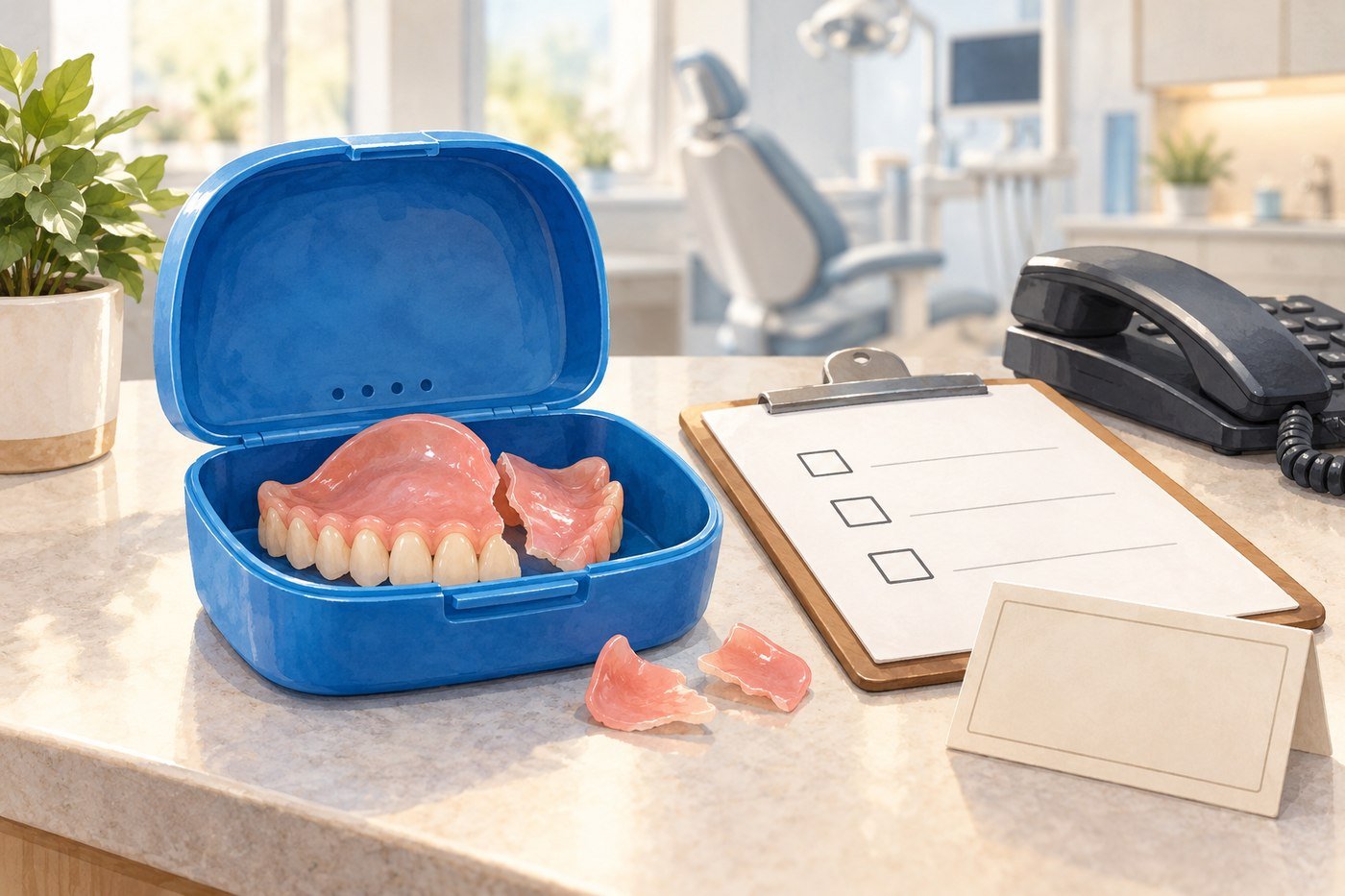
Keep every available piece together in a protective container. Bring the detached denture tooth, too. Do not glue the pieces, bend a clasp, grind a sharp edge or heat the appliance to reshape it. A home repair can make professional work harder or damage the denture further.
If it is sharp, unstable or hurting your mouth, leave it out and ask the office for advice. Do not force a partial denture into place by biting down. Ask how to store the pieces for your particular material; do not use hot or boiling water.
If you have already tried a repair, tell the team what product you used. That information helps the assessment. You do not need to hide an unsuccessful attempt or decide that the denture is beyond help yourself.
What to say when you call
A clear first call helps the team understand what you need. You can use a simple description like this:
“I have Health First Colorado. My upper denture broke yesterday, and I have the pieces. It was made at another office around three years ago. I need an assessment and help checking whether repair or replacement is the right next step.”
If it is missing, say that instead. Mention pain, mouth sores, difficulty eating and any deadline that matters to you. Then ask:
- Is the visit an assessment, or could treatment also happen?
- What should I bring, and can you request records from the previous office?
- What information is needed to check my benefits?
- When can the appliance be assessed, and when will timing be discussed?
An appointment to assess a broken denture is not a promise that it will be repaired that day. Give the office a chance to identify the work before relying on a collection time.
Make a small records checklist—not a paperwork project
Bring what you have; do not delay making the call because one item is missing. A short note on your phone can help you remember the important details:
- Your current Health First Colorado member information, if available.
- The name of the office that made the denture.
- The approximate delivery date and which upper or lower appliance is involved.
- Dates of repairs, relines or replacement requests you remember.
- The current denture and all pieces, if you still have them.
- A brief account of what happened and what has changed in your mouth or daily function.
Approximate dates are a starting point, not a reason to guess confidently. Tell the office when you are unsure and ask whether earlier records can establish the history. If a caregiver helps you organize care, share the checklist with them so the same information follows you between conversations.
What the assessment needs to answer
The appointment is about your mouth as well as the appliance. The dentist may need to consider sore areas, remaining teeth, how the denture fits and whether the problem keeps recurring. The useful question is not simply, “Can these pieces be joined?” It is, “Will the proposed work give me a usable result?”
A repair addresses damage to the denture. A reline changes its fit against the gums. Replacement involves making a new appliance. Which approach makes sense depends on the findings, not only the size of the visible crack.
For a fuller comparison, read our broken-denture repair or replacement guide. At the visit, ask the dentist to name the recommendation and explain why another option would not address the problem.
Will Colorado Medicaid pay for a repair or replacement?
Health First Colorado includes benefits for removable dentures and eligible repairs, but a lost appliance does not automatically qualify for a new one. The office needs to check the proposed service, your active eligibility and your denture history.
For standard adult benefits, the July 2026 DentaQuest summary lists an ordinary seven-year interval for complete or partial removable dentures. Lost, stolen or damaged-beyond-repair dentures can involve a separate prior-authorization review. DentaQuest’s April 2026 provider update describes a once-per-member-lifetime replacement benefit for circumstances outside the member’s control. That is not an automatic replacement whenever an appliance goes missing.
If the appliance was an immediate denture, tell the office. The current provider manual says immediate dentures do not qualify under that one-time lifetime replacement benefit; the office must check the applicable complete-denture service and review process instead.
A clinical recommendation and a benefit decision answer different questions. Our Colorado Medicaid dentures guide remains the detailed coverage reference. Do not apply an adult summary automatically to a child or another benefit program.
Leave with a plan while any approval is being checked
Before leaving, make sure you know which step comes next. An assessment, a benefit inquiry, an authorization request and the start of fabrication are not the same milestone.
Ask what has been submitted, whether more records are needed and whom to contact about progress. If a decision has not arrived, ask how the office will let you know and whether you should arrange a follow-up conversation. Keep the date, the contact and the next agreed step together.
If a request is not approved, ask for an explanation of the actual decision rather than assuming all denture care is unavailable. Find out whether the plan is waiting for information, concerns a particular service or needs a different discussion. Do not start a private-pay replacement based only on a general statement that “Medicaid will not cover it.” Ask for the proposed options and costs in writing.
Eating and mouth care while you are without the denture
Tell the team if being without the appliance is making meals difficult. Ask about food textures you can manage comfortably and how to protect sore areas. Do not keep using a painful or unstable denture just to get through a meal.
It can help to plan a few easy-to-manage meals rather than struggle with your usual menu. Ask which softer foods fit your health needs; a diabetes, swallowing or nutrition plan still matters. If eating or drinking is becoming difficult, contact your dental or medical team for individual advice.
Continue gently cleaning your gums, tongue and any remaining natural teeth. Ask for instructions if an area is sore. If you have an older backup denture, ask whether its fit is suitable before relying on it. After repair or replacement, keep the recommended fit checks and report rubbing or a change in comfort instead of trying to adjust the appliance yourself.
Arrange the next step in Denver
Call Star Dental at 303-222-1414 or request an appointment. Say whether your denture is lost, broken or no longer fitting, and mention Health First Colorado so the team can discuss what needs checking.
Review our dentures and denture repair services or Denver denture repair information before you call. Ask about assessment availability, what to bring and when the team can discuss the treatment options and expected timing. Bring the questions and records you have, even if the history is incomplete.
Common questions about lost or broken dentures and Medicaid
I lost my dentures. Should I call the dentist or DentaQuest first?
Do I have to wait seven years if my Medicaid denture breaks?
What if another dentist made the denture?
Mention that when scheduling and ask about assessment of the appliance. Bring the denture and all pieces if available, and ask whether earlier delivery and treatment records should be requested. Do not assume every material or repair can be managed the same way.
Can I glue my denture before the appointment?
Do not use household glue or a do-it-yourself repair kit. Save the pieces and contact the dental office. Home repairs can damage the appliance, affect the fit and complicate professional treatment.
Helpful next steps
Sources and further reading
Primary denture-care and Colorado coverage resources used for this guide:
- American Dental Association, MouthHealthy: Removable partial dentures.
- American Dental Association, MouthHealthy: Dentures.
- American Dental Association: Denture Care and Maintenance.
- American College of Prosthodontists: Frequently Asked Questions about Dentures.
- National Health Service: Dentures (false teeth).
- DentaQuest: Health First Colorado Adult Dental Benefit Summary, revised July 2026.
- DentaQuest: Health First Colorado Office Reference Manual, updated July 1, 2026, pages 62–63.