
Quick answer: when should you call?
A numb lip, chin or tongue immediately after wisdom teeth removal can come from the local anesthetic. But numbness that lasts beyond what your treating team told you to expect, is not easing, returns after sensation improved, or comes with burning or unusual pain deserves a prompt call to that team. Do not wait weeks to report it or assume an online recovery timeline applies to you.
Difficulty breathing or swallowing, or rapidly increasing mouth, tongue or throat swelling, needs emergency medical help. Call 911. Do not wait for a dental callback.
This guide explains what to report and how to protect an area with reduced feeling. It cannot determine the cause of your numbness or replace your surgeon’s discharge instructions.
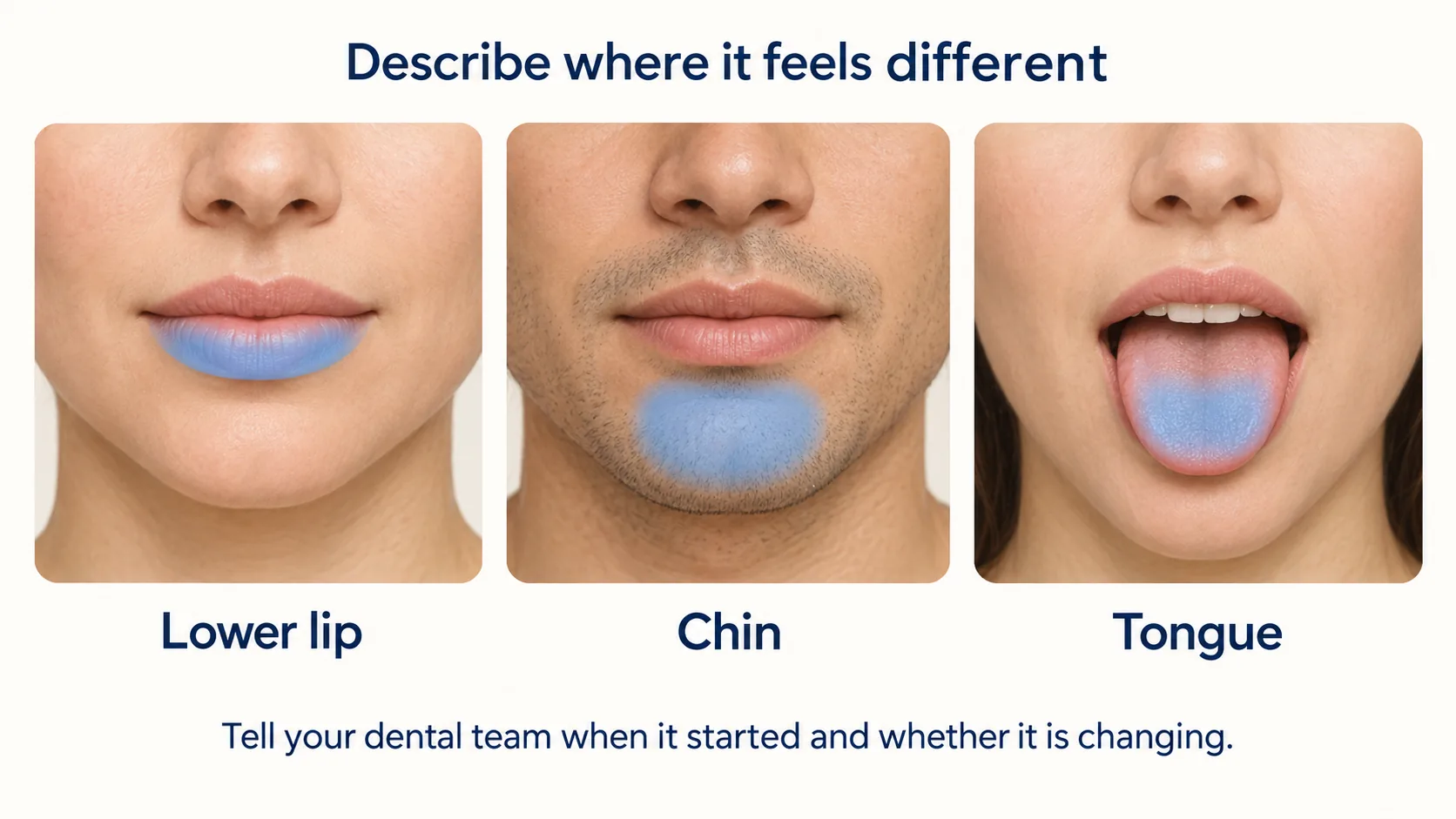
Numbing medicine or a change in sensation?
Local anesthetic temporarily blocks nerve signals in the treatment area. Your lip or tongue can still feel thick, tingly or unfamiliar after you leave the office. Sedation and local anesthesia do different jobs: sedation helps you feel relaxed or less aware, while local anesthetic numbs the area. Receiving IV sedation does not mean no numbing injection was used.
Ask the office what was given and what it expects for your procedure. The answer is more useful than comparing your experience with someone else’s exact number of hours. If you were not given a clear explanation, call for one. The NHS advises seeking advice when local-anesthetic side effects worry you or do not improve. Read the NHS local-anesthetic information.
Continued loss or alteration of feeling after surgery is a separate issue to assess. It can include reduced feeling, tingling, burning, unusual sensitivity or a change in taste. The symptom alone does not tell you whether a nerve was irritated, injured or is recovering.
Why the lip, chin and tongue can feel different
Two sensory nerves run near lower wisdom teeth. The inferior alveolar, also called inferior dental, nerve supplies feeling to the lower teeth, lower lip and chin on its side. The lingual nerve supplies feeling to the tongue on that side and is involved in taste. Their relationship to the tooth helps explain why an altered sensation can affect one area rather than the whole mouth.
These nerves can be stretched or bruised during lower wisdom-tooth surgery. A change in sensation may be temporary, but some changes can be lasting. Your tooth position, procedure and examination matter; a general risk percentage cannot predict your individual outcome. Newcastle Hospitals explains the relevant nerves and surgical risks.
Do not try to identify the affected nerve by repeatedly poking the area. Tell the clinician exactly where you notice the change. “My lower lip on the left feels numb” is more helpful than deciding for yourself that you have permanent nerve damage.
When to contact the treating team
Use the number on your discharge instructions. You do not need to wait until a routine follow-up appointment to raise a concern.
- Call promptly about altered feeling: it is lasting longer than the team explained, is not easing, has returned or changed, or is affecting eating, drinking or everyday comfort. If you are unsure whether it is expected, ask.
- Seek urgent dental advice: you also have worsening or severe pain, increasing swelling, fever, pus or a persistent bad taste, or bleeding that does not stop with the measures your treating team provided.
- Call 911 for emergency symptoms: breathing or swallowing difficulty, or rapidly increasing tongue, mouth or throat swelling. These are not symptoms to monitor through an online appointment request.
Numbness without those emergency signs still needs appropriate follow-up when it is unexpected or persistent. Conversely, a numb area does not make worsening pain or swelling safe to ignore. AAOMS advises contacting the surgeon about concerning postoperative symptoms. Read the AAOMS complication guidance.
What to say when you call
Have your discharge sheet available. Give the team a short, specific description:
- The date of surgery and which wisdom teeth were removed, if you know.
- Whether the change is in your lower lip, chin, tongue or another area, and which side.
- Whether it feels completely numb, partly numb, tingly, burning or unusually sensitive.
- When you first noticed it, whether feeling ever returned, and what has changed since.
- Any altered taste, accidental biting, difficulty managing food or drink, pain, swelling, fever or bleeding.
- The medicines you were prescribed and the follow-up instructions you received.
You might say: “My right lower wisdom tooth was removed yesterday. My right lower lip and chin still feel numb, and I have not noticed it easing. My tongue feels normal. What should I do, and when should I be examined?”
Ask who will review the concern, when you should expect a response and what changes require urgent help. A brief written symptom note can help you describe a trend without repeatedly testing the area.
Protecting numb tissues while you arrange advice
Reduced feeling can make a bite or burn harder to notice. Avoid hot food and drinks, and take care not to chew or bite the numb lip, cheek or tongue. Follow the eating and wound-care instructions your treating team gave you. Cambridge University Hospitals specifically warns about hot food and accidental lip or tongue biting after oral surgery. Read its postoperative advice.
Do not use needles, sharp objects, ice or hot items to test feeling. Do not massage the surgical area or start supplements, extra medication or a home “nerve repair” treatment on your own. Check treatment questions with the clinician; protecting the area is not a substitute for assessment.
What follow-up can clarify
The treating dentist or surgeon knows what happened during the procedure and can review your symptoms alongside the examination and records. The plan may include an assessment and further follow-up. Ask what the team is monitoring, when you should be checked again and whether a specialist opinion is appropriate.
Feeling better is useful information to report, but tingling by itself does not prove complete recovery. There is no dependable online deadline for when your sensation will return. Observation may be part of a clinician’s plan after assessment; it should not mean silently waiting weeks before telling anyone about a new concern.
This is different from a general recovery calendar. For food, swelling and wound-care questions, use our wisdom teeth recovery guide. For procedure planning, see wisdom teeth removal in Denver and our IV sedation guide.
Frequently asked questions
How long should numbness last after wisdom teeth removal?
There is no single deadline for every patient. Ask your treating team what to expect from the anesthetic and procedure you received. Call promptly if numbness lasts beyond that expectation, is not easing, changes or worries you.
Does a numb lip or tongue mean permanent nerve damage?
No. Local anesthetic and postoperative changes in sensation can both cause numbness. Some nerve-related changes are temporary and others can be lasting. Your symptoms need assessment; their location or duration alone cannot establish the outcome.
Should I wait a week or several weeks before calling?
Do not use a waiting period from the internet as your follow-up plan. Contact the treating team promptly about unexpected or persistent altered feeling, and follow its instructions for examination and review.
What if another dentist or surgeon removed my wisdom teeth?
Contact that treating team first because it has your surgical and anesthetic records. If you cannot reach it, use its after-hours instructions or seek dental advice. Emergency breathing or swallowing symptoms need 911, not a routine appointment.
Need a dental assessment in Denver?
Start with the team that performed your surgery. If you need a Star Dental appointment, call 303-222-1414 to describe the concern and check availability. You can also request an appointment; online requests require office confirmation and are not an emergency response service.
For related care, see our tooth extraction information and emergency dental appointment information.
Sources and further reading
Patient education from Star Dental. Sources checked October 11, 2026. This page does not diagnose a nerve injury or replace individual postoperative instructions.
- NHS: local anesthetic
- Newcastle Hospitals: surgical removal of teeth
- AAOMS: potential complications of wisdom teeth extractions
- Cambridge University Hospitals: postoperative advice
- NHS: wisdom tooth removal
- NHS: dental infection and emergency warning signs
- MedlinePlus: severe allergic-reaction warning signs