
A removable partial denture can replace missing back teeth while keeping useful natural teeth. The design depends on where the spaces are, which teeth remain and the health of the gums and bone supporting them. Having no tooth behind a gap does not automatically rule out a partial, but it changes how support and chewing pressure must be planned.
If your front teeth look fine but eating has become difficult, this is a reasonable question to bring to a denture evaluation. The goal is not simply to fill every visible space: it is to make a replacement you can use, clean and maintain.
Three common patterns of missing back teeth
“I need a partial for my back teeth” can describe very different mouths. Start by identifying whether the missing teeth form a space between teeth or extend all the way to the back. Your dentist then considers the entire arch, not just the gap.
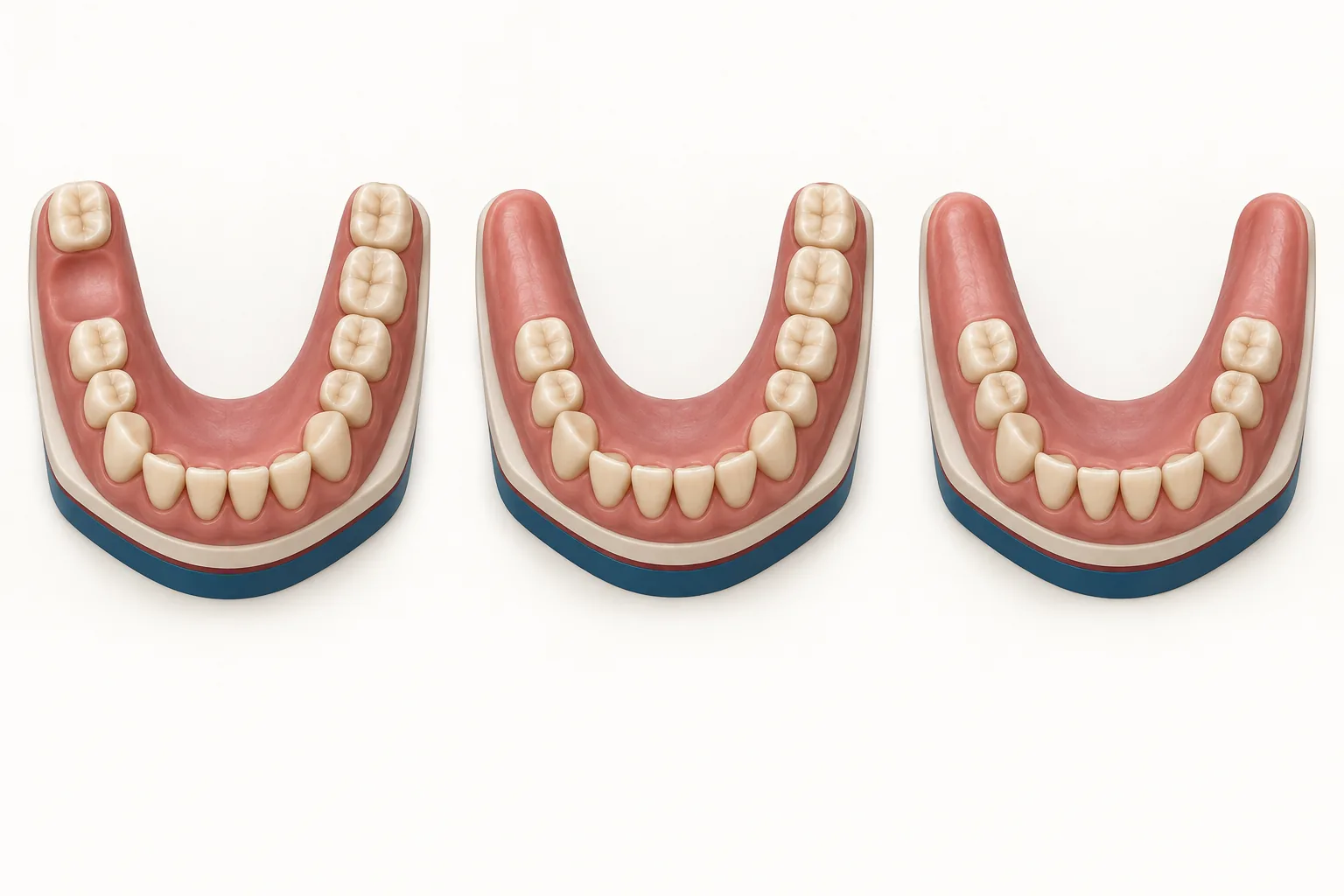
| Your situation | What the dentist considers | A useful question |
|---|---|---|
| A space with a natural tooth in front and behind | Whether those teeth are healthy enough to help support the replacement. | “Which teeth would support it, and do they need treatment?” |
| Missing molars at the end of one side | How the remaining teeth and gum-covered ridge can share support without a rear supporting tooth. | “How will you keep the back of the appliance stable?” |
| Missing back teeth on both sides | How one appliance can restore the spaces and distribute support across the arch. | “How will this design work when I chew on either side?” |
For example, two people may each be missing three teeth, yet need different designs because one has teeth behind the spaces and the other does not. These examples explain why a photograph or tooth count alone cannot determine the right appliance.
How does a partial stay in place?
A partial combines replacement teeth with a base and a supporting design that relates to the remaining mouth. Depending on the plan, attachments help retain it while other parts provide support and connect the replacement areas. The ADA’s partial-denture overview explains common bases and attachment approaches; it is not a list of materials available at every practice.
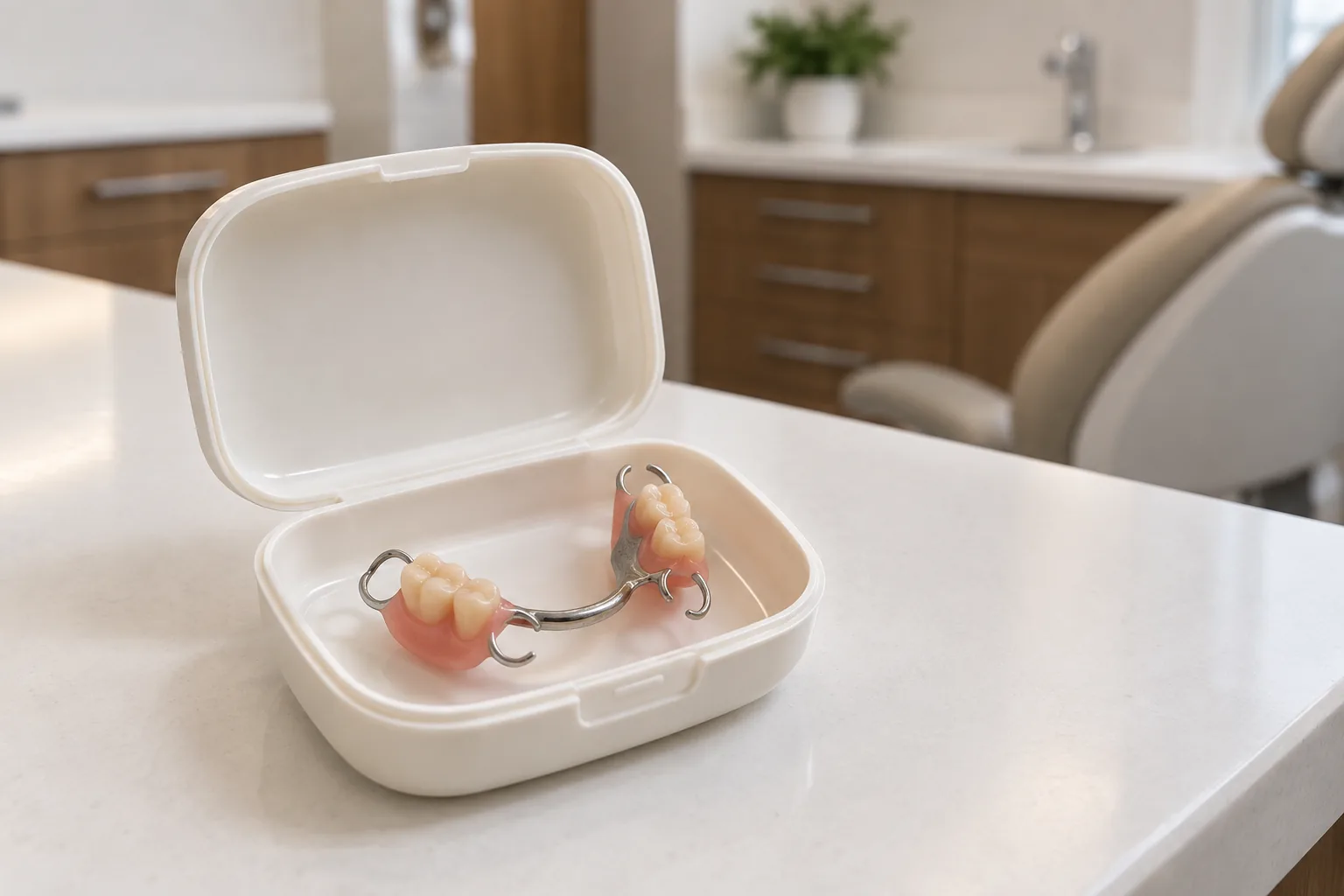
When teeth are missing beyond the last natural tooth, the denture base also relies on the gum-covered ridge. Gum tissue and teeth respond differently to pressure. That is why the shape of the base, the bite and the remaining teeth all matter. A clasp alone does not solve every movement problem. This support principle is discussed in clinical literature on distal-extension dentures; it does not establish one best design for everyone.
At a consultation, ask to see the proposed appliance on a model or drawing. Where will it touch your teeth? Which parts might be visible? How will you insert and remove it? Understanding those details is more useful than choosing by a material name or a picture found online.
What needs checking before a partial is made?
The appointment should connect your priorities with findings from your mouth. Mention foods you avoid, soreness, an old appliance you no longer wear and anything that makes cleaning difficult. Bring the old partial if you have it; explaining what worked and what did not gives the team a practical starting point.
- Remaining teeth: Which are sound, which need repair and which may not provide dependable support?
- Gums and supporting bone: Is gum disease present, and does it need attention before the appliance is planned?
- Bite and space: How do the upper and lower teeth meet, and where will the replacement teeth fit?
- Day-to-day use: Can you comfortably handle the appliance and clean around its supporting teeth?
- Treatment sequence: Are any preparatory visits needed before impressions and fitting?
Do not assume that every remaining tooth must be removed because several molars are missing. Equally, do not assume a painful or loose tooth can safely hold a new appliance. Ask the dentist to explain the outlook for each important supporting tooth before you decide. The general full versus partial denture comparison explains how the two categories differ.
Partial denture, bridge or another option?
A removable partial is one possible solution, not the automatic answer to every missing molar. The ADA’s missing-teeth guidance notes that missing teeth can affect chewing and that replacement choices depend on the individual mouth.
| Option | Main distinction | What to clarify |
|---|---|---|
| Removable partial | Replaces some teeth; you remove it for cleaning. | Support, stability, appearance and ongoing care of the remaining teeth. |
| Fixed bridge | A fixed replacement supported by suitable teeth or implants; you do not remove it yourself. | Whether the available support and gap make it appropriate. |
| Implant-based replacement | Uses implants as part of the support plan. | Suitability, treatment requirements and whether specialist evaluation is needed. |
| Complete denture | Replaces every tooth in one arch. | Why this would be considered instead of retaining useful teeth. |
This is an overview of options to discuss, not a promise that a particular procedure is suitable or available at Star Dental. For the fixed-versus-removable distinction, see the ADA’s bridge explanation. Ask for the reasons behind the recommendation, including what happens if you choose to defer replacement.
Eating, cleaning and getting used to the fit
Start with a manageable meal
A new appliance can feel unfamiliar. Follow the fitting instructions, begin with softer food in small pieces and practice chewing evenly. Think of a meal you can comfortably manage while learning, rather than testing the partial with your toughest food immediately. Do not force the appliance into position by biting down. These are part of the ADA’s adjustment guidance.
If a particular bite causes rocking, pinching or pain, note the location and contact the team. Describing “it tips when I chew on the left” is more helpful than trying to correct it yourself. An adjustment visit is a chance to check how the appliance works in your mouth, not evidence that you have failed to adapt.
Care for both the appliance and your mouth
Remove the partial for cleaning and follow the recommended cleanser and storage instructions for its materials. Denture cleaners are used outside the mouth and must be rinsed away before reinsertion. Keep cleaning the remaining teeth and the spaces between them; a removable replacement does not take over that job. The ADA’s denture-care guidance explains daily cleaning and fit checks.
Keep the planned follow-up visits even when chewing feels better. If the fit changes, ask whether the appliance, the supporting tissues or a natural tooth needs attention. Do not bend attachments, use household glue or file a sore area yourself.
Bring these questions to your consultation
- Which teeth would support my partial, and how healthy are they?
- What would the appliance cover, and what might show when I smile?
- Is treatment needed before the denture appointments begin?
- What should I expect from chewing, and what would count as a fit problem?
- Which fitting and follow-up visits are included in my written plan?
For financial planning, use the existing Star Dental denture cost guide. If you use Health First Colorado, the Medicaid denture guide explains the coverage questions to raise. Have the team verify your own benefits and any authorization requirements before treatment.
Common questions about partial dentures for back teeth
Can I get a partial denture if I have no back teeth?
Possibly. Some partial dentures replace teeth behind the last remaining natural tooth, with support planned around the available teeth and gum-covered ridges. The important question is whether the remaining teeth and tissues can support a useful, maintainable design.
Can one partial replace missing back teeth on both sides?
Yes, one removable appliance can replace spaces on both sides of the same upper or lower arch. That does not mean every person needs the same shape. An upper appliance and a lower appliance are separate designs.
Do I need a full denture just because my molars are missing?
Not necessarily. A full denture replaces all teeth in one arch. Missing molars alone do not establish that the remaining teeth should be removed. Ask which teeth are useful to keep and how they affect the replacement plan.
Will I be able to chew normally straight away?
Expect a learning period, not an instant return to every food. Begin with manageable textures and small pieces, following your dentist’s instructions. Report tipping, pinching or an uncomfortable bite so the team can check the fit.
Can I sleep with my partial denture in?
Follow the wearing schedule given for your appliance. Routine overnight removal is commonly recommended, although initial fitting instructions may be different. If you were not given a clear schedule, ask before deciding to wear it continuously.
Does the smallest partial denture work best?
Not always. A design must balance space, support and stability as well as comfort. Ask the dentist to show you why each part is needed and whether a different option could meet your goals. Small size alone is not a measure of fit.
What if the partial rocks or hurts a remaining tooth?
Contact the dental team for a fit and tooth check. Do not bend the attachments, file the base or bite harder to seat it. Explain where it moves or hurts and whether the problem started suddenly.
How do I find out the cost and whether my plan covers it?
Request an examination-based treatment plan and benefit check. Ask which preparatory care and follow-up visits are included. The existing Star Dental denture cost and Medicaid guides explain what to ask; an online guide cannot confirm an individual member’s approval.
Talk through a back-tooth replacement plan
Call Star Dental at 303-222-1414 to schedule a denture evaluation. Tell the team which teeth are missing and whether you have an existing appliance. Visit our denture services page for the practice’s denture and repair information.
Prepared by Star Dental. An examination is needed to recommend a replacement for your mouth.