
A regular cleaning supports prevention; periodontal maintenance supports gum health after periodontal treatment. A deep cleaning, usually meaning scaling and root planing, is active treatment for diagnosed gum disease. These appointments can involve similar instruments, but their purpose, assessment and follow-up are different. Your treatment history and current examination—not simply whether your teeth feel clean—help determine the appropriate visit.
If you expected an ordinary cleaning and were offered maintenance instead, it is reasonable to ask why. You should be able to understand what condition is being monitored, which parts of your mouth need attention and how the next appointment will be chosen.
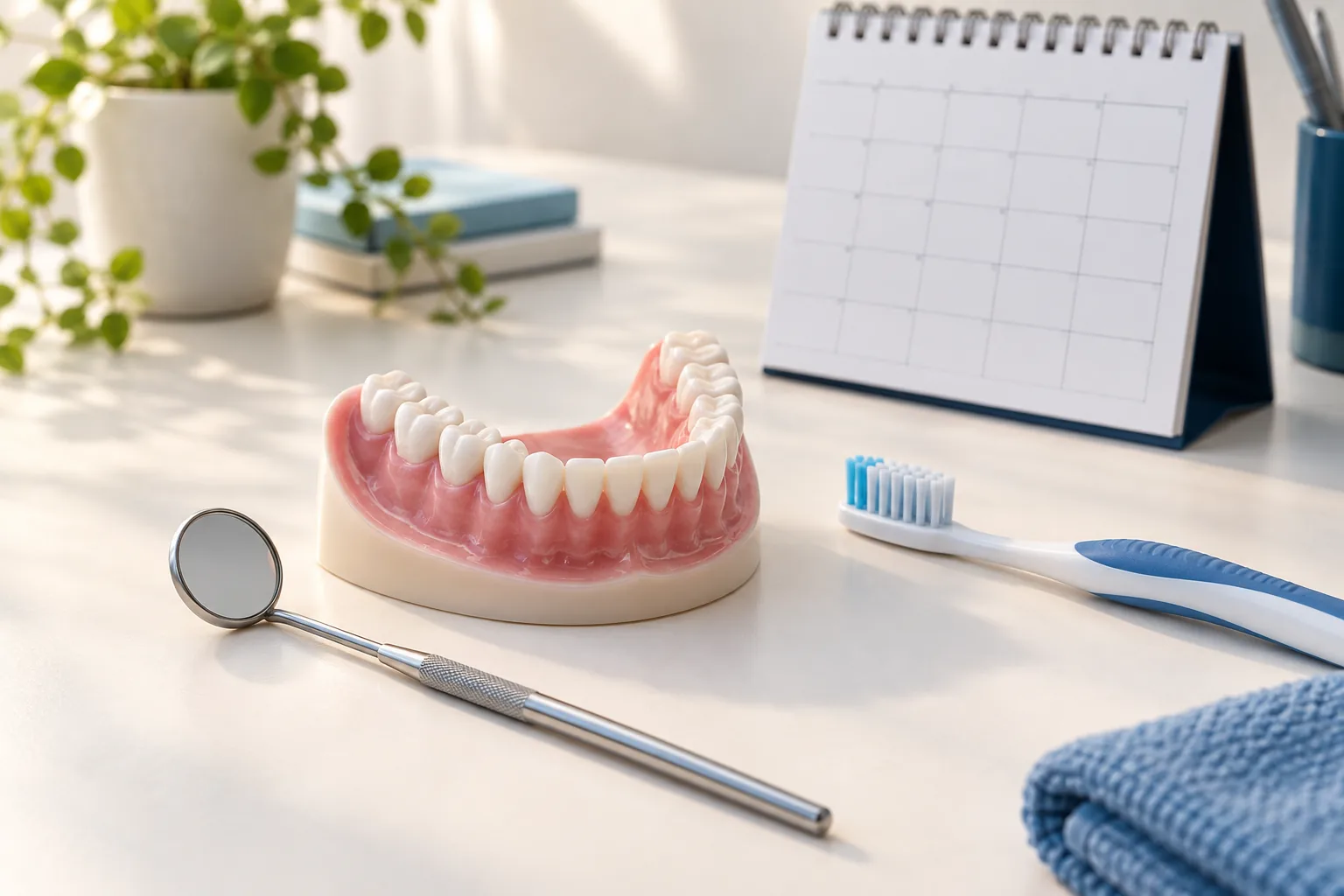
Three appointments, three different purposes
People often call any professional tooth cleaning a “cleaning.” That shorthand can hide an important distinction between preventing problems, treating existing disease and looking after a previously treated condition.
| Visit | Main purpose | What guides the plan? |
|---|---|---|
| Regular cleaning | Remove buildup and support prevention when the examination supports routine preventive care. | Current tooth and gum findings, home care and individual risk. |
| Active periodontal treatment | Treat diagnosed disease. Scaling and root planing cleans affected tooth and root surfaces below the gumline; other treatment may be considered when needed. | The diagnosis, affected areas and response to treatment. |
| Periodontal maintenance | Provide ongoing cleaning and monitoring after periodontal treatment, with attention to previously affected and currently vulnerable areas. | Treatment history, stability over time, remaining concerns and the ability to keep areas clean. |
These are not three upgrades on a menu. More intensive care is not automatically better for every person, and a routine cleaning is not automatically enough for every mouth. For preventive appointments, see our dental exams and cleanings page. Questions about a new diagnosis belong with a gum evaluation.
Why feeling better does not erase your gum history
After treatment, less bleeding and greater comfort can be encouraging. But “nothing hurts” and “the supporting tissues are stable” answer different questions. Gum disease can be present without pain, as the American Dental Association explains.
Periodontitis can damage the tissues and bone supporting teeth. A successful period of care does not mean that history disappears. The team needs to know what happened before, what has improved and whether any sites are changing. That is why a person who previously had gum treatment may receive a different recommendation from someone whose examination has consistently supported routine prevention.
A practical example
Two people say, “My gums feel fine.” One has no known history of periodontal treatment; the other completed treatment and has earlier records showing loss of tooth support. Their current comfort is similar, but their starting points are not. Ask how your own history affects the recommendation rather than comparing appointment names with a friend.
What happens during periodontal maintenance?
A maintenance visit is a chance to compare findings, clean the areas that need attention and adjust the plan. Depending on your situation, the team may:
- Update your medical and dental history, including medication changes, tobacco use and conditions such as diabetes.
- Assess gum inflammation and bleeding, measure relevant pockets around teeth and compare findings with earlier records.
- Remove plaque and hardened deposits above and below the gumline where indicated.
- Discuss a difficult-to-clean area and demonstrate a practical way to reach it.
- Explain whether the condition appears stable or needs further assessment or treatment.
Tell the team which areas bleed at home, whether food catches somewhere new and whether your bite feels different. These observations help focus the examination; they do not replace it. If you are unsure what a pocket measurement means, ask the clinician to point out the location and explain its significance alongside the other findings.
The National Institute of Dental and Craniofacial Research describes how gum measurements, medical history and imaging can inform assessment. X-rays are not automatically required at every maintenance appointment; ask whether imaging is indicated and what question it would help answer.
How often will you need maintenance?
There is no single interval that suits everyone. A recommendation should reflect your periodontal condition, treatment response and risk factors. The American Academy of Periodontology’s patient guidance describes tailoring follow-up rather than using one fixed schedule for all patients.
For example, if your plan calls for a visit in three months, ask what makes that interval appropriate for you. You might hear about areas that are difficult to clean, findings that need closer observation or a health factor that influences the plan. The useful explanation is specific to your mouth—not merely “that is our standard.”
Ask what would support keeping or changing the interval at a later assessment. Do not lengthen it solely because a benefit plan pays for fewer appointments, or shorten it yourself because another patient comes more often. If the schedule is difficult to manage, say so before you leave so the team can discuss your options.
Is maintenance another deep cleaning every time?
Not necessarily. Maintenance can include cleaning below the gumline, but it is not automatically a repeat of the original course of scaling and root planing. The American Academy of Periodontology distinguishes active treatment from the continuing maintenance that many patients need afterward.
If the team recommends more active treatment, ask what has changed, which areas are involved and why maintenance alone would not meet the need. A new recommendation deserves an explanation; it should not be hidden behind the word “cleaning.” For food choices, sensitivity and immediate instructions after scaling and root planing, use our separate after-deep-cleaning care guide.
What if you have missed visits or changed dentists?
Book an assessment and explain the gap without feeling that you need to arrive with everything sorted out. Missing maintenance does not, by itself, tell the dentist which treatment you now need. Likewise, having had a deep cleaning years ago does not establish what is happening today.
If possible, request your earlier periodontal chart, relevant X-rays and treatment summary. When calling a new office, say that you have had gum treatment and are seeking continuing care. This helps the team arrange the appropriate assessment rather than assuming you only need a routine preventive appointment. Mention new bleeding, swelling, pain or tooth movement when you call instead of waiting for the next scheduled cleaning.
Separate the care recommendation from the benefit check
There are two questions to resolve: “What care is appropriate?” and “What will my plan contribute?” An answer to one does not settle the other. Ask for the recommended appointment name, proposed procedure information and estimate before treatment, with a clear explanation of any examination or imaging charges.
For Colorado Medicaid, our existing deep-cleaning and periodontal benefits guide explains the coverage questions to check. Member eligibility, previous services and current program requirements need individual verification. This comparison does not confirm approval or promise a particular payment.
Five questions worth taking to the visit
- What is my current gum diagnosis, and what evidence supports it?
- Which findings have improved, stayed stable or changed since treatment?
- What does the recommended appointment include, and why is it different from a regular cleaning?
- What should I work on at home, and can you show me in my mouth?
- When should I return, what will be reassessed and what changes should prompt an earlier call?
Before leaving, try explaining the plan back in your own words. “We are watching these areas, I will try this cleaning technique, and we will reassess at the next visit” is more useful than remembering only a billing label.
Common questions
Can I ask for a regular cleaning instead?
You can ask the dentist to explain the alternatives and their limits. A routine cleaning should not be presented as equivalent to needed periodontal care. If you remain unsure, request your findings and treatment plan so you can discuss them or seek another opinion.
Does needing maintenance mean my treatment failed?
No. Continuing care can be part of the intended plan after treatment. The relevant question is whether your gum condition is stable and what still needs attention, not simply whether another cleaning appointment has been recommended.
Can careful brushing replace maintenance?
Home care and professional care do different jobs. Daily cleaning helps control plaque, but a toothbrush cannot remove hardened tartar or measure changes in tooth support. Ask for home-care advice suited to the spaces and surfaces you actually need to clean.
Will maintenance always be uncomfortable?
Comfort needs vary. Tell the team about sensitive teeth, previous difficult appointments or anxiety before cleaning begins. Ask what comfort measures may be appropriate and how to signal for a pause. The appointment name alone does not predict how it will feel.
Will I need the same schedule forever?
Do not assume that either a permanent fixed interval or a return to ordinary cleanings is automatic. Your history continues to matter, and follow-up should be reassessed using current findings and risk. Ask what the team will review before changing the plan.
Can my general dentist and a gum specialist share follow-up?
Care may be coordinated between offices when appropriate. Ask who is responsible for each visit, who will assess changes and how records will be shared. An appointment at one office should not leave you guessing whether another planned visit is still needed.
Ask for the right appointment in Denver
Call Star Dental at 303-222-1414 to discuss your gum-treatment history and arrange an assessment. Tell us whether you have had scaling and root planing or other periodontal treatment, when you last attended and whether you have new symptoms. Bring available treatment records and your benefit information.
Sources and editorial information
Prepared by Star Dental. This guide explains general dental care; your dental team’s examination and instructions guide your individual care.