
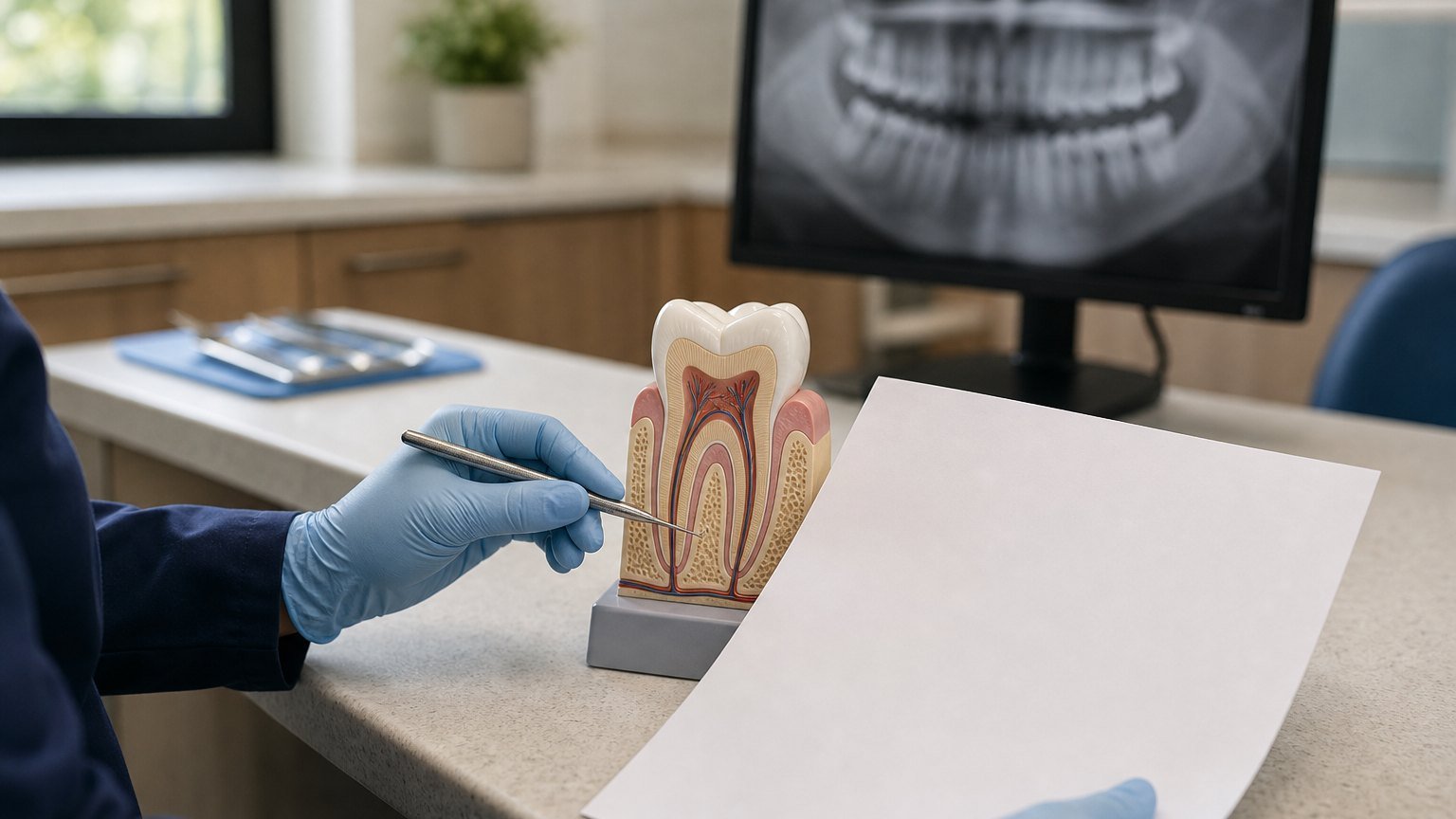
If you are trying to budget for a root canal, the most honest answer is that the total cannot be determined from a symptom or a search query alone. The dentist first needs to identify the painful tooth, review an appropriate X-ray and determine whether the tooth can be restored. The estimate may then include more than one part: diagnosis, root canal treatment and the filling or crown used to protect the tooth afterward.
Star Dental does not use one online price as a substitute for that evaluation. Instead, our team can explain the recommended treatment and provide an estimate based on the tooth, its anatomy, the planned restoration and your current benefits. Call 303-222-1414 to ask about an examination at our Denver office near Lakewood. We are open seven days; please call for current availability.
For symptoms, treatment steps and urgent warning signs, visit our Root Canal Treatment in Denver and Lakewood service page. This guide focuses specifically on understanding the estimate.
The three parts of a root canal estimate
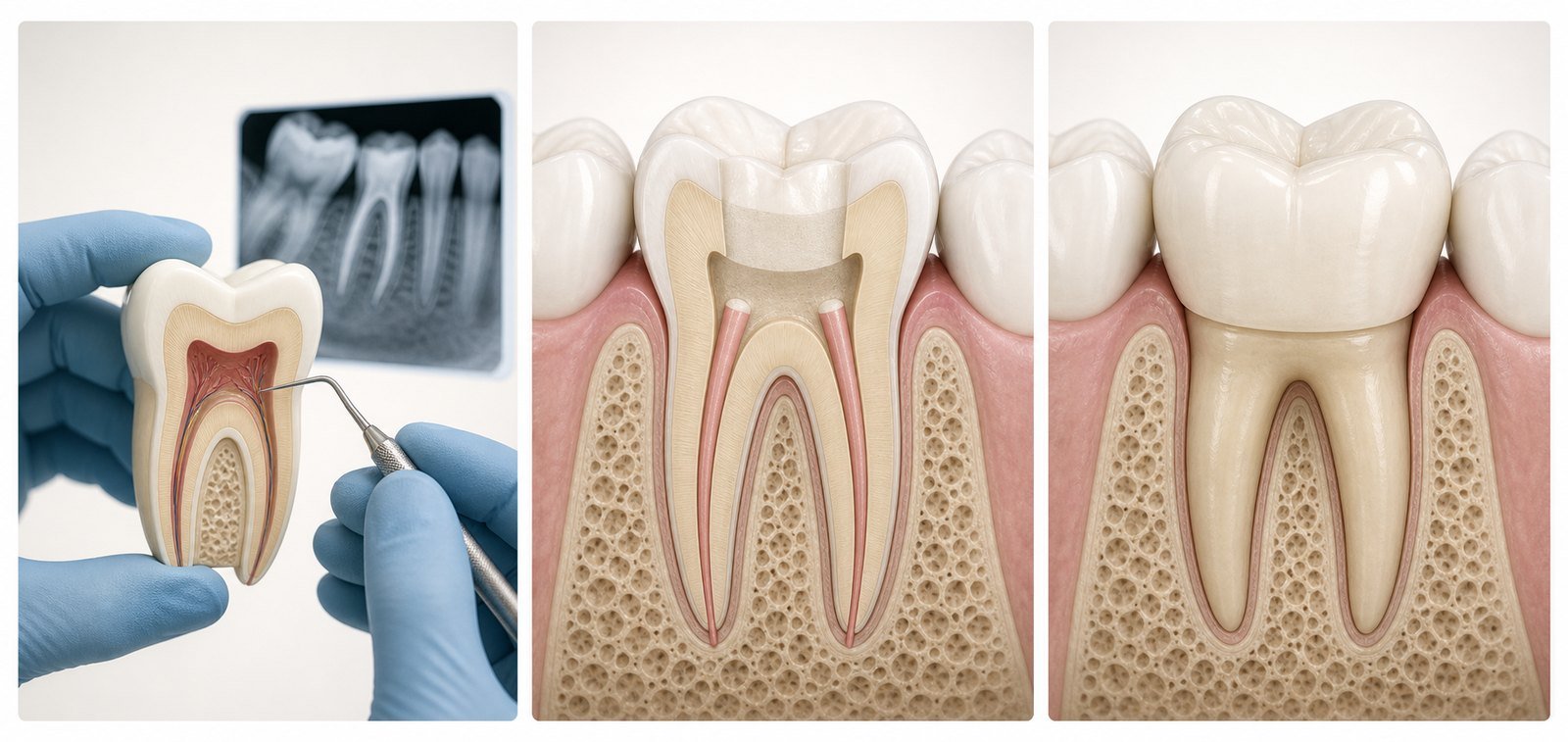
A clear estimate should help you see which services are included and which are separate.
1. Examination and diagnostic imaging
Tooth pain can come from decay, a crack, inflamed pulp, an abscess, the gums, the bite or even another tooth. The dentist combines your history and symptoms with a clinical examination and any imaging needed for diagnosis. Additional images or tests may be recommended when the anatomy or source of pain is not clear.
2. Root canal treatment
During root canal treatment, inflamed or infected pulp is removed and the internal spaces are cleaned, shaped, filled and sealed. The treatment fee can vary by the tooth and the clinical complexity described below. A first-time root canal is not the same service as retreating a tooth that was previously treated.
3. The final restoration
The root canal treats the inside of the tooth; it does not automatically rebuild all tooth structure lost to decay, fracture or prior dental work. Depending on the tooth and how much sound structure remains, the dentist may recommend a bonded restoration, a buildup and/or a crown. Ask whether the temporary restoration, buildup and final crown are separate line items. Our Dental Crowns page explains why a crown may be recommended, and the Dental Crown Cost in Denver guide explains that estimate separately.
Clinical details that can change the estimate
Which tooth needs treatment
Front teeth, premolars and molars do not all have the same internal anatomy. Back teeth often have more canals and can require more time to locate, clean and seal. The exact anatomy—not simply whether the tooth is visible when you smile—helps determine complexity.
The number, shape and accessibility of the canals
Canals can be narrow, curved, calcified or otherwise difficult to reach. A crown, large filling or other existing restoration may also affect access. These details may not be apparent until the dentist reviews the tooth and its imaging.
First treatment versus retreatment
Retreatment of a previously treated tooth may require removal of existing filling material, a post, a core or a crown before the canals can be evaluated and cleaned again. A complicated case may require care from an endodontist. If referral is recommended, the specialist’s services should be estimated separately.
Infection, swelling and urgency
An emergency examination may be needed before the definitive procedure. Incision and drainage or another urgent service can be separate from root canal treatment. The American Dental Association advises that antibiotics are not a substitute for definitive dental treatment for most pulpal and periapical conditions. They may be indicated in certain situations, including when an infection has systemic involvement; the treating dentist must make that decision.
The restoration needed after treatment
The amount and location of remaining tooth structure affect whether a filling, buildup, post or crown is recommended. A crown is not automatically included in a root canal quote. Ask for both stages to be shown so you understand the cost of treating and then protecting the tooth.
What may be separate from the root canal fee?
Depending on the diagnosis and treatment plan, an estimate may list some of these services separately:
- A limited or comprehensive dental examination
- Dental X-rays or other clinically indicated imaging
- Emergency treatment performed before the root canal
- A temporary filling, core buildup or post
- A permanent filling or dental crown
- Removal of an existing restoration when required
- Endodontic retreatment or endodontic surgery
- Services provided by a specialist
- Prescribed medication, when clinically indicated
Not every patient needs every item. The purpose of an itemized estimate is to show what applies to your tooth.
Root canal cost with dental insurance
Many dental plans provide some coverage for medically necessary root canal treatment, but coverage is not the same as a promise that the plan will pay the entire amount. Your share can be affected by:
- Whether the dentist or specialist participates with your plan
- Your deductible and remaining annual maximum
- The plan’s percentage or allowance for endodontic treatment
- Waiting periods, frequency rules or exclusions
- Whether the crown or other final restoration is covered separately
- Whether authorization or a pretreatment estimate is required
Star Dental accepts many PPO dental plans. Participation and benefits vary by plan. Bring your current insurance information so our team can check available benefits. The insurance company makes the final claim determination.
Root canals and Health First Colorado Medicaid
Health First Colorado may cover medically necessary root canal treatment when current eligibility, clinical criteria and program requirements are met. Coverage can depend on the tooth, diagnosis, benefit rules and authorization requirements. Star Dental can check current benefit information and authorization requirements for the recommended treatment and explain the available estimate before care.
Effective July 1, 2026, Health First Colorado adult dental benefits have a $3,000 annual benefit limit for each July 1–June 30 benefit year. DentaQuest states that emergency treatment and dentures are not subject to that limit. Whether a particular service is covered and how it is processed depends on current program rules and the claim. See our Colorado Medicaid Dental Coverage guide and Medicaid Dentist service page for current patient guidance.
If you use Health First Colorado, the adult dental benefit planner can help organize questions about your proposed treatment and the remaining benefit to confirm with the office or DentaQuest.
Planning a root canal as a self-pay patient
If you are paying without insurance, ask for a written estimate after the examination. A useful discussion should answer:
- Which tooth needs treatment, and what findings support the diagnosis?
- Is this a first root canal or a retreatment?
- Is the examination and imaging included in the estimate?
- Is a temporary restoration included?
- Will the tooth need a buildup, post, filling or crown afterward?
- Is specialist care expected?
- Which part is needed now, and which part is a separate follow-up visit?
Do not compare two quotes until you know whether they include the same stages of care. A quote for the root canal alone cannot be directly compared with an estimate that also includes the final crown.
When cost research should not delay care
Call a dentist promptly for increasing facial swelling, fever, a bad taste or drainage, severe pain, or difficulty opening your mouth. If swelling is affecting breathing or swallowing, involves the eye or neck, or you believe the situation is life-threatening, call 911 or go to an emergency department. Emergency medical care can address immediate medical risk, but dental follow-up may still be necessary to treat the source.
Get a root canal estimate based on your tooth
Star Dental welcomes new patients from Denver and Lakewood, is open seven days, accepts Health First Colorado Medicaid and most major PPO plans, and has Spanish-speaking staff available. Call 303-222-1414 for current availability or request an appointment online. An examination and appropriate imaging are needed before the dentist can diagnose the problem and provide a treatment estimate.
Root canal cost: frequently asked questions
How much does a root canal cost in Denver?
There is no single fee that applies to every tooth. The estimate depends on the tooth, canal anatomy, whether it is a first treatment or retreatment, diagnostic needs and the restoration required afterward. Star Dental can provide an estimate after an examination and appropriate imaging.
Is a crown included in the root canal cost?
Not necessarily. Root canal treatment and the final restoration are distinct services. Depending on the tooth and remaining structure, the dentist may recommend a filling, buildup and/or crown. Ask for each recommended stage to appear on the estimate.
Does dental insurance cover root canals?
Many plans provide some coverage for medically necessary root canal treatment, but deductibles, annual maximums, plan allowances, network rules and exclusions can affect the patient’s share. The crown or other final restoration may be processed separately. Benefits should be verified for the individual plan.
Does Health First Colorado Medicaid cover root canals?
Health First Colorado may cover medically necessary root canal treatment when eligibility, clinical criteria and current program requirements are met. Effective July 1, 2026, adult dental benefits have a $3,000 annual limit for each July 1–June 30 benefit year; emergency treatment and dentures are excluded from that limit. Star Dental can check current benefit information for the individual patient and recommended service.
Why can a molar root canal be more complex?
Molars often have more canals and can have curved, narrow or difficult-to-access anatomy. The dentist must evaluate the specific tooth before determining the treatment plan or estimate.
Can I receive an estimate before root canal treatment?
Yes, an estimate can usually be prepared after the dentist identifies the tooth, completes the examination and reviews appropriate imaging. Ask for an itemized estimate showing the root canal, any temporary restoration and the recommended final restoration.
Sources
- American Association of Endodontists: What Is a Root Canal?
- American Association of Endodontists: Endodontic Retreatment Explained
- American Dental Association: Antibiotics for Dental Pain and Swelling Guideline
- DentaQuest: Health First Colorado Adult Dental Benefit Summary, revised July 2026
- DentaQuest: Change to the Health First Colorado Adult Dental Benefit Limit
- DentaQuest: Colorado Provider Newsletter, July 2026