01
Throbbing Toothache
Deep, constant or rapidly worsening pain may radiate toward the ear, jaw or neck.

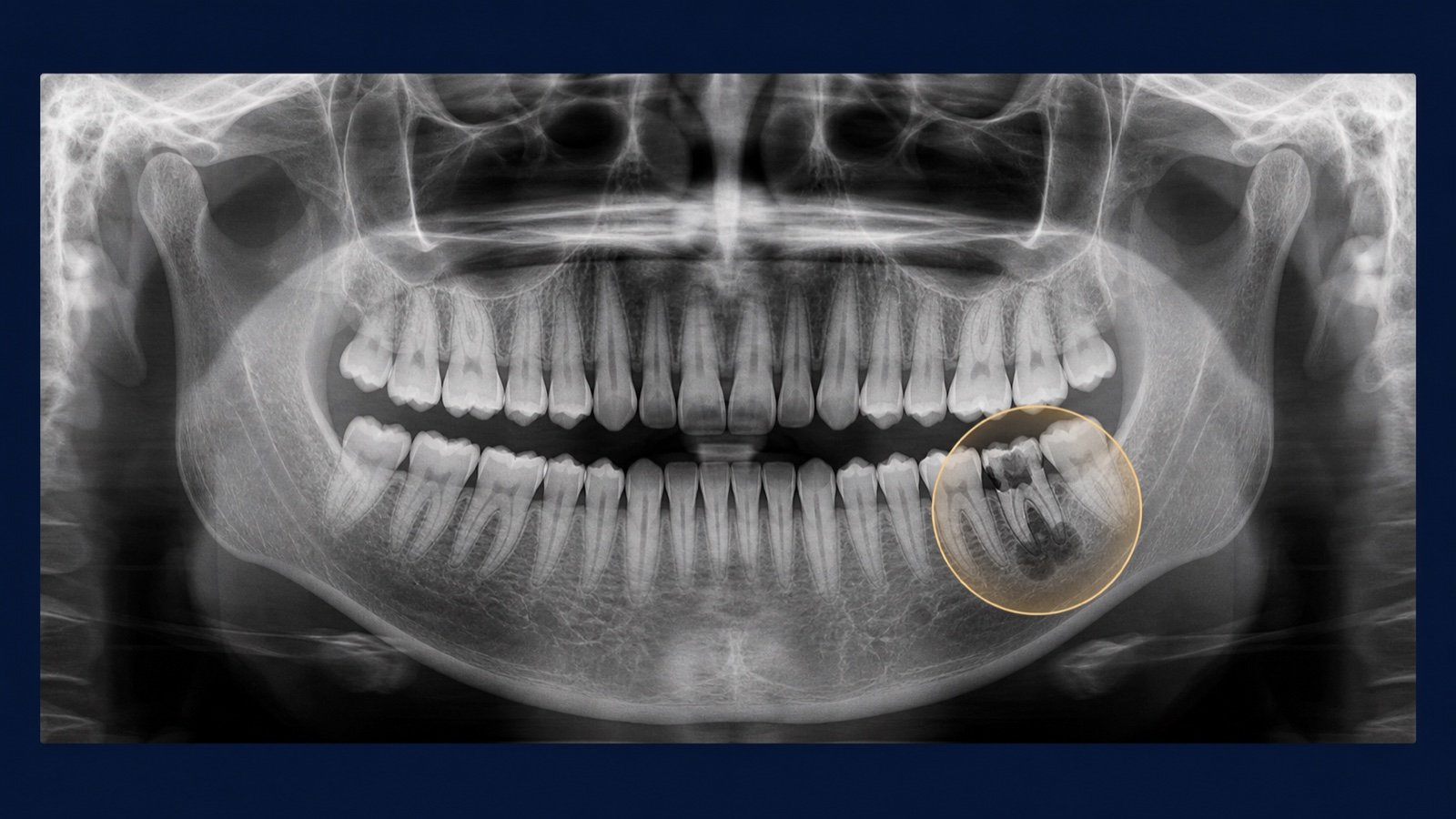
A dental abscess is a pocket of infection that can form around a tooth or in the gums. It usually does not resolve without dental treatment and can spread beyond the tooth. Call promptly for pain, swelling, fever, drainage or a bad taste.
PLAN YOUR NEXT STEP
A throbbing tooth, gum swelling, a bad taste or a swelling that comes and goes can be a reason to call for an urgent dental assessment. The dentist needs to find where the problem starts: inside a tooth, around the gums, or somewhere else. Symptoms alone cannot tell you which treatment will work.
A dentist may need to release a collection of infection. This is not something to do at home, and it may be only one part of treating the cause.
When the infection starts inside a tooth that can be restored, root canal treatment may help keep it. An exam and images establish whether that is a suitable option.
Extraction may be recommended if the tooth cannot be predictably saved. Whether treatment can begin at the first visit depends on the findings, your health and appointment capacity.
Antibiotics may be prescribed when the dentist determines they are needed, including some infections with systemic or spreading signs. For many localized dental problems, dental treatment—not antibiotics alone—is the priority. If the pain settles, keep the assessment: an untreated source can remain even when symptoms feel better.
Do not wait for a dental appointment if you have trouble breathing or swallowing, swelling near an eye or rapidly spreading face or neck swelling. Call 911 or go to an emergency department. For localized symptoms without those signs, call Star Dental promptly and describe any fever, swelling or change in your condition.
Star Dental accepts Health First Colorado Medicaid. We verify current eligibility and coverage for the recommended care; not every urgent procedure is automatically approved. Read how to reserve an emergency Medicaid dental appointment, what happens before an emergency extraction, or tooth-saving emergency root canal care.
Sources: ADA: dental abscesses · ADA: antibiotics and dental infection · NHS: abscess symptoms and urgent care.
Yes. Drainage or reduced pain does not prove that the source of infection has been treated. Contact a dentist for assessment even if pressure eases or a gum bump opens. Do not squeeze or puncture it yourself. Trouble breathing or swallowing, swelling near the eye, or rapidly spreading face or neck swelling needs emergency medical care.
Symptoms can vary, and pain may decrease if pressure drains even though infection remains. An exam and X-rays help locate the source and choose definitive treatment.
Deep, constant or rapidly worsening pain may radiate toward the ear, jaw or neck.
A swollen cheek, jaw or gum can mean infection is spreading into surrounding tissues.
Fever, chills or fatigue with dental swelling may indicate a more significant infection.
A gum bump that releases fluid can reduce pressure but does not eliminate the source of infection.
Inflammation around a tooth root may make the tooth feel raised, tender or painful with pressure.
Increasing stiffness, swallowing problems or rapid swelling are warning signs that require urgent assessment.
Treatment must address the source. Depending on the tooth and infection, care may include draining the abscess, root canal treatment to save a restorable tooth, or extraction when the tooth cannot be saved. Antibiotics may be prescribed when infection is spreading or there are systemic signs, but antibiotics alone usually do not remove infected tissue inside a tooth. Delaying definitive care can allow infection to return or progress.
We begin with a diagnosis, explain the options and help you understand the next step. Treatment is based on your examination, health history and individual needs.
Describe swelling, fever, drainage, medical conditions and how quickly symptoms are changing.
The dentist examines the area and uses X-rays when needed to find the source.
Treatment may involve drainage, root canal therapy or extraction based on the diagnosis.
Complete prescribed medication and return for definitive restoration or healing checks as directed.
Seek emergency medical care for trouble breathing or swallowing, uncontrolled bleeding, severe facial trauma, confusion, or rapidly increasing swelling that may affect the airway or eye. These signs are beyond routine dental-office care.
Star Dental welcomes new patients, accepts Health First Colorado Medicaid and most PPO plans—including many Delta, Cigna, Aetna, MetLife and Guardian plans—and has Spanish-speaking staff available every day. Benefits and coverage are confirmed for each patient. Same-day appointments may be available; call for availability.
Find us at 1490 S Sheridan Blvd in the King Soopers plaza, with free onsite parking and wheelchair accessibility. New patients should arrive 10–15 minutes early with photo ID and insurance information.
Call for current availability or send an online appointment request. We respond to phone calls and online requests promptly.
PATIENT GUIDES