
Some soreness is expected after a tooth is removed. Dry socket is different: pain becomes severe or worsens instead of following the recovery pattern your dentist described, often within a few days of the extraction. The pain may spread toward the ear, temple, eye or neck on the same side.
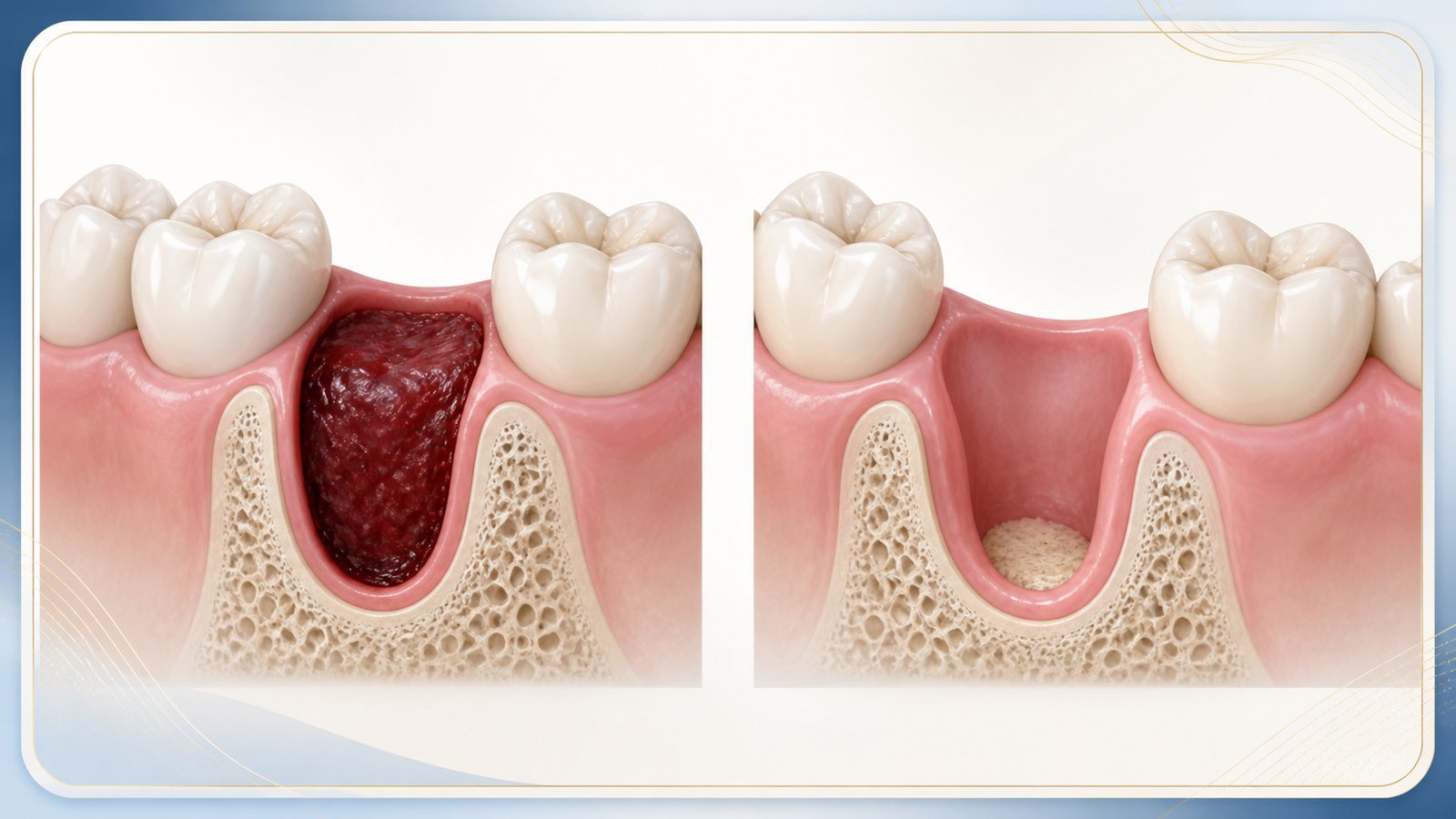
Dry socket—also called alveolar osteitis—occurs when the protective blood clot in an extraction socket is lost, breaks down or does not form properly. The underlying bone and sensitive tissues become exposed, which can cause significant pain and delay healing.
Dry socket is treatable, but it should be evaluated by a dentist or oral surgeon. Do not try to diagnose or pack the socket yourself.
Why the Blood Clot Matters
After an extraction, a clot forms in the opening where the tooth was located. That clot protects the area while new tissue begins to develop. Activities that disturb the clot can interfere with healing.
Dry socket does not mean that every extraction problem is an infection. It is a healing complication involving the socket. However, infection, retained debris and other post-operative problems can cause overlapping symptoms. An examination is the reliable way to identify the cause.
Common Dry Socket Symptoms
Contact the treating dental office if you notice:
- Severe pain that appears or increases within a few days after extraction.
- Pain that travels from the socket toward the ear, temple, eye or neck on the same side.
- A socket that appears empty or has visible bone.
- Bad breath or a foul smell or taste.
- Pain that is increasing or is not responding as expected to the recommended pain plan.
Appearance alone is not enough to diagnose dry socket. A normal healing socket can look unfamiliar, and a whitish layer can be part of healing tissue rather than infection or exposed bone. Avoid pulling, scraping or probing anything in the socket.
Expected Recovery vs. a Reason to Call
Every extraction is different, and the clinician’s instructions should define what is expected for that procedure. This comparison is a general guide, not a diagnosis.
| Recovery pattern | More consistent with expected healing | Reason to contact the dental office |
|---|---|---|
| Pain | Soreness that follows the expected pattern and begins to improve | Severe pain, pain that worsens after initial improvement or pain not controlled as expected |
| Swelling | Mild to moderate swelling that follows the post-operative instructions and then subsides | Increasing or severe swelling, swelling with fever, pus or worsening illness |
| Taste or breath | Temporary changes associated with healing or medicines | New or worsening foul taste, odor or drainage, especially with increasing pain |
| Bleeding | Light oozing early in recovery that responds to the instructions provided | Heavy, persistent or recurrent bleeding that does not stop with directed pressure |
| Function | Temporary tenderness with chewing or opening | Increasing difficulty opening the mouth, swallowing or managing fluids |
When in doubt, call. The team may ask about the timing, pain pattern, swelling, temperature, medications and whether the symptoms followed a wisdom-tooth or other extraction.
When Does Dry Socket Usually Begin?
The American Association of Oral and Maxillofacial Surgeons describes severe dry-socket pain as typically developing within a few days after extraction. MedlinePlus likewise notes that the clot may be lost days after the procedure.
Pain immediately after the numbing wears off is not by itself proof of dry socket. The trend matters: pain that becomes severe, radiates or worsens after it had started to settle deserves a call.
Who Has a Higher Risk of Dry Socket?
Dry socket can occur even when a patient follows instructions. Factors associated with increased risk include:
- Smoking or other tobacco use.
- A difficult or more involved extraction.
- Vigorous rinsing or repeated forceful spitting early in recovery.
- Drinking through a straw soon after extraction.
- Poor oral health.
- A prior history of dry socket.
- Certain medicines, including oral contraceptives, which should be discussed with the treating clinician.
Do not stop a prescription medicine or contraceptive on your own. Tell the dentist or oral surgeon about all prescription drugs, nonprescription medicines, supplements, medical conditions and prior extraction complications.
How to Reduce the Risk
The most important prevention step is to follow the post-operative instructions provided for your procedure. General measures commonly include:
- Avoid tobacco during healing. Smoking and tobacco can interfere with healing and increase dry-socket risk. Ask for help if stopping is difficult.
- Do not create suction. Follow the written instructions for your procedure. Star Dental's current wisdom-tooth aftercare instructions say to avoid straws, forceful spitting and vigorous rinsing for at least seven days unless your clinician gives different individualized instructions.
- Do not rinse or spit forcefully. Follow the exact timing and method your clinician gives you for mouth rinsing.
- Keep fingers, the tongue and objects away from the socket. Do not check the clot by touching it.
- Brush carefully. Continue oral hygiene as directed while avoiding trauma to the surgical area.
- Follow food instructions. Choose the recommended foods and chew away from the site when possible.
- Take medicines only as directed. Do not place aspirin, crushed tablets, essential oils, household remedies or non-prescribed dressings into the socket.
Star Dental Wisdom Teeth Post-Op Instructions
What a Dentist May Do for Dry Socket
Treatment is intended to reduce pain, remove trapped material and support healing. After examining the area, a dentist may:
- Gently clean or irrigate the socket.
- Place a medicated dressing or paste.
- Provide instructions for changing a dressing or returning for follow-up.
- Recommend or prescribe an appropriate pain-control plan.
- Provide a rinsing or irrigation plan when indicated.
- Evaluate for infection or another complication and prescribe antibiotics only when clinically appropriate.
Antibiotics are not a substitute for examining a severely painful socket. Do not use leftover antibiotics or another person’s prescription.
What Not to Do if You Suspect Dry Socket
- Do not pack the socket with cotton, tissue, food, herbs or an online remedy.
- Do not place aspirin or crushed pain medicine directly on the gums or socket.
- Do not scrub, scrape or probe the socket to see whether bone is exposed.
- Do not smoke or vape while the site is healing.
- Do not keep increasing medication beyond the labeled or prescribed dose.
- Do not delay calling because there is no visible swelling; dry socket can be very painful without looking dramatic.
Dry Socket, Infection or Another Complication?
Dry socket commonly produces severe localized and radiating pain. Fever, chills, pus, rapidly increasing swelling or feeling systemically ill can suggest infection or another complication and should be reported promptly. Persistent heavy bleeding, rash, hives or trouble swallowing also requires urgent assessment.
Call 911 or go to an emergency department for chest pain; shortness of breath or difficulty breathing, speaking or swallowing; rapidly spreading swelling toward the eye, neck or airway; uncontrolled bleeding; fainting or a severe medication reaction.
When to Call Star Dental
Call 303-222-1414 if:
- Your extraction pain is severe, increasing or not improving as expected.
- Pain spreads toward your ear, eye, temple or neck.
- You notice a foul taste, odor, drainage or visible bone.
- Swelling is increasing or you have fever or chills.
- Bleeding continues despite following the pressure instructions you received.
- You are unsure whether your recovery is normal.
If another office performed the extraction, contact that clinician first when possible because they know the procedure and aftercare plan. If they cannot be reached, tell Star Dental when and where the extraction was performed, which tooth was removed, what medicines you are taking and how the symptoms have changed.
Dry Socket FAQs
What does dry socket feel like?
It commonly causes severe, deep pain in or around the extraction site. The pain may radiate toward the ear, temple, eye or neck on the same side and may be accompanied by foul taste, odor or visible bone.
Can I have dry socket if the extraction site looks normal?
Yes. Appearance alone cannot confirm or rule out dry socket. A dentist considers the pain pattern, timing and clinical examination. Do not probe the site to inspect it.
How soon after an extraction can dry socket happen?
Dry-socket symptoms typically develop within a few days after the tooth is removed. Call if pain becomes severe, worsens after initial improvement or is not following the recovery pattern you were given.
Is dry socket an infection?
Dry socket is primarily a problem with the protective clot and healing socket, not automatically a bacterial infection. Infection and other complications can cause similar symptoms, so the area should be examined.
Will dry socket heal on its own?
The socket can eventually heal, but untreated pain may be severe and another condition could be missed. Dental treatment can relieve symptoms, remove debris and support healing. Contact the treating office rather than waiting through worsening pain.
Do I need antibiotics for dry socket?
Not necessarily. A dentist may use local cleaning, a medicated dressing and pain management. Antibiotics are considered when the examination identifies infection or another clinical reason; they should not be self-started.
Can smoking or using a straw cause dry socket?
Both are recognized risk factors because tobacco can impair healing and suction can disturb the clot. Follow the exact restrictions in your post-operative instructions.
Should I go to the emergency room for dry socket pain?
Call a dentist or oral surgeon promptly for suspected dry socket. Use emergency medical care for breathing or swallowing difficulty, rapidly spreading swelling, uncontrolled bleeding, serious facial trauma, fainting or a severe medication reaction.
Talk With Star Dental
For concerning pain after an extraction, call 303-222-1414 and describe when the tooth was removed and how the symptoms have changed. Star Dental serves Denver and Lakewood seven days a week. Current appointment and treatment availability must be confirmed by phone.
Sources
- MedlinePlus Medical Encyclopedia. Dry socket. https://medlineplus.gov/ency/patientinstructions/000780.htm
- American Association of Oral and Maxillofacial Surgeons. What Is Dry Socket? https://myoms.org/what-we-do/extractions-and-dentoalveolar-surgery/dry-socket/
- MedlinePlus Medical Encyclopedia. Tooth extraction. https://medlineplus.gov/ency/article/007630.htm
- American Association of Oral and Maxillofacial Surgeons. Potential Complications of Wisdom Teeth Extractions. https://myoms.org/what-we-do/wisdom-teeth-management/potential-complications-of-wisdom-teeth-extractions/