
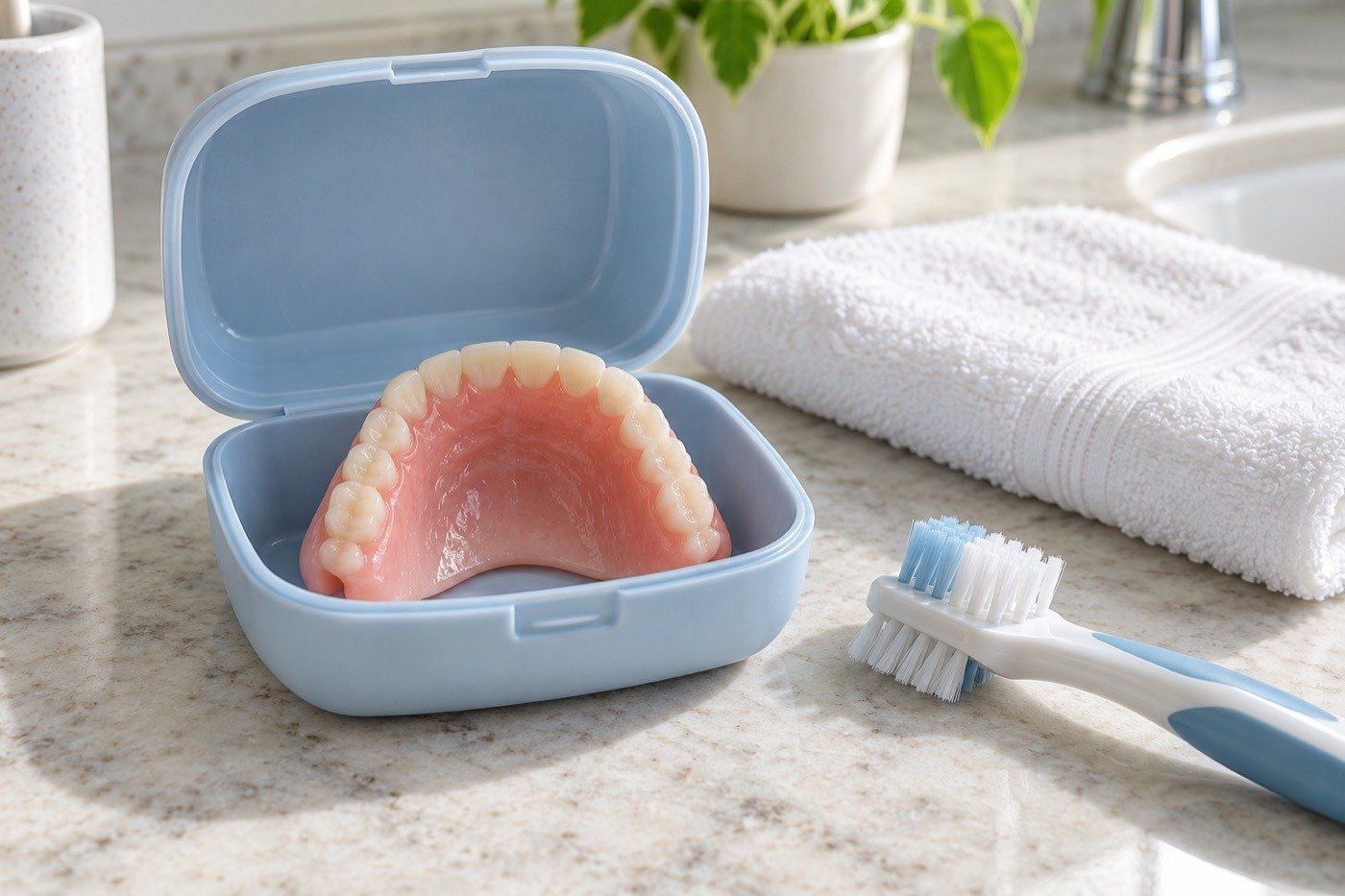
Stained dentures do not automatically need repair or replacement. A cleaning concern is different from a crack, a loose denture tooth or a change in fit. Start with the care instructions for your particular appliance. If a mark stays, the surface feels rough, or the denture becomes uncomfortable, have it assessed instead of scrubbing harder or trying a stronger household product.
Do stained dentures need cleaning or repair?
People sometimes use “stain repair” to describe several different problems. Start with what changed: the color, the surface, a piece of the appliance, or the way it sits in your mouth. Describe the surface and fit as well as the color; similar-looking marks can need different kinds of attention.
| What you notice | What to explain to the dental team | A useful next step |
|---|---|---|
| A yellow, brown or dark mark, with no obvious break | Where the mark is, when it appeared, and whether your usual cleaning changes it. | Continue only the routine recommended for that appliance; ask for an assessment if the mark persists. |
| A rough or crusted area that will not brush away | Whether you can feel a raised area, and whether it is on the tooth surface, base or tissue side. | Do not scrape it with a sharp tool. Ask whether a deposit or the surface itself needs attention. |
| Dullness, a new white area or a surface change after a different product | The product name, dilution, water temperature and how long you used it. | Stop the new product and bring its label or a photo of the packaging to the appointment. |
| A crack, chip, missing denture tooth or changed fit | What happened, whether any pieces are missing, and whether the bite or comfort changed. | This is a denture repair or fit-assessment question, not simply a stain-removal task. |
Coffee, tea, tobacco and some strongly colored foods can contribute to denture discoloration. Cleaning products may help with surface stains, but a product’s claims apply only when it is suitable for the appliance and used as directed. Trying to make denture teeth lighter than their original shade is a different question from removing an acquired stain. [1] [2]
How to clean stained dentures safely
Set out a towel, a clean container and your denture-care supplies before you begin. This routine is for dentures designed to be taken out; do not try to detach a fixed restoration. Keep any special instructions from a recent repair or reline with your cleaning supplies.
- Know what you are cleaning. Check the material and any metal components, soft lining or attachments. These details help determine the right brush, product, water temperature and cleaning time. Check your product label against the instructions from your dental team.
- Protect it from a fall. Work over a folded towel or a basin containing water. Hold the appliance carefully without bending a clasp or pressing on a delicate area.
- Remove loose debris. Rinse the denture after meals when practical. Clean off food and adhesive as directed instead of allowing each day’s residue to build on the last.
- Clean the surfaces gently. Use the brush and nonabrasive product recommended for your appliance. Give attention to the inside surface and around replacement teeth; harder scrubbing is not a substitute for the correct method.
- Follow the cleanser’s directions exactly. If soaking is part of your routine, use the stated amount and contact time. Denture cleansers are used outside the mouth. Rinse the appliance thoroughly before putting it back in.
- Care for your mouth and store the appliance correctly. Clean remaining natural teeth separately with fluoride toothpaste, and keep gums and other oral tissues clean. Follow your dentist’s instructions for resting the tissues and storing the denture when it is not worn.
Daily care is also a chance to notice a new rough area, sore spot or change in fit. Mention those changes at a dental visit even if the denture looks cleaner. [3] [4]
How do I remove stains from a partial denture?
First find out what the partial is made from. “Partial” describes how many teeth it replaces; it does not identify one universal material or cleaning method. A metal framework, a flexible base, an acrylic section and a soft lining can have different care requirements.
- Metal components: choose a cleanser specifically compatible with them. Chlorine-based or hypochlorite solutions may damage metal. Do not bend a clasp to reach a mark.
- Flexible materials: use the manufacturer’s instructions for that particular material. Some manufacturers specify their own brush and cleanser routine; do not assume instructions for a conventional acrylic denture apply.
- A new lining or repair: ask whether it changes your previous cleaning or soaking instructions before restarting an old product.
- Remaining natural teeth: clean them and the areas between them separately. Denture cleanser is not a replacement for toothpaste on your natural teeth.
If you no longer have the material information, the office that supplied the appliance may be able to help identify it. Bring the denture and any original care leaflet to your next visit. [5] [6]
What should I avoid when trying to whiten dentures?
Do not make a home cleaning experiment stronger, hotter or longer because a stain did not disappear. Denture materials are not the same as tooth enamel, and different parts of an appliance may react differently. [3] [7]
- Do not use household bleach, powdered household cleaners or other products not approved for the appliance.
- Avoid boiling or very hot water, which can distort a denture.
- Do not sand, scrape, file or polish a mark yourself.
- Do not assume ordinary or whitening toothpaste is suitable for denture surfaces; abrasive products can scratch or dull them.
- Do not improvise mixtures of cleaners or substitute a social-media recipe for the material’s instructions.
When is a dental assessment the better next step?
Arrange a check when marks or odor remain despite the recommended routine, the surface becomes rough, the appliance changes appearance after a cleaning product, or you are no longer sure what is safe to use. Also call about a crack, a loose denture tooth, persistent sores or a denture that no longer fits comfortably.
The appointment is an opportunity to check the appliance and the tissues underneath it, not just its color. Depending on what is found, the team can explain whether the next step is a change in home care, another professional assessment, repair, adjustment or replacement. Examining the appliance helps the team recommend an appropriate approach and explain the next steps and costs.
Bring the denture—and the cleaning history
- The appliance and any broken pieces in a protective container.
- The cleanser’s packaging or a clear photo of its label.
- Your brush and any other products used on the denture.
- Notes about when the change started and whether fit, comfort or chewing changed.
- Any care instructions from the office that made, repaired or relined it.
These details help the dental team ask the right questions without assuming that every dark area is a stain or every cleaning concern requires a new denture.
For structural damage, our broken denture repair-or-replacement guide explains a different decision. If you are adapting to a new appliance, see the new denture care guide for eating, speech and sore spots.
Common questions about denture stains
How do I get yellow or brown stains off my dentures?
Begin with the care routine for your appliance. If a mark stays after normal cleaning, bring the denture for a check instead of scrubbing harder. Its color alone cannot tell you whether it is a surface stain or another change.
Can I use a whitening product made for natural teeth?
A product made for natural teeth may not be compatible with a denture. Removing a surface stain is also different from changing its original shade. Have the dental team check the product against your appliance before using it.
Can I scrape a hard deposit off a denture?
Do not use a sharp instrument or try to grind it away. Explain where the rough area is and bring the appliance for a check; the team needs to distinguish a deposit from a damaged surface.
Does discoloration mean I need a replacement denture?
Not necessarily. Color is only one part of the assessment. The condition of the material, fit, bite, remaining teeth and oral tissues also matter. An examination helps separate a cleaning issue from a repair or replacement need.
Ask about a denture assessment in Denver
Tell Star Dental whether the concern is a mark, roughness, discomfort, looseness or a break. Call 303-222-1414 to describe the change and check appointment availability at our Denver dental office.
Sources and further reading
Patient-care guidance and material-specific instructions used for this guide:
- Polident: Full and Partial Denture Care—How to Whiten Dentures. Manufacturer information on surface stains and denture cleaning.
- American College of Prosthodontists: Frequently Asked Questions about Dentures.
- Mayo Clinic: Denture care—How do I clean dentures?
- Oral Health Foundation: Denture care guidelines.
- American Dental Association MouthHealthy: Removable partial dentures.
- Valplast: Care of Your Full or Partial Denture. An example of why a flexible appliance’s instructions can differ.
- American Dental Association: Denture Care and Maintenance.