
Wisdom Teeth Removal in Denver
Get a clear evaluation, a personalized treatment plan and a comfort option that fits you. Star Dental removes erupted and impacted wisdom teeth, offers optional IV sedation and welcomes Medicaid patients.
Star Dental’s office is located in southwest Denver near Lakewood, welcoming patients from Denver, Lakewood, and surrounding communities.
What Are Wisdom Teeth?
Wisdom teeth are the third and final set of molars at the very back of the mouth. They usually begin appearing between the late teens and mid-twenties.
Like other molars, wisdom teeth can help with chewing when they grow in completely, line up correctly and stay healthy. They develop later than the rest of the adult teeth, which is why they became known as “wisdom” teeth.
Modern jaws often do not have enough room for all four third molars. A tooth may remain partly or completely trapped under gum or bone, grow at an angle, or press toward the molar in front of it. This is called an impacted wisdom tooth.
When should wisdom teeth be evaluated?
A first focused evaluation often happens in the later teen years, when a panoramic X-ray can show the position, development and available space before every tooth has erupted.
- Pain or pressure behind the last molar
- Swollen, tender or bleeding gums
- Bad taste, drainage or persistent bad breath
- Jaw swelling or difficulty opening
- Food repeatedly trapped behind the last molar
- A wisdom tooth found on an X-ray even without symptoms
Adults can also develop wisdom-tooth problems later. There is no age at which an evaluation becomes “too late.”
Why Wisdom Teeth May Need to Be Removed
Removal is considered when a wisdom tooth is causing disease, damaging nearby structures or is unlikely to remain healthy and cleanable.
Pain or Infection
Partially erupted teeth can trap bacteria under a gum flap, causing recurrent swelling, tenderness, bad taste or pericoronitis.
Decay or Gum Disease
Position and limited access can make wisdom teeth and the back of the neighboring molars difficult to brush and floss.
Damage to Nearby Teeth
An impacted tooth can press against the second molar or create an area where decay, bone loss or root damage develops.
Cysts or Other Changes
Less commonly, a fluid-filled sac or another abnormal change can develop around an unerupted tooth and affect surrounding bone.
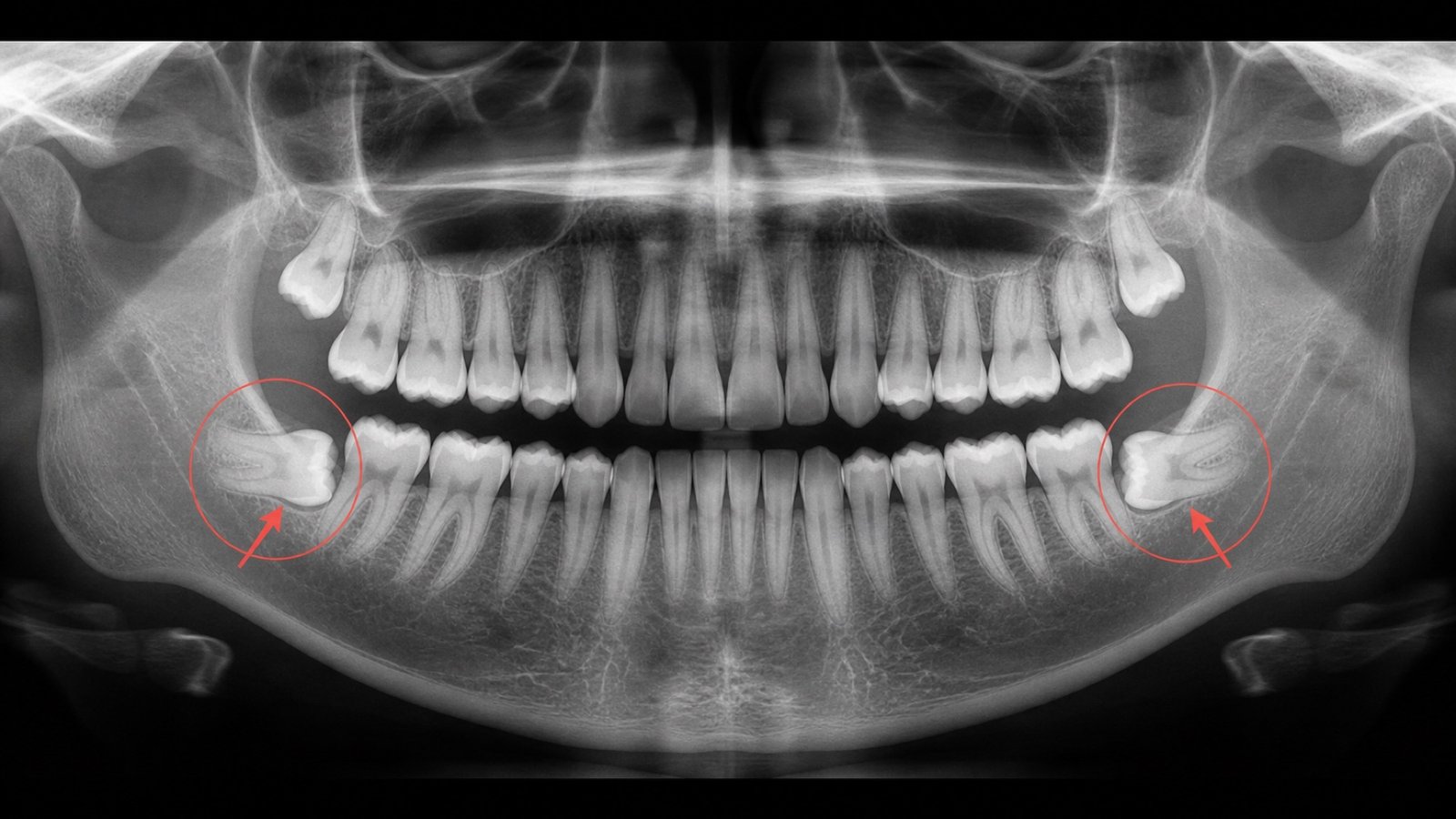
What a Panoramic X-Ray Shows
A panoramic X-ray captures the upper and lower jaws in one image so the dentist can see teeth that have not erupted.
The image helps show whether a tooth is vertical, tilted, horizontal, partly covered by bone or close to nearby structures. It also helps reveal decay, cyst-like changes and possible effects on the second molar.
Your treatment plan is based on your own examination, health history and diagnostic images. The highlighted example shows lower wisdom teeth angled toward the molars in front of them, a common type of impaction.
Local Anesthetic or Sedation?
Sedation is not mandatory. Many Star Dental patients have wisdom teeth removed comfortably with local anesthetic alone.
Local anesthetic numbs the treatment area. You remain awake and may notice pressure or movement, but the goal is to prevent sharp pain. Optional IV sedation can help patients who are very anxious, prefer limited memory of treatment or have a more involved procedure.
Local anesthetic is still used when IV sedation is chosen. Your medical history, medications, procedure complexity, comfort preferences and safe escort arrangements all help determine which option is appropriate.
| Consideration | What to know |
|---|---|
| Local anesthetic alone | You are awake and the surgical area is numb. Sedation-only fasting, escort and 24-hour driving restrictions generally do not apply unless your dentist gives different instructions. |
| IV sedation | You become deeply relaxed and may remember little of the procedure. You must follow the fasting instructions, bring a responsible adult escort and avoid driving or important decisions for at least 24 hours. |
| Choosing safely | Your dentist reviews your health history and explains the benefits, limits and instructions for the option recommended in your case. |
How Wisdom Teeth Removal Works
Evaluation and imaging
We review symptoms, medical history, medicines and a panoramic X-ray, then explain which teeth need treatment and why.
Comfort plan
You and the dentist discuss local anesthetic alone or optional IV sedation. Sedation patients receive specific fasting and escort instructions.
Tooth removal
A fully erupted tooth may be removed through the socket. An impacted tooth can require a small opening in the gum, removal of a limited amount of bone or sectioning the tooth into smaller pieces.
Recovery instructions
You leave with gauze, medication directions and written instructions for protecting the blood clot, eating, cleaning and knowing when to call.
What Recovery Usually Feels Like
Some soreness, swelling, jaw stiffness and light bleeding are common during the first few days. The amount varies with the tooth position, the number removed and your individual healing response.
- Rest on the day of treatment and return to normal activity gradually
- Use gauze and cold packs as directed
- Choose soft, nourishing foods and drink regularly
- Avoid straws, smoking, vaping, vigorous rinsing and hard foods
- Begin gentle salt-water rinses after 24 hours if instructed
- Take medicines only as directed by your treating dentist
Download Wisdom Teeth Instructions
Keep these printable Star Dental guides available before and after treatment. Personalized instructions from your treating dentist take priority.
Pre-Op Instructions for IV Sedation
For patients who choose IV sedation: fasting, escort, clothing, medication review and planning for the rest of the day.
Download Pre-Op PDFPost-Op Instructions
For all oral-surgery patients, plus an additional page for patients who received IV sedation.
Download Post-Op PDFMedicaid and Insurance for Wisdom-Teeth Care
Health First Colorado may cover wisdom-tooth removal when the tooth is causing pain, swelling, infection or another problem and the recommended care meets the member's current benefit rules.
An impacted tooth does not automatically qualify. The dentist first examines the tooth and reviews appropriate X-rays, then the office checks active eligibility, the treatment plan and any requirements for imaging, extraction, sedation or a specialist.
Adults and children can have different benefits. Use our patient guide to Colorado Medicaid wisdom-teeth coverage for a clear explanation, or call Star Dental and we can check the information that applies to you.
Star Dental also accepts most major PPO plans, including Delta Dental, Cigna, Aetna, MetLife and Guardian. Learn more about Medicaid dental appointments in Denver.
When Wisdom Tooth Pain Is Urgent
Pain behind the last molar can come from infection, decay, gum inflammation or pressure around a partially erupted tooth. Call promptly if pain is accompanied by facial swelling, fever, drainage, a foul taste, difficulty opening your mouth or difficulty swallowing.
Star Dental is open seven days. Please call first to reserve an appointment so we can allow enough time for an examination, panoramic X-ray and treatment planning. For broader urgent-care information, visit our emergency dentistry page.
Wisdom Teeth Removal and Sedation FAQ
Answers to common questions about age, necessity, pain, local anesthetic, optional sedation, recovery and insurance.
Does everyone need their wisdom teeth removed?
No. Healthy wisdom teeth that are fully erupted, functional, painless, cavity-free, surrounded by healthy gums and easy to clean may be monitored. Removal is usually considered when there is pain, infection, decay, gum disease, damage to a neighboring tooth, a cyst or another concern found during the examination or on X-rays.
At what age are wisdom teeth usually removed?
Wisdom teeth often develop or erupt between ages 17 and 25, so evaluation commonly begins in the later teen years. Removal can be recommended earlier or later depending on tooth development, symptoms, available space and health. Adults can also have wisdom teeth removed when problems arise.
Why do we have wisdom teeth?
Wisdom teeth are simply the last set of adult molars. Healthy third molars can help with chewing, but they develop after the other adult teeth. Many modern jaws do not have enough room for them to erupt and remain clean.
What happens if impacted wisdom teeth are not removed?
Some impacted teeth remain quiet, while others develop food trapping, recurrent gum infection, decay, gum disease, damage to the second molar or a cyst-like change. A tooth that is kept should be monitored with examinations and periodic X-rays because a problem may begin before it causes pain.
Is wisdom teeth removal painful?
Local anesthetic is used to numb the area during treatment. You may feel pressure or movement, but tell the team if you feel sharp pain. Soreness and swelling after removal are common and are managed with the care and medication plan your dentist provides.
Do I have to be sedated?
No. Sedation is optional. Many patients have wisdom teeth removed with local anesthetic alone. Optional IV sedation may be considered for anxiety, preference or a more involved procedure after the dentist reviews your medical history and safety needs.
Will I still be numb if I choose IV sedation?
Yes. Local anesthetic is still used to numb the surgical area when IV sedation is selected. Sedation helps with relaxation and awareness; the local anesthetic provides numbness at the treatment site.
Do I need to fast and bring a driver?
Patients receiving IV sedation must follow the fasting instructions and bring a responsible adult escort who stays at the office, drives them home and remains with them afterward. These sedation-only rules generally do not apply to local-anesthetic-only treatment unless your dentist gives different instructions. Always follow the instructions for your specific appointment.
How long does wisdom teeth removal take?
The appointment length depends on the number of teeth, whether they are erupted or impacted, the position of the roots and the comfort option used. The dentist can give you a more useful estimate after reviewing your panoramic X-ray.
How long is recovery?
Many patients experience the most soreness and swelling during the first few days and then improve gradually. Gum and bone continue healing beyond the point when you feel ready for normal daily activities. Follow your personalized instructions and call if symptoms worsen instead of improving.
When can I return to school or work?
That depends on the difficulty of the extraction, your symptoms and the type of work or activity. Plan to rest on the day of treatment. Patients with more involved extractions or physically demanding work may need additional time. IV sedation patients must not drive or make important decisions for at least 24 hours.
What is dry socket?
Dry socket occurs when the protective blood clot is lost or breaks down before the extraction site has healed. It can cause severe pain a few days after removal. Avoid smoking, vaping, straws, vigorous rinsing and disturbing the socket, and call if pain becomes significantly worse after initially improving.
What can I eat after wisdom teeth removal?
Begin with fluids and soft, nourishing foods such as yogurt, applesauce, eggs, mashed potatoes, pasta or soup that is not hot. Avoid straws, hard or crunchy foods and small pieces such as nuts or seeds while the sites are healing. Follow the post-op guide and your dentist's instructions.
Can all four wisdom teeth be removed at once?
Sometimes. Removing more than one tooth in the same visit may avoid separate procedures and recovery periods, but the right plan depends on the position of each tooth, your health and treatment complexity. Your dentist will explain whether one, several or all four teeth should be treated.
How does Star Dental verify Medicaid benefits before treatment?
Star Dental checks active Health First Colorado eligibility, the recommended treatment, available benefit information and any requirements for imaging, sedation or specialist care. Because an impacted tooth does not automatically qualify, the dentist first examines the tooth and reviews appropriate X-rays. See our Colorado Medicaid wisdom-teeth coverage guide.
Do I need to call first, and is Spanish-speaking staff available?
Yes. Star Dental is open seven days and has Spanish-speaking staff available. Please call first to reserve an appointment so we can allow enough time for an examination and panoramic X-ray.
Oral surgery resources
Prepare for Wisdom Teeth Care With Confidence
Review treatment choices, comfort options, coverage information and downloadable instructions.
Schedule a Wisdom Teeth Evaluation
Star Dental is at 1490 S Sheridan Blvd, at Sheridan and Florida in the King Soopers plaza. Free on-site parking and wheelchair access are available. We welcome new patients from Lakewood, Denver and surrounding communities. Get directions.
Planning your care: Your visit begins with an examination and any needed diagnostic X-rays. Your dentist will then provide personalized preparation, medication and after-care instructions for your treatment. Insurance benefits depend on active enrollment, medical necessity, plan rules, documentation and authorization requirements.
PATIENT GUIDES