
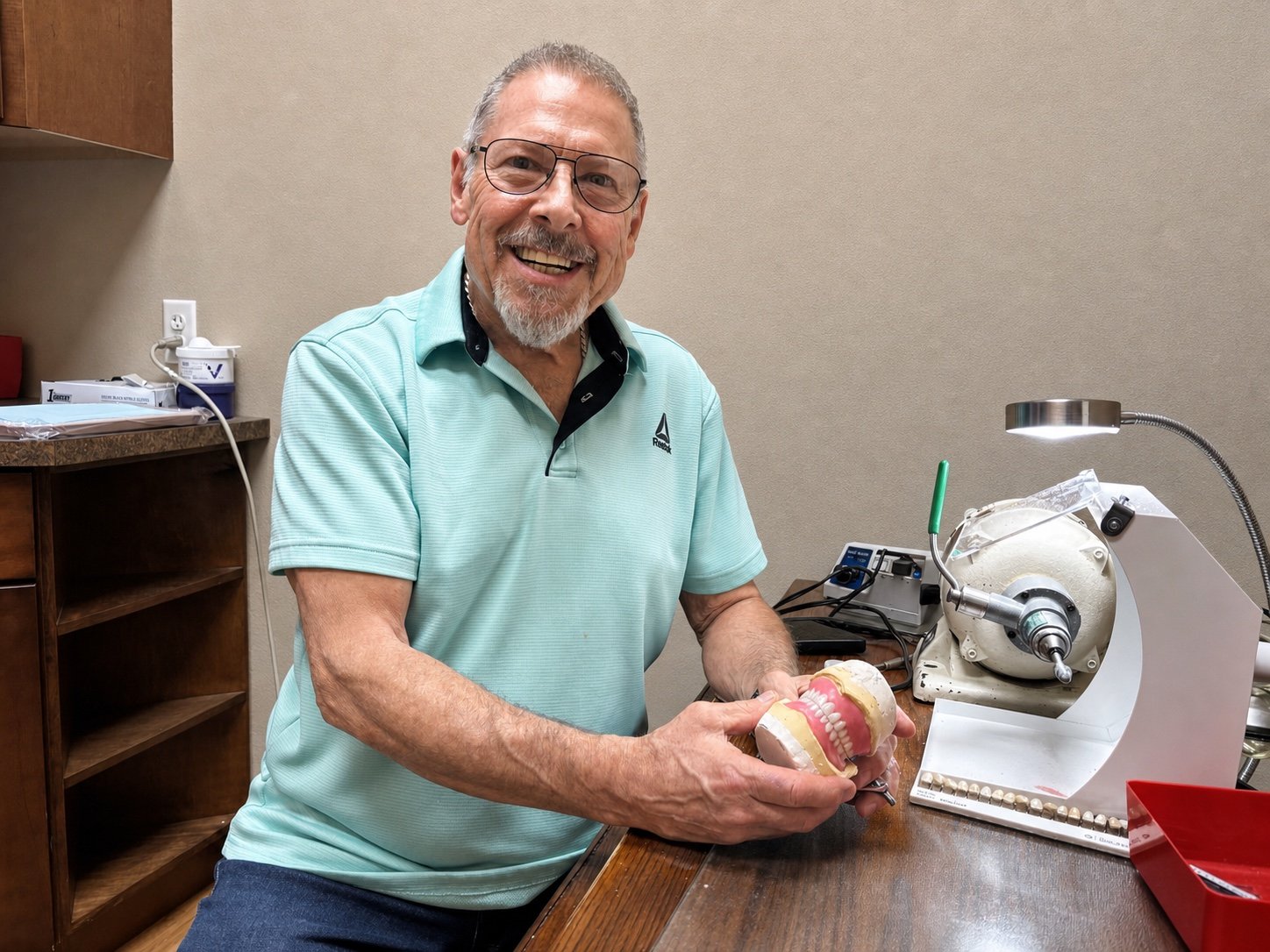
If you are comparing denture prices in Denver, the most useful starting point is a real office fee and a clear explanation of what it covers. At Star Dental, a conventional full or partial denture generally costs $900–$1,100 per arch for a self-pay patient. The office fee for an insured patient is generally in a similar range, but insurance benefits determine how that fee is divided between the plan and the patient.
The $900–$1,100 range is for the denture service itself. It includes impressions, try-in appointments, delivery of the completed denture and some initial fit adjustments. Extractions, immediate dentures, relines and specialist services are separate.
Prices are current as of August 2026 and may change. Your examination and written treatment plan—not an online article—determine which type of denture is appropriate and what your total treatment will cost.
Quick price answer
- Conventional full denture: generally $900–$1,100 per arch
- Conventional partial denture: generally $900–$1,100 per arch
- Self-pay and insured office fees: generally similar, although an insured patient’s responsibility depends on the plan
- Health First Colorado: the office fee is not a statement of what a Medicaid member owes; covered dentures are handled under current benefit and authorization rules
What does “per arch” mean for denture pricing?
An arch is one full row of teeth. The upper jaw is one arch, and the lower jaw is another.
The $900–$1,100 per-arch fee applies to one upper denture or one lower denture. A patient who needs both an upper and a lower conventional denture is receiving treatment for two arches. Ask Star Dental for a combined written estimate rather than calculating a total from the per-arch range, because the final plan may include case-specific services or pricing.
“Full denture” and “full set of dentures” can be confusing search terms. A full denture replaces all teeth in one arch. People sometimes use “full set” to mean both upper and lower dentures, so it is important to ask whether a quoted price is for one arch or two.
Do full and partial dentures cost the same at Star Dental?
Star Dental’s current self-pay range is the same for a conventional full denture and a conventional partial denture: $900–$1,100 per arch.
A full denture, also called a complete denture, replaces all natural teeth in the upper or lower arch. A partial denture replaces one or more missing teeth while useful natural teeth remain. A partial denture is designed around those remaining teeth and the spaces that need to be restored.
The fact that both fall within the same office range does not mean the treatment is identical. The dentist must evaluate the teeth, gums, bite, supporting tissues and existing dental work before recommending a full or partial design. Read the detailed comparison in Star Dental’s full versus partial dentures guide.
What is included in the $900–$1,100 denture fee?
For a conventional full or partial denture, the fee includes the denture process from the first denture records through delivery:
Impressions
Impressions or other appropriate records capture the shape of the mouth and the tissues that will support the denture. Accurate records give the dentist and denture technician the information needed to plan the appliance.
Try-in appointments
Try-ins allow the team and patient to evaluate important details before the final denture is completed. Depending on the case, this may include the bite, tooth position, appearance, smile and speech.
Delivery of the completed denture
At insertion, the denture is placed and evaluated in the mouth. The team reviews how to insert, remove, clean and begin adapting to the new appliance.
Some initial adjustments
New dentures can create pressure areas as the mouth adapts. The current fee includes some initial adjustments. It does not include unlimited future maintenance or a later reline. The treatment plan should state what follow-up is included and when a separate maintenance fee would apply.
What is not included in the conventional denture price?
The following services are separate from the $900–$1,100 conventional denture fee:
- Tooth extractions
- Immediate dentures
- Denture relines
- Services performed by a specialist
- Any other treatment listed separately on the written plan
Some patients need dental treatment before a conventional denture can be made. For example, remaining teeth may need to be evaluated for extraction, or the supporting tissues may need time to heal. Those needs can change the sequence, timeline and total treatment cost even though the denture itself remains within the quoted range.
What is an immediate denture, and why is it priced separately?
An immediate denture is planned and made before the teeth designated for extraction are removed. It is inserted after those teeth are removed so the patient has a tooth replacement during initial healing.
An immediate denture requires a different treatment sequence from a conventional denture made after healing. The gums and underlying bone change shape after extractions. Because the appliance was made from records taken before those changes occurred, it may need additional adjustments, a reline or eventual replacement as healing progresses.
Star Dental’s $900–$1,100 conventional denture range does not include an immediate denture. This explanation is not a representation that immediate dentures are available in every case or are offered on a particular timetable. Ask the office whether an immediate option is clinically appropriate and available, and request a separate written estimate before treatment.
What is a denture reline?
A reline modifies the tissue-facing surface of an existing denture to improve its adaptation to the current shape of the gums. It is different from a repair, which fixes damage, and different from making a new denture.
Gum and bone contours can change after extractions and over time. A dentist should examine the mouth and denture before deciding whether an adjustment, reline, repair or replacement is appropriate. Relines are not included in the $900–$1,100 conventional denture fee.
If an existing appliance is loose or damaged, read Star Dental’s denture repair or replacement guide and bring the denture and every available piece to the evaluation.
How much do dentures cost with dental insurance?
Star Dental’s office fee for an insured conventional denture is generally similar to the self-pay range. That does not mean every insured patient pays $900–$1,100 out of pocket.
The patient’s actual responsibility can depend on:
- Whether Star Dental is in network for the plan
- The plan’s covered services and exclusions
- The deductible, coinsurance and annual maximum
- Waiting periods and frequency limits
- Whether a predetermination or prior authorization is required
- Benefits already used during the plan year
- Separate services, such as extractions or relines
Insurance verification and predetermination provide useful planning information, but the insurance company makes the final benefit decision after processing the claim. Star Dental can explain the available benefit information and provide an estimated patient portion; the final account may change after claim processing. Review the Dental Insurance & Payment Guide before treatment.
How does Health First Colorado Medicaid affect denture cost?
The $900–$1,100 range is Star Dental’s conventional denture office fee, not a statement that a Medicaid member personally owes that amount.
The current Health First Colorado adult dental benefit summary states that:
- The dental benefit does not have copays, a deductible or an out-of-pocket maximum.
- Adults age 21 and older have a $3,000 annual dental benefit limit for each benefit year, which runs from July 1 through June 30.
- Covered complete or partial removable dentures do not count toward that $3,000 annual limit.
- Covered complete or partial removable dentures are listed at 100% of the covered service and generally have a once-every-seven-years frequency limit for adults.
Coverage is not automatic. Current eligibility, provider enrollment, clinical criteria, documentation, frequency rules and prior authorization must be confirmed for the particular denture. Star Dental can help review authorization requirements and available benefit information before treatment.
When a denture is a covered Health First Colorado service and all program requirements are met, the member should not be presented with Star Dental’s self-pay fee as the member’s charge for that covered service. If a requested service is not covered, Colorado requires the applicable non-covered-service disclosure and written agreement before a participating provider charges the member.
Star Dental can help verify available benefit information, but DentaQuest and Health First Colorado administer the benefit and determine coverage. Read the Colorado Medicaid denture coverage guide or call DentaQuest Member Services at 1-855-225-1729 for official benefit questions.
Why can the total treatment cost be higher than the denture fee?
The denture is only one part of some treatment plans. The total may be higher when the mouth needs additional care before, during or after denture treatment.
- Removing teeth that cannot be retained
- Treating disease or discomfort affecting the gums or remaining teeth
- Choosing an immediate denture during extraction healing
- Relining an appliance after tissue changes
- Repairing or replacing an older denture
- Receiving care from a specialist
A written treatment plan should separate the denture fee from each additional service. That makes it easier to compare estimates and understand which services may be submitted to insurance.
How the conventional denture process works
Although every treatment plan is individualized, a conventional denture commonly involves several stages:
- Evaluation and treatment planning. The dentist evaluates the mouth, remaining teeth, tissues, bite, current appliance and treatment goals.
- Impressions and records. The team gathers the information needed to design the denture.
- Try-ins. The patient and team review fit-related records, bite, tooth position and appearance as appropriate to the case.
- Final processing and delivery. The completed denture is inserted, and care and adaptation instructions are reviewed.
- Initial follow-up. Some adjustments are included to address early pressure areas or bite concerns.
Treatment time depends on the clinical situation and laboratory steps. The office should give a case-specific schedule rather than promising one turnaround time for every patient.
How to compare denture prices responsibly
When comparing a denture price from different offices, ask the same questions each time:
- Is the price for one arch or both arches?
- Is it for a full denture, partial denture, immediate denture or another design?
- Are impressions and try-ins included?
- Is delivery included?
- What early adjustments are included?
- Are extractions or other preparatory services separate?
- Is a future reline included or separate?
- What happens if the treatment plan changes?
- Will I receive a written estimate before starting?
- If I have insurance or Medicaid, what benefits must be confirmed first?
A low headline price is not useful if it leaves out essential stages. A clear estimate should identify the appliance, the arch, what is included, what is separate and the expected patient responsibility based on the information available.
Frequently asked questions about denture cost
How much is one denture at Star Dental?
A conventional full or partial denture generally costs $900–$1,100 for one upper or lower arch for a self-pay patient. The office fee for insured treatment is generally similar, but insurance benefits determine what the plan and patient may pay.
How are both upper and lower dentures priced?
The $900–$1,100 range is per arch, so an upper denture and a lower denture are priced as treatment for two arches. Ask Star Dental for a combined written estimate. Do not assume a total by multiplying the published range, because the final plan may include case-specific services or pricing. Extractions, immediate dentures, relines, specialist services and other separately listed treatment are not included in the conventional per-arch fee.
Are partial dentures cheaper than full dentures at Star Dental?
Star Dental’s current self-pay range is the same for a conventional partial denture and a conventional full denture: $900–$1,100 per arch. The exact treatment is based on the remaining teeth, tissues, bite and proposed appliance.
What does the conventional denture price include?
It includes impressions, try-in appointments, delivery of the completed denture and some initial adjustments. It does not include extractions, immediate dentures, relines or specialist services.
Is an immediate denture included in the $900–$1,100 price?
No. An immediate denture is made before planned extractions and inserted after the teeth are removed. Healing changes can require further adjustments, relining or later replacement. Immediate dentures are priced separately, and their clinical appropriateness and availability must be confirmed for the individual patient.
Does dental insurance cover dentures?
Many dental plans include some denture benefits, but coverage varies by plan, network, deductible, coinsurance, annual maximum, waiting period, frequency limit and authorization requirements. Star Dental can help review available benefit information, but the insurer makes the final claim decision.
Does Colorado Medicaid cover dentures for adults?
Health First Colorado lists complete and partial removable dentures as adult benefits. The current adult summary says covered dentures do not count toward the $3,000 annual dental benefit limit and are paid at 100% of the covered service, subject to eligibility, provider enrollment, clinical criteria, documentation, frequency rules and prior authorization. The $900–$1,100 office fee is not a statement of what a Medicaid member owes.
Why might my total treatment cost more than the denture itself?
The total can include separately needed treatment such as extractions, an immediate denture, a later reline, other treatment for the mouth or remaining teeth, or specialist care. Your written treatment plan should list each service and estimated patient portion separately.
Pricing and benefit information reviewed August 6, 2026. Clinical information is based in part on the American Dental Association’s dentures overview. Health First Colorado information is based on DentaQuest’s Adult Dental Benefit Summary revised July 2026 and Change to Adult Benefit Limit notice effective July 1, 2026. Office fees and program rules can change; confirm current information before treatment.
Plan a denture evaluation at Star Dental
Call 303-222-1414 to describe what you need and ask about an evaluation. You can also review Star Dental’s dentures and denture repair services, read information for new patients or request an appointment.
This article provides general educational and pricing information. It does not diagnose a condition, determine Medicaid or insurance coverage, or replace an examination and individualized written treatment plan.